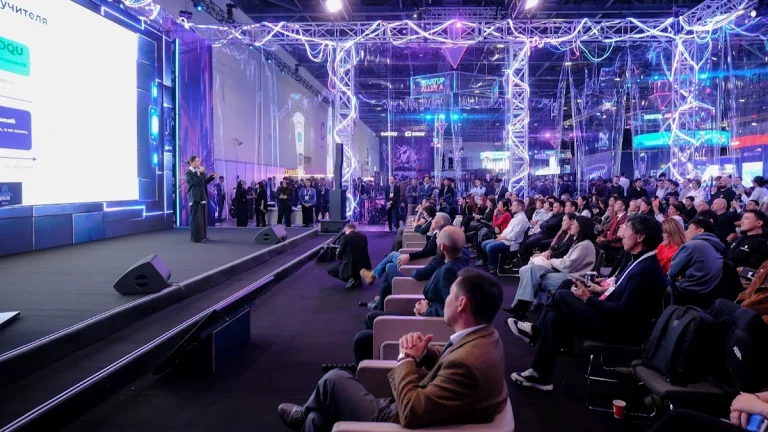

The municipal administration of Almaty is preparing to commission an artificial-intelligence-driven city superapp for 357.8 million KZT (exclusive of VAT, or approximately $750,000). According to reporting by Kursiv, the Almaty Department of Digitalization has published a public procurement tender for a unified mobile platform consolidating 17 municipal services—ranging from public transit routing and utility payments to appointment bookings with the city akim. The tender stipulates an exceptionally aggressive delivery window: just 25 calendar days following contract registration with the national treasury.
This striking combination of public budget, sweeping functional scope, and a compressed timeline inevitably raises a vital engineering and governance question: what tangible digital product can a metropolis realistically receive in under four weeks? The answer depends fundamentally on whether the winning contractor is tasked with building an enterprise architecture from scratch or deploying an already configured, white-label smart-city software engine.
What We Know About the Tender Specifications
Citing technical procurement schedules, Kursiv notes that operational milestones require the preliminary version of the AI engine to be demonstrated by the 15th calendar day. The remaining 10 days are allocated for municipal API integrations, end-to-end security penetration testing, pilot trials, and formal handover to the city administration.
The conversational AI assistant must natively support Kazakh, Russian, and English, providing contextual civic consultations and routing citizen petitions directly to appropriate municipal departments. Architectural requirements include a back-office citizen CRM system and seamless integration with eGov Mobile single sign-on (SSO). The tender mandates the full transfer of exclusive intellectual property rights to the municipal government alongside a mandatory 12-month warranty and maintenance period. Kursiv submitted formal journalistic inquiries to municipal authorities regarding schedule feasibility and potential reliance on pre-existing commercial platforms.
Because primary procurement documentation cannot be independently verified prior to tender closure, these technical conditions reflect published journalistic disclosures. The following analysis evaluates realistic engineering scenarios rather than passing judgment on any prospective bidder.
Engineering Feasibility: What Is Possible in 25 Days?
A compressed development calendar does not automatically render an IT project impossible. However, the calendar window dictates three radically divergent delivery models:
1. The Interactive Prototype. A rapid-response development squad can readily design mobile frontend interfaces, wrap a commercial large language model via API, ingest public municipal FAQs into a vector index, and demonstrate polished user journeys. Such an application looks compelling on a presentation stage. However, successfully simulating a municipal complaint on mocked staging data does not mean the actual Department of Urban Mobility will receive, track, and resolve it in production.
2. Customization of an Existing Platform. If the contractor already possesses a battle-tested smart-city core—complete with iOS and Android shells, dispatch CRM logic, notification brokers, and pre-trained GovTech NLP models—the 25-day scope reduces to municipal branding, user acceptance testing (UAT), and configuration. Assuming municipal agency APIs and cryptographic credentials are pre-authorized, a short delivery window becomes plausible. Yet the tender makes no explicit mention of pre-qualified turnkey software.
3. Greenfield Custom Development. If a contractor were expected to architect mobile codebases, construct microservices backends, negotiate bespoke API data protocols across 17 disparate municipal agencies, implement security boundaries, and conduct audit certifications from zero within 25 calendar days, the project faces near-certain structural failure.
Hence, the foundational question for public oversight is straightforward: what functional components exist on Day 1 of contract execution, and what exact automated workflows must operate on Day 25?
17 Services Does Not Mean 17 Functional Integrations
Counting listed app categories reveals little about architectural depth. A webview button that launches a third-party website and an end-to-end transactional workflow fully embedded within the app represent vastly different engineering efforts.
Consider the municipal taxi module. A development team could simply embed a deep link into an existing ride-hailing app. Alternatively, they could pass departure and destination geolocations via API. Or they could build native dispatch, live GPS vehicle tracking, in-app billing, and dispute resolution within the municipal superapp itself. The engineering complexity between these approaches differs by orders of magnitude.
The same principle applies to citizen petitions. A text input field is trivial to deploy. The meaningful civic value emerges only when the petition is cryptographically registered in the unified state system, routed to a verified municipal officer, updated with real-time status webhooks, and concluded with an official response backed by an audit trail.
A rigorous audit of this procurement requires clear public disclosure for each of the 17 modules: clarifying where the app provides informational reference, where it redirects to external systems, and where it executes native, authenticated transactions.
Rigorous Validation of the Conversational AI Assistant
The project technical brief references Retrieval-Augmented Generation (RAG)—an architecture where an LLM synthesizes responses grounded in retrieved knowledge-base documents. However, deploying a RAG pipeline is far from a guarantee of factual accuracy. Industry benchmarks, including Microsoft’s GovTech AI evaluation frameworks, emphasize search retrieval precision, citation faithfulness, and answer completeness.
In a municipal environment, systems must survive messy real-world stress tests. What happens when an elderly resident uses colloquial administrative terms? What if city regulations in the database are outdated? What if a user submits a query blending conversational Kazakh and Russian (“shala-Kazakh”)? What happens if an emergency report falls entirely outside municipal jurisdiction?
Furthermore, the boundary between conversational dialogue and transactional execution requires airtight technical barriers. The AI agent must never output “Your petition has been officially filed” unless the back-office registry has returned a verifiable 200 OK receipt with a cryptographic tracking number.
The definitive acceptance metric for the AI assistant must be verified transaction completion and legal accuracy, rather than superficial conversational fluency.
Why the Budget Does Not Explain the Schedule
Without an itemized cost breakdown, evaluating 357.8 million KZT as either inflated or deficient remains speculative.
Cost assessments fluctuate drastically depending on what the figure encompasses: licensing existing proprietary software, custom feature engineering, cloud compute hosting, API middleware development, external security penetration testing, administrative staff training, and continuous technical support. Future operational costs—such as GPU inference fees, database hosting, and maintaining third-party APIs—must also be factored into lifecycle accounting.
While an adequate budget enables a prime contractor to mobilize substantial engineering headcount, adding developers cannot overcome dependencies on third-party municipal agencies. If municipal water utilities, public transit databases, or akimat scheduling systems lack modern, documented REST APIs, no volume of software engineers can force an integration in 25 days.
Success requires synchronization not only from the contractor’s agile sprint teams, but from every municipal department and utility participating in the data exchange.
Essential Accountability Checklist Prior to Final Acceptance
To establish public transparency and demonstrate genuine civic value, the municipal administration should address several objective questions prior to signing final acceptance certificates:
- Software Provenance: Exactly which architectural modules are built from scratch, and which components represent licensed commercial off-the-shelf software?
- Native vs Redirect Services: Which of the 17 declared services allow citizens to complete transactions natively within the app, and which merely redirect users elsewhere?
- API Readiness: Which municipal databases, transport telemetry feeds, and akimat booking calendars have confirmed live, bilateral API connectivity?
- Verification Standards: What independent cybersecurity audits, stress tests, and AI hallucination benchmarks were executed prior to acceptance?
- Definition of Delivery: Does the 25-day delivery constitute a restricted alpha pilot for internal staff or a publicly accessible production release on the App Store and Google Play?
- Lifecycle TCO: What are the projected annual operational, cloud hosting, and model inference costs once the initial 12-month warranty concludes?
Clear answers will ground public discussion in empirical reality. An aggressive deadline alone does not prove wrongdoing or predetermined vendor selection.
A smart-city superapp is fundamentally justified only if it measurably compresses the friction between a citizen’s problem and municipal resolution. The definitive outcome of this 358M KZT procurement will not be measured in press releases, but in tangible transactions: whether residents can seamlessly file a grievance, track snow removal, schedule an administrative meeting, and receive verified public services. That is the empirical standard against which Almaty’s 25-day sprint must be judged.