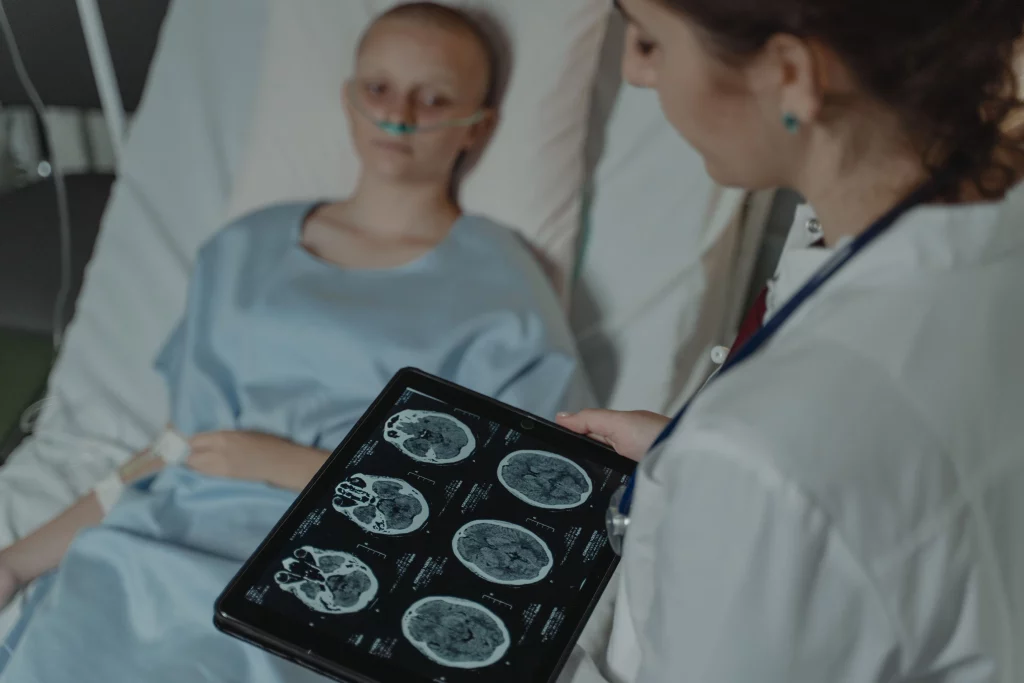
A telemedicine center has launched at the Mangystau Regional Multidisciplinary Hospital. Doctors will be able to hold remote multidisciplinary consultations, with AI systems for diagnostic image analysis and early disease detection planned for the next phase.
What Is Already Operational
The center was inaugurated during an international symposium on smart telemedicine between Kazakhstan and South Korea. The South Korean partners supplied medical and telemedicine equipment, including mobile ultrasound scanners, electrocardiographs, digital X-ray panels, videoconferencing terminals, and high-resolution diagnostic monitors.
Remote multidisciplinary consultations do not replace in-person patient examinations, but they enable transmitting medical scans and records to specialized consultants, discussing complex clinical cases, and expediting patient triage pathways.
Which AI Solutions Were Demonstrated in Aktau
At the symposium, Kazakhstani and South Korean companies presented software suites for automated analysis of radiological imaging, early stroke detection, and fundus retinal pathology screening. Demonstrations also included digital spirometry lung function testing, cardiovascular risk assessment, osteoporosis screening, and remote monitoring for musculoskeletal conditions.
A Kazakhstani system for stroke diagnosis was demonstrated separately. According to its developers, following a computed tomography (CT) scan, the algorithm delivers structured diagnostic results to the physician in approximately five minutes, flagging suspected cerebral ischemic or hemorrhagic zones.
This speed refers strictly to the benchmark processing time of that software module, not the overall patient care pathway from hospital admission to emergency treatment. The final clinical diagnosis and therapeutic decisions remain entirely with attending physicians.
What Is Formally Slated for Implementation
The Ministry of Healthcare stated that the center’s technical infrastructure enables deploying AI assistants and smart software platforms for the early diagnosis of stroke, pulmonary pathologies, and other critical conditions.
The formal wording is critical: while the telemedicine center is open and remote consultations are structurally enabled, the comprehensive list of actively deployed AI modules, integration timelines, and clinical trial results have not yet been published. Not all solutions presented at the expo can be assumed to be operational in clinical workflows.
For clinical applications, an exhibition demonstration is insufficient. Permanent clinical deployment requires EHR integration, medical data protection compliance, staff training, and validation accuracy assessments on local patient cohorts.
Why the Initiative Matters for Mangystau
The region faces acute shortages of narrow medical specialists and significant distances between settlements. Patients frequently expend substantial time and financial resources traveling to Aktau when initial clinical determinations could readily be made via remote review of scans and medical records.
Telemedicine can reduce unnecessary patient transfers while accelerating urgent referrals to the regional hub for cases requiring in-person intervention. The greatest utility stems not from video links per se, but from direct digital access to medical imaging and rapid connection to niche clinical experts.
Within this framework, AI can help prioritize clinical review queues and flag subtle lesions earlier. It is designed as a second-opinion verification aid, rather than an autonomous substitute for a radiologist, neurologist, or ophthalmologist.
Metrics Needed to Evaluate Performance
The real-world clinical impact of the center will be measured by several quantitative indicators: the volume of remote consultations, report turnaround times, averted patient journeys, the accuracy rate of AI findings verified by physicians, and door-to-treatment intervals in acute stroke cases.
As these performance metrics have not yet been published, the rigorous conclusion today is: telemedicine connectivity is deployed, medical equipment has been delivered, and the deployment of AI diagnostic modules represents the subsequent development milestone.