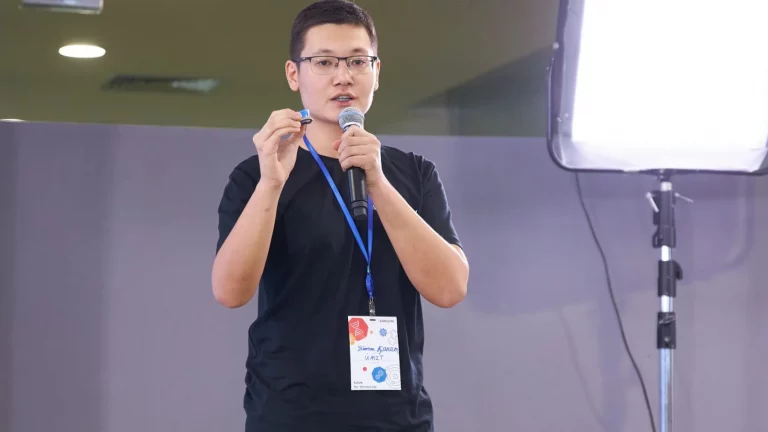
The Wikimedia Foundation has officially launched the third funding cycle for its global Wikimedia Rapid Fund grant program. Established to foster grassroots open knowledge initiatives, the program provides direct financial support to software developers, open-source engineers, data researchers, and community contributors. Applicants from Kazakhstan are fully eligible to apply for grant awards ranging between $500 and $5,000 USD to build technical solutions that strengthen the open digital commons. Submissions for this round must be submitted through the foundation’s Fluxx platform (wmf.fluxx.io) by November 1, 2026.
A concise summary of eligibility conditions and application requirements is accessible via the catalog listing Wikimedia Rapid Fund: гранты до $5000 на технические проекты и свободные данные. This comprehensive guide outlines technical evaluation criteria, open licensing compliance, budget preparation rules, and mandatory community consultation procedures.
Who is Eligible to Apply
The Rapid Fund accepts applications from individual technical contributors, collaborative working groups, and registered non-profit organizations. The Wikimedia Foundation explicitly lists the Republic of Kazakhstan among its supported funding territories, confirming full regional eligibility (meta.wikimedia.org). Applicants must possess an established track record within the open knowledge movement or demonstrate direct technical familiarity with the Wikimedia technology stack.
Grant evaluators look closely at each applicant’s public profile and past technical contributions. Relevant activities include creating user scripts, contributing to Wikipedia or Wikidata edit histories, maintaining open code repositories, or localizing documentation. For multi-member teams, the proposal must delineate specific responsibilities and verify that technical leads possess necessary domain skills.
Eligible Technical Projects and Solutions
The program prioritizes software tools and data engineering workflows that solve persistent operational challenges for community editors, curators, and readers. Eligible development categories encompass automated maintenance bots, custom gadgets, user scripts for the MediaWiki editing environment, automated citation checkers, and digital asset curation utilities for Wikimedia Commons.
Special focus is given to Wikidata expansion and regional language support. High-value proposals include natural language processing utilities for Kazakh Wikipedia, tools mapping regional cultural heritage records to Wikidata entities, and automated quality assessment pipelines. All proposed software must deliver tangible community value and maintainable architectural design.
Hosting on Toolforge and Infrastructure
Technical project teams are encouraged to leverage the Wikimedia Cloud Services ecosystem, particularly Toolforge, which provides a managed Kubernetes computing environment. Hosted tools benefit from direct, low-latency access to read-only database replicas of Wikipedia, Wikidata, and Wikimedia Commons, alongside shared webservice endpoints and automated job schedulers.
Proposals should outline the intended infrastructure footprint, identifying necessary runtime environments (such as Python, Node.js, or Go) and data storage dependencies. Utilizing Toolforge eliminates external server hosting expenses from the grant budget while guaranteeing long-term service continuity for global wiki editors.
Open Licensing and Code Governance
All software developed with Wikimedia grant funding must be published under recognized open-source licenses from its inception. The foundation strictly prohibits proprietary software modules, non-commercial restrictions, or undisclosed algorithmic models. Source code must reside in a publicly accessible version control repository, such as Wikimedia GitLab or GitHub.
Acceptable software licenses include the GNU General Public License version 2 or later (GPL v2+), the MIT License, and the Apache License 2.0. All accompanying documentation, guides, and educational media must be released under the Creative Commons Attribution-ShareAlike 4.0 International license (CC BY-SA 4.0). Adherence to open licensing standards is an immutable contractual obligation.
Budget Guidelines and Eligible Costs
Requested funding must fall between $500 and $5,000 USD. The proposal requires a line-item budget table justifying each planned expenditure against project milestones. Permissible budget categories include direct compensation for software developers, UI/UX designers, and quality assurance specialists during the active grant period, along with cloud hosting infrastructure (such as Toolforge or Cloud VPS) and developer tooling.
Prohibited expenses include personal hardware acquisitions (such as personal laptops or mobile phones), general organizational overhead unrelated to the technical deliverable, and tuition fees. Technology builders seeking alternative startup or research capital models can compare these requirements with initiatives such as $250,000 Equity-Free: Thiel Fellowship Is Accepting Applications, but Requires Dropping Out of College, which explores equity-free models in the technology sector.
Community Consultation on Meta-Wiki
A distinguishing prerequisite of Wikimedia grantmaking is mandatory community consultation. Prior to submitting the final application, applicants must publish a project proposal page on Meta-Wiki. This public submission outlines technical architecture, project objectives, target user personas, and measurable performance indicators.
During the consultation window, community volunteers, technical editors, and wiki administrators review the proposal, submit questions, and offer recommendations. Applicants must respond constructively to feedback and adjust design specifications where appropriate. Failure to engage with the community during this phase leads directly to application disqualification.
Review Timelines and Fund Disbursement
The Cycle 3 submission window closes on November 1, 2026. Committee evaluations and administrative reviews take approximately four to six weeks following the submission deadline. Approved applicants undergo identity verification and financial due diligence before signing the grant agreement. The earliest permissible project launch date is January 31, 2027.
Grant funds are disbursed via international bank wire to the recipient’s personal or institutional account. Grantees must submit a final technical and financial report on Meta-Wiki within 30 calendar days of project completion, providing functional code links, usage statistics, and expenditure documentation.
Practical Tips for Prospective Applicants
Technical teams in Kazakhstan should focus on well-scoped, achievable deliverables. Demonstrating an early functional prototype or clear data schema significantly increases evaluation scores. Frame your technical contribution around specific community needs, such as expanding Kazakh language datasets or streamlining regional knowledge preservation.
Reviewing broader international fellowship and project design guidelines can further strengthen your strategic framework. For example, comparing structural planning methodologies detailed in Atlantic Fellows AFSEE 2027–28: Fully Funded Fellowship at LSE, Deadline January 11 offers valuable insights into establishing sustainable, long-term public benefit initiatives.