
US-based Anduril Industries has raised $5 billion in a new investment round, valuing the company at $61 billion. For a business developing military drones, software and surveillance systems, the deal represents an investor bet on a market much larger than individual equipment deliveries.
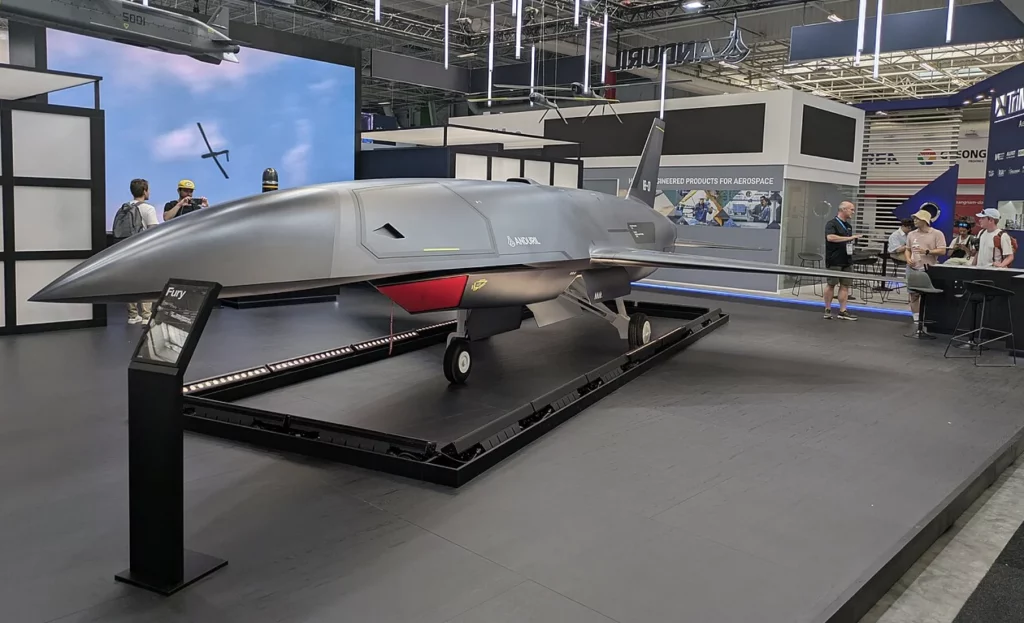
Anduril already participates in major US Army and Air Force programs. In September, its YFQ-44A Fury uncrewed aircraft was delivered to an Air Force unit for operational testing. Yet a substantial gap remains between testing a prototype, signing a framework agreement and earning revenue from large-scale deliveries.
Drones, sensors and a shared software platform
Founded in 2017, Anduril develops aerial and underwater uncrewed vehicles, surveillance equipment and other defense systems. A significant part of its offering is Lattice, a software platform that combines sensor data and lets operators control different devices within a shared environment.
This combination helps Anduril sell an integrated solution. A military customer can procure hardware, software, integration and maintenance under a single program. However, the company does not publicly disclose separate revenue or profitability figures for Lattice, so it cannot yet be assessed as a standalone high-margin software business.
One of Anduril’s most prominent projects is Fury, an uncrewed jet aircraft for the Collaborative Combat Aircraft (CCA) program. The program aims to develop aircraft capable of operating alongside crewed aviation.
Which contracts the company has secured
In June 2026, the US Air Force awarded development and production contracts for the first phase of CCA to two companies: Anduril and General Atomics. This is a major achievement for Anduril, but it is not the program’s sole supplier.
In September, the Air Force reported that Fury had arrived at an experimental unit at Creech Air Force Base. General Atomics’ aircraft was also delivered there. The military will assess how both aircraft operate in conditions resembling actual service and identify requirements for further deployment.
Another indication of scale is the US Army’s ten-year framework contract with Anduril, announced in March. Its potential ceiling is $20 billion. This is the maximum value of possible orders over the agreement’s lifetime, rather than money already paid to the company or guaranteed future revenue. In September, the Army also announced a $65 million order from Anduril for production of TITAN intelligence systems.
What Anduril still needs to prove
The next stage of growth requires industrial scale. Anduril is developing its Arsenal-1 manufacturing site in Ohio, where it plans to produce defense systems in large volumes. The outcome will depend on how quickly the company establishes production, meets military requirements and secures follow-on orders.
The $61 billion valuation reflects investors’ expectations of that future growth. Announced contracts confirm that Anduril has become a major participant in US defense programs. But framework contract ceilings and participation in testing alone do not show how much revenue or profit the company will ultimately earn.