
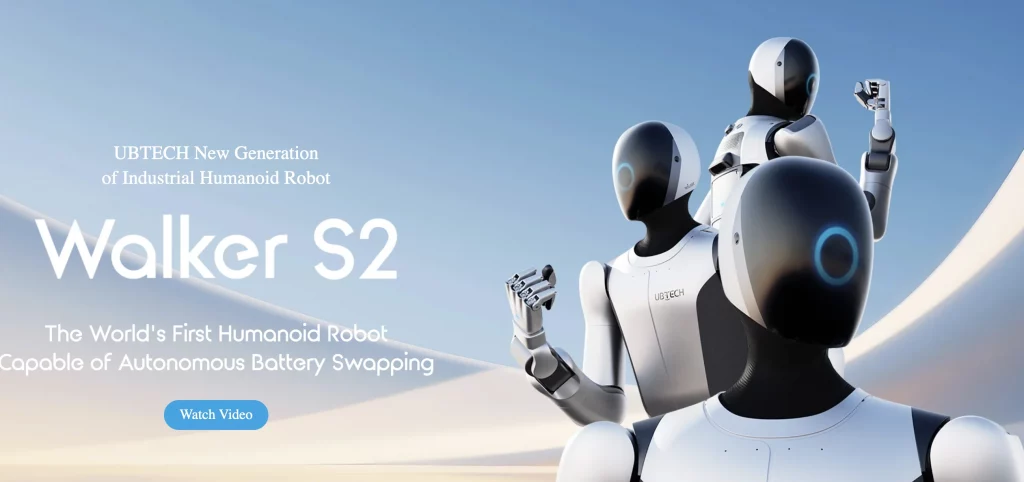
Kazakhstan’s Nero Group and China’s UBTech Robotics are developing a project to localize robot production in Kazakhstan. Initial investment is estimated at nearly $440 million.
The project envisages a manufacturing site, R&D, programming and research alongside assembly of finished robots.
Nero Group head Yerlan Nabiyev discussed the plans with The Astana Times at the Kazakhstan–China Investment Forum in Almaty.
What they plan to manufacture in Kazakhstan
UBTech Robotics is a Chinese technology company founded in Shenzhen in 2012. It develops humanoid, educational and service robots.
According to Nabiyev, cooperation with UBTech began after an initial meeting in November 2025. The parties subsequently signed an agreement during a Kazakhstan–China forum.
The project is already being implemented within a special economic zone.
Nero Group emphasizes that the aim extends beyond local assembly of finished devices. In Kazakhstan, it plans to develop:
- robot manufacturing;
- research and development;
- programming;
- educational robotics;
- logistics solutions;
- robot applications in industry and services.
The first robots are intended for schools
Educational robotics will be the first area of focus.
Nero Group expects to begin producing these solutions in October 2026.
By the end of the year, the company plans to supply robotics kits to approximately 30 Almaty schools.
It also intends to have its robotics production included in Kazakhstan’s register of domestic manufacturers. Registration should take account of technological operations performed within the country and the share of local content.
Nero Group currently employs more than 200 people. It works in electronics, printed circuit board manufacturing and specialized technology solutions. The company plans to expand its workforce after launching the robotics business.
Robots are intended to assist people rather than replace them
The developers place particular emphasis on practical applications.
The company says it does not want to turn the project into a humanoid robot show.
The robots are intended for education, manufacturing, logistics and service industries.
“Our goal is not for robots to replace people. We want them to become assistants,” Nabiyev explained.
What remains unknown
The project is valued at nearly $440 million, but The Astana Times describes that figure as an estimate of initial investment.
The detailed financing structure, the robot models to be produced in Kazakhstan and the ultimate extent of localization have not yet been disclosed.
It is therefore too early to speak of full-scale production of Kazakhstani humanoid robots.
However, if the project includes R&D and programming as well as assembly of Chinese kits, it could become one of the most technologically complex manufacturing operations localized in Kazakhstan in recent years.
Source: The Astana Times.