
Kazakhstan wants a digital twin of its power system and intelligent monitoring for 70% of key fuel and energy assets. RAEM.KZ examines how a genuine digital twin differs from an impressive 3D model and what businesses already gain from industrial AI solutions.
By 2029, digital twins are intended to be in place at at least 60% of Kazakhstan’s large industrial enterprises. Another state target is AI-based monitoring and management for at least 70% of key fuel and energy sector assets.
These targets are set out in the national Digital Qazaqstan strategy through 2029, approved by presidential decree on June 9, 2026.
The energy sector has a separate project: a digital twin of the national power system, combining generation, networks, balancing and major industrial nodes. Authorities expect it to model loads, predict risks and assess the consequences of management decisions in advance.
The Ministry of Energy announced plans for these models in March 2026.
A substantial gap remains, however, between a government target and an operating system.
A state target, not an obligation for every factory
Digital Qazaqstan envisages deploying AI, industrial IoT and digital twins in key economic sectors. The state is to develop standards, digital architecture and support mechanisms, while enterprises and technology companies implement specific solutions.
The strategy does not currently mean that every private factory must purchase a digital twin by a particular date. It is a national indicator the state intends to achieve by 2029.
Requirements are stricter for the state and quasi-state sectors. The Digital Code, adopted on January 9, 2026, requires government bodies, state legal entities and quasi-state organizations to develop and implement digital transformation programs.
Heads of government bodies are also responsible for achieving Digital Qazaqstan’s key indicators.
This turns digitization from a collection of separate pilots into a measurable government program. It also creates the risk that some organizations will attempt to meet targets only on paper.
How a digital twin differs from a 3D model
The main misconception is that any three-dimensional model of an enterprise is a digital twin.
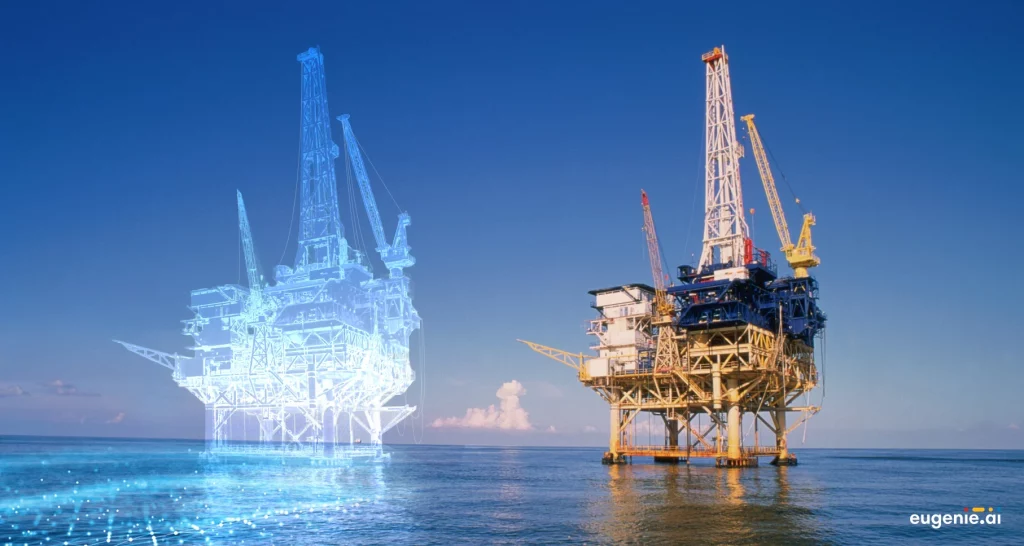
A 3D model shows what an asset looks like. A digital twin should receive current data from actual equipment and reflect its condition: temperature, pressure, vibration, energy use, load and wear.
With sufficient high-quality data, the system can detect anomalies, calculate failure probability and suggest when equipment needs servicing. Engineers gain a decision-making tool rather than just an image of a machine.
Ruslan Omarov, Softprom’s Head of Cloud & AI, presented one possible architecture at AWS Cloud & AI Day in Astana.
AWS IoT SiteWise collects equipment data, IoT TwinMaker connects it to a virtual model, S3 stores engineering documentation and CAD files, and models accessed through Amazon Bedrock can generate summaries and answers for engineers.
Softprom estimates that using existing CAD and BIM models can reduce development of a basic twin from several months to several weeks. Launch speed depends on more than software, however. If an enterprise lacks sensors, consistent reference data and reliable maintenance history, a 3D model alone is insufficient.
Where digital twins could work in Kazakhstan
One clear use case is monitoring extensive infrastructure.
Roads can be surveyed using lidar and cameras to record pavement, markings, barriers and signs. A similar approach applies to railway tracks, bridges and overhead line supports.
According to Softprom’s presentation, lidar surveys can create point clouds accurate to five centimeters. This information can be combined with maintenance, traffic and asset condition data.
A digital road model becomes a fully functional twin only when it is regularly updated and used in workflows, for example automatically detecting a damaged section and helping prioritize repairs.
AI projects that have shown results
Softprom’s presentation describes several projects involving computer vision, voice bots and production data analysis.
In one agricultural case, cameras recorded grain spillage during combine unloading. A computer vision model processed the images and identified episodes of crop loss. The model could be retrained as new examples became available.
In another project, a voice bot handled retail employees’ routine issues with cash registers, scanners and access permissions. Softprom says the bot could resolve 40–55% of those requests independently.
Another system transcribed and analyzed a distributor’s sales calls. The presentation claims a roughly 30% reduction in quality control costs and a 10–15% increase in sales.
However, the clients, implementation costs and measurement periods are not disclosed. These figures should therefore be treated as the solution provider’s data rather than independent effectiveness assessments.
A public case study, but not a digital twin
The most transparent Kazakhstani example in the presentation concerns retail rather than industry.
Beauty retailer MonAmie introduced personalized product recommendations using Amazon Personalize. Previously, website visitors saw the same offers regardless of purchasing history or interests.
According to the case study published by AWS, online store revenue increased by 14% after implementation. Average order value increased by the same amount, while the number of users interacting with recommendations rose by 200%.
This is a documented example of AI’s economic impact in Kazakhstan. It would be incorrect to call it a digital twin, however: a recommendation system does not create a virtual counterpart of a physical asset.
This distinction matters because providers often group very different technologies, from chatbots to power station models, under the broad term “digitization.”
Promises must be separated from project economics
Softprom’s materials also give industry benchmarks: productivity gains of up to 15%, downtime reductions of around 30%, equipment lifespan increases of up to 50% and payback in less than a year.
The presentation does not specify the calculation methods, enterprise sample or particular projects behind these figures. They cannot therefore be transferred into a Kazakhstani company’s business plan without further verification.
Results depend on equipment costs, source data quality, accident and downtime frequency, and whether analytics are embedded in actual production workflows.
If a system warns of a possible breakdown but the enterprise does not change its maintenance schedule, there will be no economic benefit.
Where businesses should start with a digital twin
The first step should be identifying a specific problem—unplanned downtime, excess energy use, defects, raw material losses or costly repairs—before purchasing a platform or creating an attractive visualization.
The company can then audit its data and select one asset for a pilot: a machine, production line, pumping station or infrastructure section.
Baseline indicators must be recorded before launch: downtime duration, accident count, maintenance costs and losses. Only then can the pilot’s measurable impact be assessed.
Cybersecurity is a separate issue. The more industrial equipment is connected to a unified system, the more serious the consequences of an attack or data leak. Access rights, information storage and production network segmentation should therefore be designed alongside the twin itself.
The main risk: a digital twin built for a report
The 60% target could accelerate the market. It could also generate dozens of nominal projects created solely to meet a plan.
An organization can draw a 3D workshop, connect a few sensors and call it a digital twin. It may look convincing in a presentation. Its actual value emerges only when it prevents an accident, reduces downtime or cuts production costs.
By 2029, the state and businesses will therefore need to count more than enterprises with digital twins. The more consequential question is how much money these systems saved and how many accidents they helped prevent.
That measure will distinguish a functioning digital industry from another attractive image in a report.