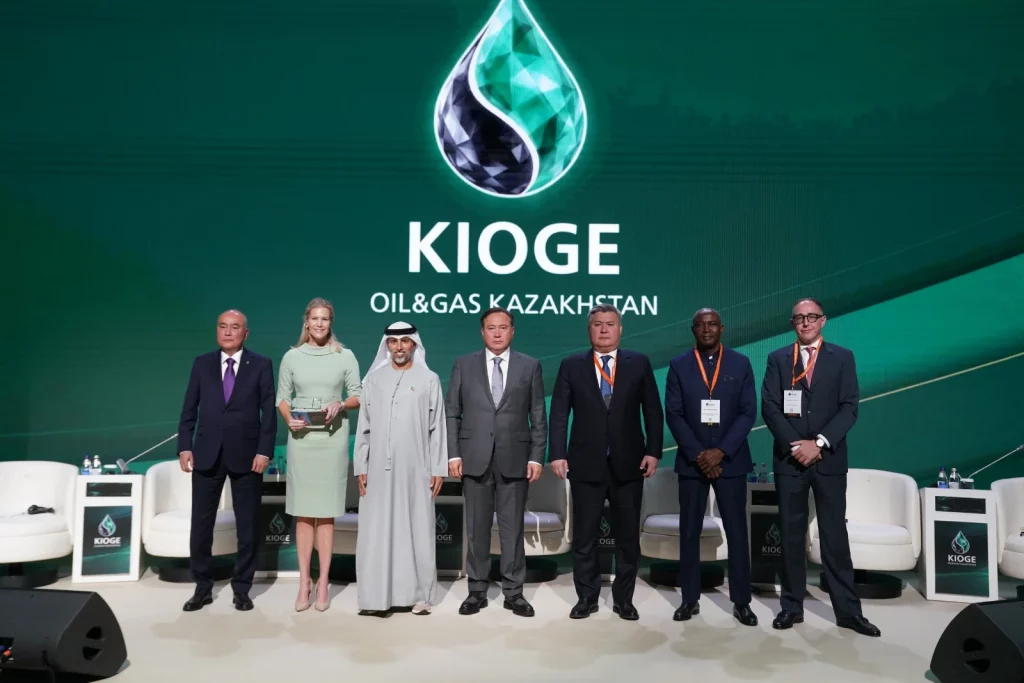
Kazakhstan intends to substantially expand domestic manufacturing of machinery and equipment for the oil and gas sector, foster local engineering capabilities, and attract advanced processing technologies for hydrocarbons. These strategic priorities were outlined by Vice Minister of Energy Yerlan Akbarov on September 30 during the international KIOGE-2026 exhibition and conference in Almaty.
To incentivize domestic industrial enterprises, the ministry proposed long-term procurement mechanisms — notably five- and ten-year off-take contracts. Such binding agreements provide guaranteed demand forecasts, granting manufacturers the confidence required to invest in high-precision tooling, specialized personnel training, and production expansion.
According to the Ministry of Energy, domestic equipment builders are expected to maintain competitive pricing, rigorous quality control, and strict delivery schedules in return. Genuine localization must be measured through fully operational manufacturing plants, skilled industrial jobs, and retained engineering expertise.
Long-Term Off-Take Contracts as the Catalyst for Production
The landmark KIOGE-2026 exhibition took place from September 30 to October 2 in Almaty. Addressing industry delegates, Akbarov identified four fundamental pillars for developing the country’s fuel and energy complex: exploration of deep geological horizons to replenish reserves, enhancing oil recovery across mature fields, localizing high-tech equipment manufacturing, and deepening petrochemical processing.
In equipment manufacturing, the government aims to pivot from isolated spot purchases toward predictable, multi-year state and operator contracts. For domestic manufacturers, off-take commitments de-risk long-term capital investments, while allowing subsoil operators to establish secure, localized supply chains resilient against global supply disruptions.
Exploration Drives Demand for Advanced Equipment and Services
Domestic energy priorities are increasingly focused on complex, deep-strata geological exploration. Tapping deeper formations necessitates heavy-duty drilling rigs, high-pressure subsea valves, intelligent downhole tools, and high-spec tubular goods.
Without localized production, energy operators remain reliant on expensive international imports, exposing domestic extraction to currency volatility and logistics bottlenecks. Expanding domestic production creates substantial spillover demand across metallurgy, specialized chemistry, and precision mechanics.
Artificial Intelligence: 45 Active Projects and Smart Well Monitoring
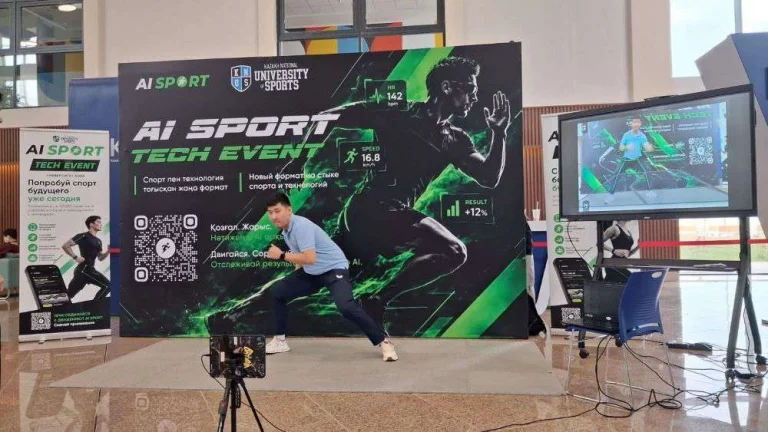
Digitalization and artificial intelligence are becoming central to national energy policy. Across Kazakhstan’s energy assets, 45 digital and AI-driven initiatives are currently undergoing active implementation.
Key applications include automated field monitoring, real-time well diagnostics, predictive maintenance algorithms for refining equipment, and smart seismic modeling. Deploying AI across mature fields mitigates output decline by optimizing pump operations and preventing catastrophic hardware failures.
Which Industrial Competencies Must Remain in Kazakhstan
Akbarov emphasized that localization should not be reduced to superficial assembly or label-swapping. Sustainable industrial value requires localizing proprietary design engineering, high-tolerance machining, thermal metal treatment, and technical certification.
Establishing localized testing facilities and internationally accredited laboratory standards is essential to qualify Kazakhstani manufacturers for mega-projects such as Tengiz, Kashagan, and Karachaganak. The long-term objective is transforming domestic producers from local suppliers into competitive regional exporters of energy equipment.