American defense technology leader Anduril Industries secured $5 billion in its latest funding round, catapulting the enterprise to a landmark $61 billion valuation. For a business engineering autonomous military drones, command-and-control software, and border surveillance systems, this massive round represents an institutional investor wager on disrupting the entrenched defense industrial base.
Anduril is already embedded in major procurement programs with the US Army and US Air Force. In September, its autonomous jet-powered combat drone, the YFQ-44A Fury, was officially transferred to an experimental Air Force squadron for operational evaluation. However, an immense operational chasm lies between experimental flight testing, multi-year production frameworks, and actual revenue realization from mass manufacturing.
Drones, Sensors, and the Lattice Operating System
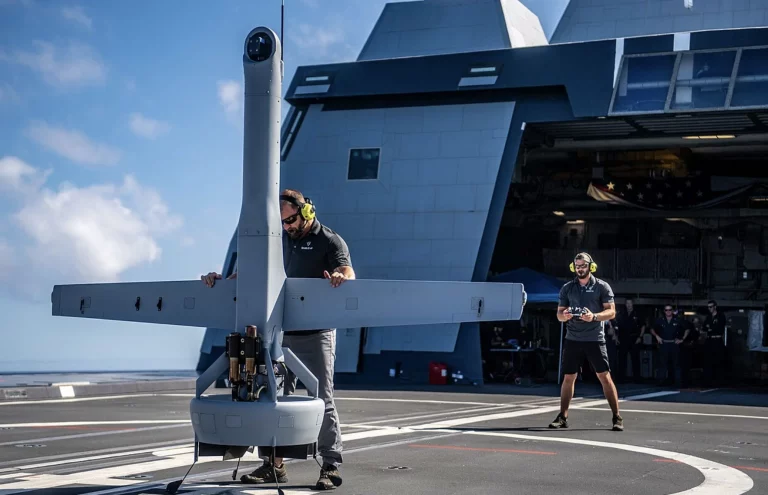
Founded in 2017 by Palmer Luckey, Trae Stephens, and Brian Schimpf, Anduril engineers autonomous aerial, surface, and subsea defense systems. Central to its competitive moat is Lattice: an open software platform that ingests raw telemetry from distributed sensors across land, sea, and air, employing computer vision and machine learning to build an integrated common operating picture for military commanders.
This software-first architecture enables Anduril to sell defense customers unified operational systems rather than disconnected hardware. Armed forces procure hardware, sensor integration, software licensing, and automated maintenance under singular modular contracts.
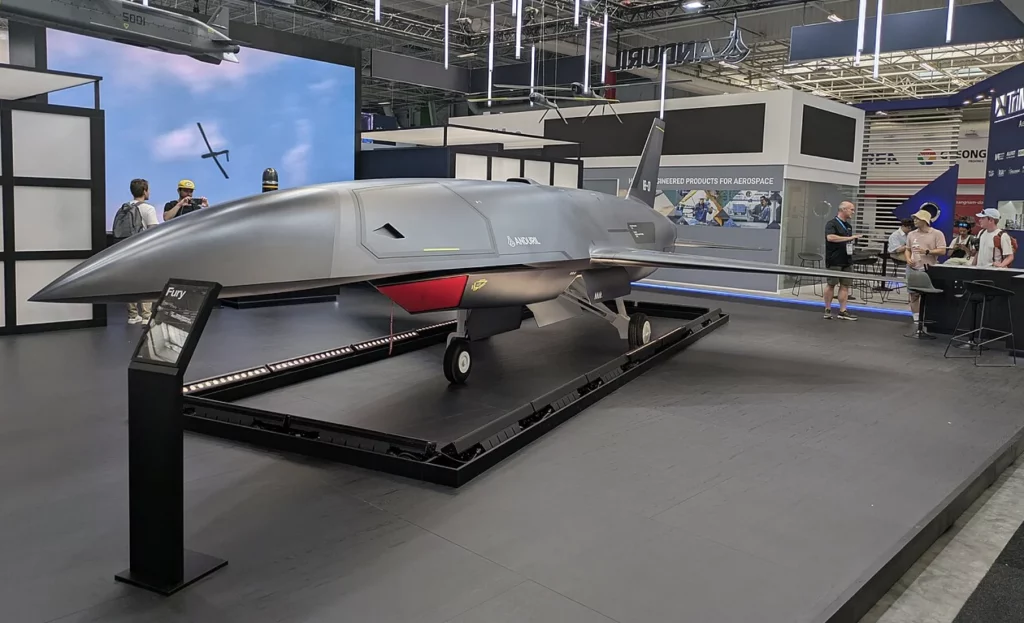
Among Anduril’s most prominent aerospace developments is the Fury, an autonomous jet engineered for the US Air Force’s Collaborative Combat Aircraft (CCA) program, designed to fly as an AI “loyal wingman” alongside manned fighter jets like the F-35.
Secured Military Contracts and Enterprise Scale
In June 2026, the US Air Force selected two prime contractors for Phase 1 of the CCA development and production program: Anduril and General Atomics. This was an unprecedented victory for a venture-backed tech firm against legacy prime contractors.
In September, the Air Force deployed the Fury to an experimental operational unit at Creech Air Force Base alongside General Atomics’ prototype to evaluate real-world tactics. Another testament to Anduril’s scale is its ten-year US Army framework contract announced in March, carrying an authorized ceiling of up to $20 billion. In September, the Army also awarded Anduril $65 million for production related to the TITAN tactical intelligence ground station.
What Anduril Must Prove to Defend Its Valuation
The next chapter of growth demands industrial-scale mass manufacturing. Anduril is aggressively constructing its Arsenal-1 manufacturing hub in Ohio, aiming to produce military hardware in software-like rapid iterations. The company’s ultimate success will hinge on production ramp speeds, military reliability standards, and converting ceiling limits into firm annual procurement line items.
The $61 billion valuation reflects sky-high investor optimism that software-defined autonomy will capture the future of modern defense. While Anduril has indisputably disrupted the Pentagon’s procurement paradigms, translating testing milestones into durable, high-margin cash flow remains the true test.