Meta’s engineering leadership has published technical architecture details for the initial deployment phase of its Prometheus supercluster in New Albany, Ohio (engineering.fb.com). According to the engineering release, the operational compute fabric has already trained the multimodal Muse foundation model family across distributed pretraining and reinforcement learning workflows.
Current Capacity and Target Scale Roadmap
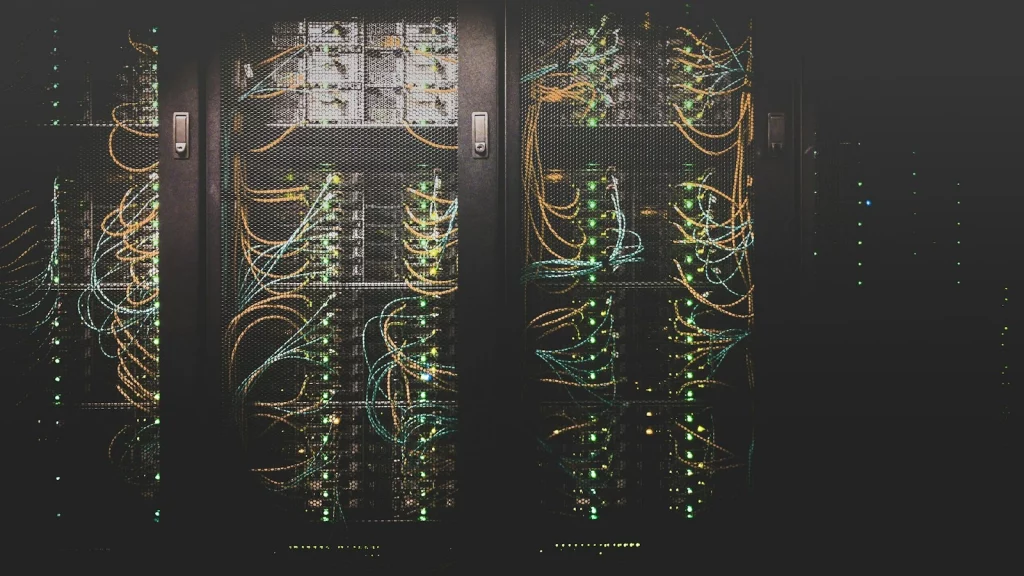
The operational facility currently harnesses hundreds of thousands of GPUs. Meta highlighted that the widely cited milestone of approximately one million accelerators represents the ultimate target scale rather than current operational capacity (engineering.fb.com). Compute nodes are constructed upon NVIDIA GB200 and GB300 NVL72 architectures. To address intense thermal density, the datacenter integrates direct-to-chip liquid cooling systems, while dedicated high-bandwidth optical networks interconnect campus buildings.
Training Goodput and Fault Resilience Mechanisms
Meta reported that training the flagship Muse Wonder model achieved effective compute utilization above 85 percent during pretraining and topped 90 percent during reinforcement learning stages. These efficiency figures represent internal vendor telemetry without independent external validation. To mitigate unavoidable hardware interruptions, Prometheus uses in-rack spare GPUs, automated distributed checkpointing, and dynamic node isolation protocols that prevent compute job restarts during component faults (engineering.fb.com).
Broader Implications for Scaled AI Systems
Gigawatt-scale compute complexes empower research teams to deploy higher parameter architectures and expand long-context memory. The international expansion of compute capacity has direct career touchpoints, as detailed when From 1,000 Cold Messages to Amazon AWS: How a Kazakhstani Specialist Negotiates Hyperscale Data Centers examined datacenter procurement. Meanwhile, academic algorithms advance regionally as Astana Hub and Ghent University Announce Joint AI and Mathematics Lab at Alem.ai for collaborative mathematics projects.
Deployment Horizon and Regional Availability
Engineering teams will continue expanding the Ohio cluster according to phased facility schedules (engineering.fb.com). Meta provided no release timelines for localized access in Central Asia or pricing adjustments for commercial APIs.