TikTok is launching a dedicated educational initiative on the responsible use of artificial intelligence for users across Kazakhstan. Concurrently, the platform is stepping up automated enforcement against botnets and commercial accounts generating and disseminating mass AI-fabricated content.
The company aims to integrate multiple layers of defense: educating users on identifying synthetic video and audio, detecting automated networks producing AI spam, and improving cryptographic provenance labeling for media generated or substantively altered by generative models.
TikTok Targets Botnets and Mass AI Spam Networks
While generative artificial intelligence has drastically streamlined digital media creation, it has also fueled a surge in automated digital pollution: cookie-cutter videos, sensationalist fake news, dubious financial get-rich-quick schemes, and unverified medical advice.
TikTok has begun testing enhanced detection algorithms targeting clusters of coordinated accounts specializing in mass-publishing synthetic clickbait. Heightened enforcement is being deployed across sensitive verticals affecting public safety and civil trust:
- Politics, public elections, and current civic events;
- Personal finance, fraudulent crypto trading, and speculative investments;
- Healthcare, pharmacological advice, and synthetic medical endorsements;
- Public welfare schemes, civil disasters, and state subsidies.
Under updated community guidelines, accounts orchestrating coordinated synthetic campaigns will face algorithmic de-ranking, shadow penalties, demonetization, or permanent domain suspensions.
C2PA Cryptographic Watermarking and Automated AI Tags
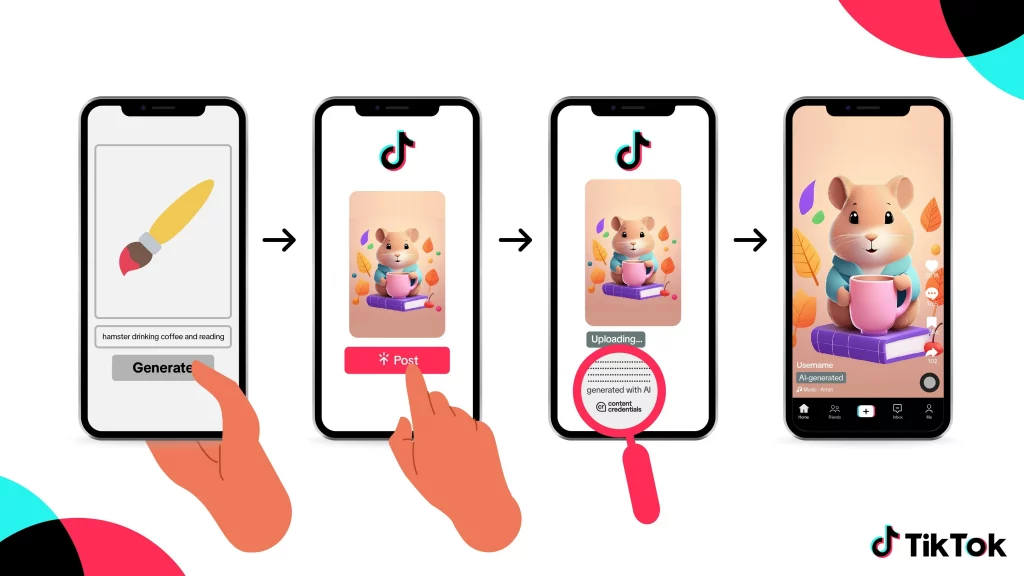
A central pillar of the initiative is expanding technical provenance standards. TikTok has joined the Steering Committee of the Coalition for Content Provenance and Authenticity (C2PA) and began embedding Content Credentials metadata into media created on its platform.
When an image, video, or audio file created or altered via generative AI tools is uploaded to TikTok, the system inspects its embedded cryptographic metadata. If cryptographic C2PA markers are found, the platform automatically affixes an “AI-generated” tag visible directly in the interface.
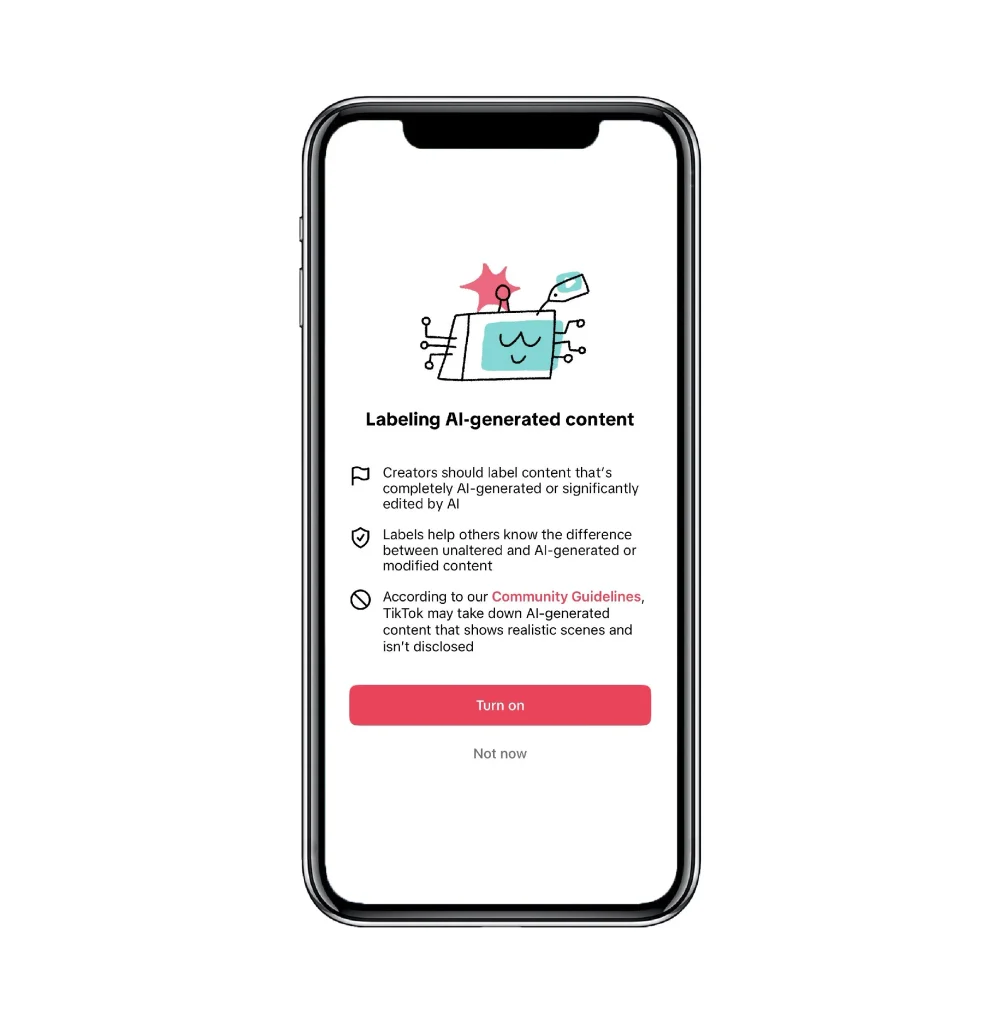
Crucially, this automated labeling operates even if the uploader neglected to declare the content as artificial. The cryptographic metadata remains resilient through content sharing and downloads, preserving transparency across third-party social networks.
Educational Media Hub for Kazakhstani Users
Beyond automated filters, TikTok is deploying localized educational modules within Kazakhstan. An interactive literacy hub has been embedded into search queries related to neural networks and artificial intelligence, teaching users:
- How to spot telltale deepfake artifacts in lip-syncing and lighting;
- Visual clues in hands, jewelry, shadows, and vocal pitch that reveal AI generation;
- Best practices for verifying primary journalistic sources and news origins;
- Why hyper-realistic production quality cannot be treated as proof of truth;
- Guidelines for responsible and ethical content generation using creative AI tools.
The curriculum was crafted in collaboration with the National Association for Media Literacy Education (NAMLE) and independent AI ethics researchers. Since late 2025, educational organizations participating in TikTok’s media integrity initiative have accumulated over 200 million views, backed by more than $4 million in company grant commitments.
Feed Customization: Giving Users Control Over AI Content
In parallel, TikTok is piloting custom preference toggles allowing users to modulate the density of synthetic content appearing in their ‘For You’ feeds.
Positioned within the Manage Topics menu, the tool lets viewers request more or less AI-generated content. While it does not provide an absolute toggle to erase synthetic videos entirely, it drastically shifts algorithmic recommendation frequencies according to user taste.
Why AI Media Literacy is Critical for Kazakhstan
In Kazakhstan, artificial intelligence literacy has become a matter of pressing urgency as generative tools spread rapidly across students, SMEs, government bodies, and social creators.
Short-form video serves as the primary news and lifestyle conduit for millions of citizens. A user encountering an AI-generated clone of a prominent political leader, a simulated medical doctor, or an investment pitch from a known business executive can easily fall victim to social engineering if not trained to evaluate synthetic indicators.
Mandatory labeling and cryptographic verification are crucial guards against targeted deepfakes engineered for financial fraud, election manipulation, and reputational attacks. TikTok’s evolving ecosystem demonstrates how platform governance is shifting from reactive tagging to systemic cryptographic provenance, botnet tracking, and public education.
Official sources: TikTok Newsroom and Coalition for Content Provenance and Authenticity (C2PA).