Illustration: AI
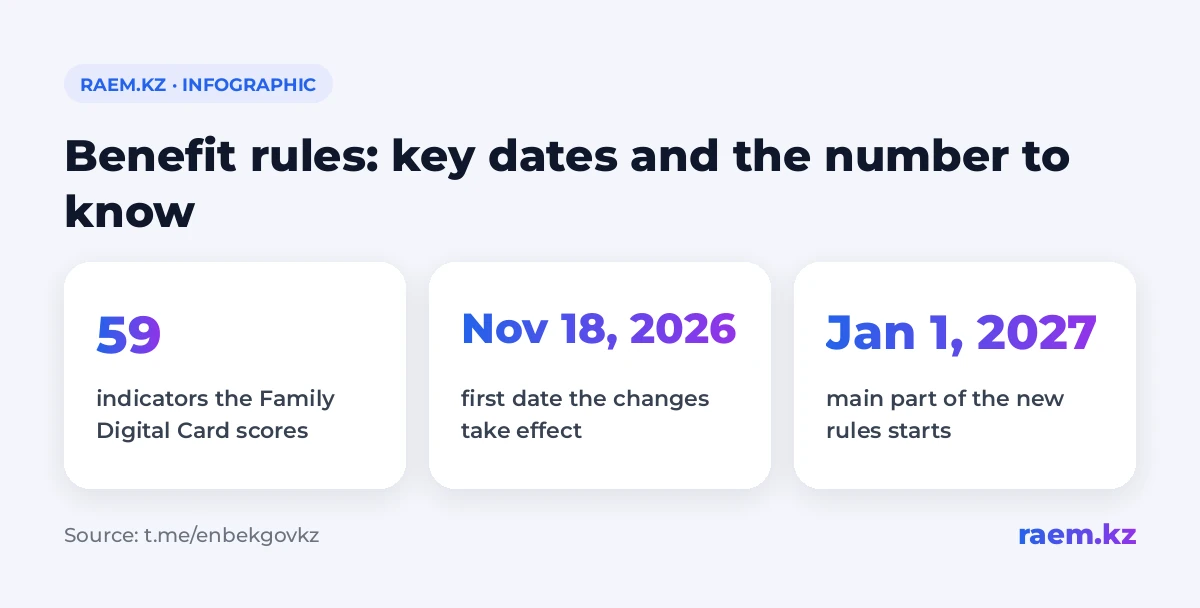
Kazakhstan will assess family wellbeing, including loan information, when awarding certain family benefits (inbusiness.kz). Having a loan does not automatically mean payments will stop. The Ministry of Labour explains that the Digital Family Card assesses a family’s circumstances using 59 indicators and recalculates the result every month. The main changes to the rules take effect on 1 January 2027.
Which benefits the changes affect
The labour minister’s Order No. 431, dated 30 October 2026, changes the rules for awarding four types of benefits: childbirth benefits, childcare benefits, benefits for large families and benefits for mothers who hold state honours.
Each benefit has its own eligibility requirements. Changes to the shared set of rules do not mean the grounds for refusal will become the same for all recipients.
How a family’s circumstances will be assessed
The Digital Family Card collects information from government information systems. According to the Ministry of Labour, it analyses 59 indicators across eight areas, including family composition and income (t.me/enbekgovkz). The assessment also takes the family’s assets and loan obligations into account.
The system uses this information to build a digital family profile. The data updates automatically, and the family’s wellbeing level is recalculated every month. The assessment can change as the family’s circumstances change.
Here’s an important detail: two families with the same income are not necessarily in the same position. The system assesses several aspects of their lives. We explained how the Digital Family Card works in a separate article.
What loan information will be considered
When applying for a benefit, applicants will need to consent to the processing of information, including confidential banking information. The list includes:
- total outstanding loan debt;
- monthly payment amounts;
- overdue payments;
- remaining loan payments.
This information helps assess the family’s financial burden. A loan alone does not mean an automatic refusal: the decision depends on the overall assessment of the family’s circumstances.
A separate article explains how banks will share information about families’ accounts for social assistance decisions. When applying for a benefit, check what information the consent covers.
When the new rules take effect
The order sets two dates for the changes to take effect: 18 November 2026 and 1 January 2027. Most changes will take effect in January, with some provisions coming into force earlier.
So the entire new system will not take effect at once on 18 November. As of 12 November 2026, both dates are still ahead.
What families should check before applying
The digital assessment takes family composition and income into account. Information about assets and loan obligations also matters. Errors could affect the family’s wellbeing category and the decision on benefit payments.
If you receive a benefit or plan to apply, check that this information is up to date. Start with anything that has changed recently, such as your family composition or loan payment amount.
Put simply
Having a loan does not, by itself, mean losing a benefit. Certain payments will take into account an overall assessment of the family’s circumstances, which the system updates monthly. Check your family’s information now, and read the consent to its processing carefully when you apply.