
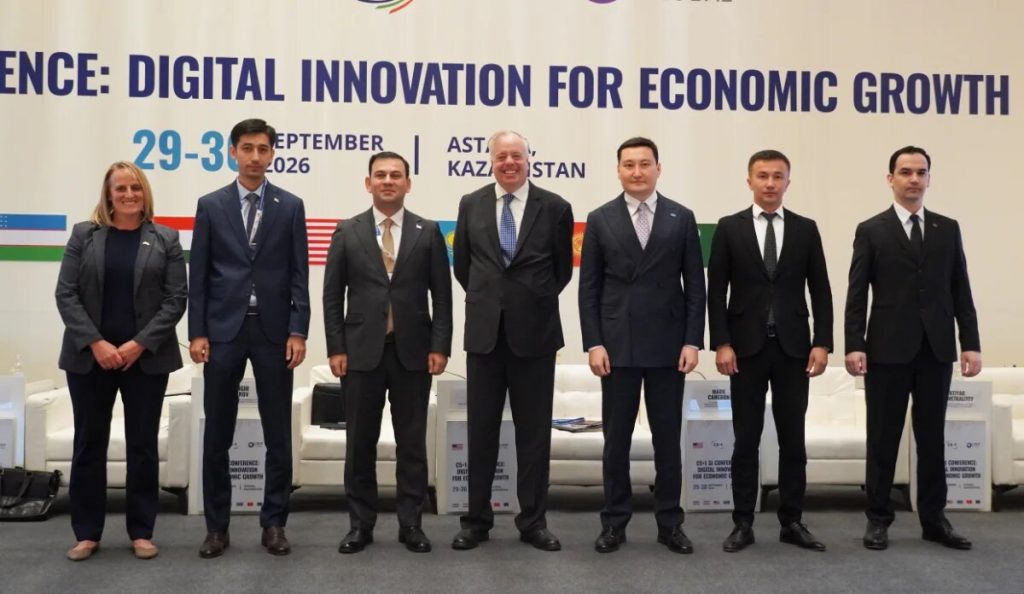
A two-day C5+1 SI Conference opened in Astana on September 29. Representatives of the five Central Asian countries and the United States are discussing cooperation in artificial intelligence, data centers, digital infrastructure and cybersecurity.
At the conference, US State Department representative Mark Cameron announced a commitment to provide $5 million through CRDF Global to support cybersecurity and Central Asia’s digital sector. He said the program would cover critical infrastructure protection, cyber incident response and financial sector security. The distribution of funding among the countries has not yet been published.
Why the region needs a shared AI agenda
C5+1 brings together Kazakhstan, Kyrgyzstan, Tajikistan, Turkmenistan, Uzbekistan and the United States. The format has operated since 2015. The current meeting focuses on technology: participants are exploring joint projects, investment and cooperation with American companies.
Central Asian countries have their own AI development strategies, but training and deploying models requires computing capacity, reliable connectivity, data, electricity and specialists. At the conference, Kazakhstan’s Deputy Minister of Artificial Intelligence and Digital Development Bakhtiyar Mukhametkaliyev identified energy and water, access to chips and GPUs, information systems and high-quality data as the essential foundations of an AI economy. In his assessment, deploying AI services without this infrastructure may fail to deliver the expected economic benefits.
Tajikistan presented plans to develop data centers powered by green energy and proposed establishing a regional AI development center. This remains a proposal rather than an approved joint C5+1 project.
What agreements already exist
Technology featured in C5+1 documents before the current conference. In a published joint statement of intent, the countries agreed to promote IT startups and access to venture capital and international markets. Separate provisions address AI research and education, data centers, telecommunications, digital public services and cyber resilience.
The statement sets out areas of cooperation but does not list completed data centers or jointly launched AI products. The Astana conference is intended to help turn that broad agenda into specific partnerships. As of September 29, its final document and a list of newly signed projects had not been released; the meeting continues on September 30.
For Kazakhstan, the practical interest lies in investment in computing infrastructure, protection of digital systems and access for technology companies to partners in the United States and neighboring countries. The conference’s results can be assessed through subsequent announcements: which projects receive funding, where new capacity is built and which companies undertake implementation.