Valuation Date: March 2026
Sector: Industrial Bipedal Logistics Robotics, Intralogistics Warehouse Automation, RaaS (Robot-as-a-Service).
Target Asset: Agility Robotics Inc. (USA, Corvallis / Salem, Oregon).
Flagship Hardware Platform: Digit v4 (Bipedal Mobile Manipulator).
Executive Snapshot & Valuation Triangulation
| KEY TAKEAWAY |
|---|
| Agility Robotics is the world’s most commercially advanced bipedal robotics company, transitioning from experimental laboratory prototypes to serial industrial deployment inside tier-1 corporate logistics hubs. Backed by the Amazon Industrial Innovation Fund, DCVC, Playground Global, and M12 (Microsoft), Agility built RoboFab in Salem, Oregon — the world’s first mass-manufacturing factory dedicated exclusively to humanoid robots, with an annual design capacity of up to 10,000 units. Having piloted Digit across Amazon fulfillment centers and GXO Logistics facilities, Agility represents the vanguard of practical, non-gimmick physical labor automation. |
1.1. Core Hardware Architecture: Digit v4
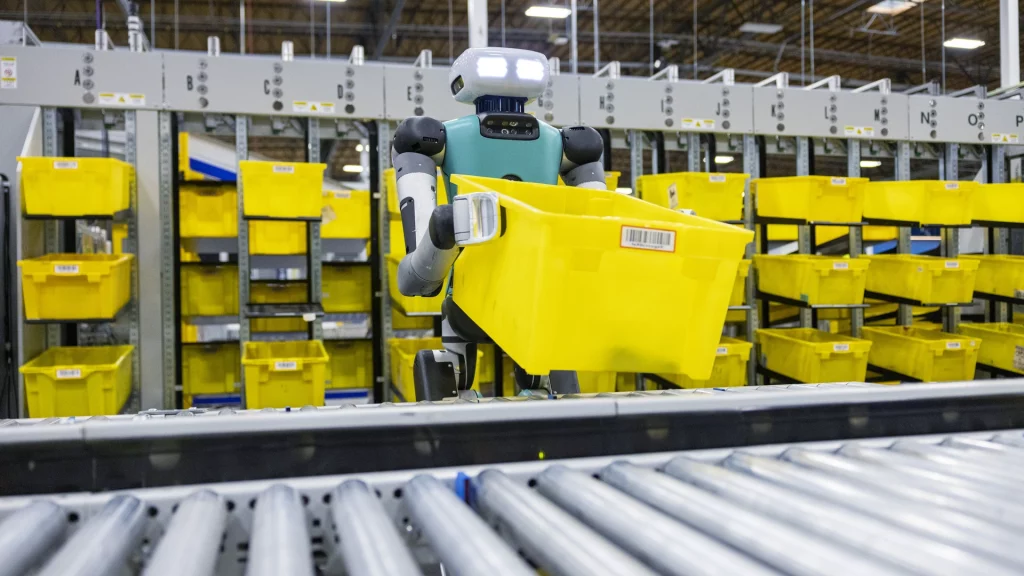
- Digit v4: A bipedal mobile manipulator designed specifically for backwards-compatible warehouse workflows (tote movement, conveyor unloading, and shelf picking).
- Form Factor Advantage: Backward-curving legs inspired by cursorial birds allow Digit to step over obstacles, climb stairs, and crouch into tight pallet racking where wheeled AMRs (autonomous mobile robots) cannot navigate.
- Payload & Battery: Carries standard plastic tote bins weighing up to 16 kg (35 lbs), with hot-swappable batteries enabling continuous multi-shift operations.
1.2. Valuation Triangulation Scenarios
| Valuation Scenario | Enterprise Valuation | Implied Multiples | Operational Milestones |
|---|---|---|---|
| Conservative Floor (CapEx Multiple) | $1.5 – $2.0 Billion | 12× Forward Revenue | 500 active Digits deployed across Amazon and GXO logistics sites |
| Base Case (Pre-IPO Growth Target) | $2.8 – $3.8 Billion | 18× – 22× Forward Revenue | RoboFab scaling to 2,500 units/year; expansion to automotive parts handling |
| Bull Case (Market Debut Target) | $5.0+ Billion | 30× Forward Revenue | Fleet deployment exceeding 10,000 robots; full multi-tenant RaaS fleet adoption |
Triangulated Comparable Transactions (Comps)
| Company | Status / Backers | Valuation | Strategic Takeaway for Agility |
|---|---|---|---|
| Symbotic (SYM) | Public (NASDAQ) / SoftBank, Walmart | ~$15 – $20 Billion | Proves public market appetite for multi-billion warehouse automation contracts |
| Figure AI | Private ($675M Series B) / NVIDIA, OpenAI | $2.6B – $10B+ | Figure targets general humanoid dexterity; Agility wins on ruggedized, immediate warehouse tote handling |
| Kiva Systems (Amazon) | Acquired by Amazon ($775M in 2012) | M&A Benchmark | Amazon’s equity stake in Agility hints at potential long-term acquisition interest |
Value Drivers and RaaS Economics
- Robot-as-a-Service (RaaS) Recurring Revenue: Instead of selling robots as one-off capital expenditures ($150,000+), Agility packages Digit under RaaS subscriptions ($25–$30/hour equivalent), displacing high-turnover human warehouse labor ($35+/hr loaded cost) with predictable operational margins.
- RoboFab Manufacturing Advantage: Owning a dedicated manufacturing facility in Oregon gives Agility proprietary control over bill-of-materials (BOM) cost reduction and quality assurance.
- Agility Arc Cloud Fleet Management: Centralized orchestration software that integrates Digit fleets directly into standard warehouse management systems (SAP, Manhattan Associates, Blue Yonder).
Risk Audit & Due Diligence Red Flags
- Customer Concentration Risk: Heavy strategic dependence on Amazon and GXO Logistics leaves Agility vulnerable if either partner modifies automation procurement roadmaps.
- Limited Manipulation Dexterity: Digit features paddle-like grippers optimized for totes, limiting its utility for fine picking of irregular individual items without hardware retrofits.
- Reliability Under 24/7 Wear: Mechanical wear on leg joints, gearboxes, and harmonic reducers during grueling 3-shift factory cycles requires robust preventative maintenance networks.