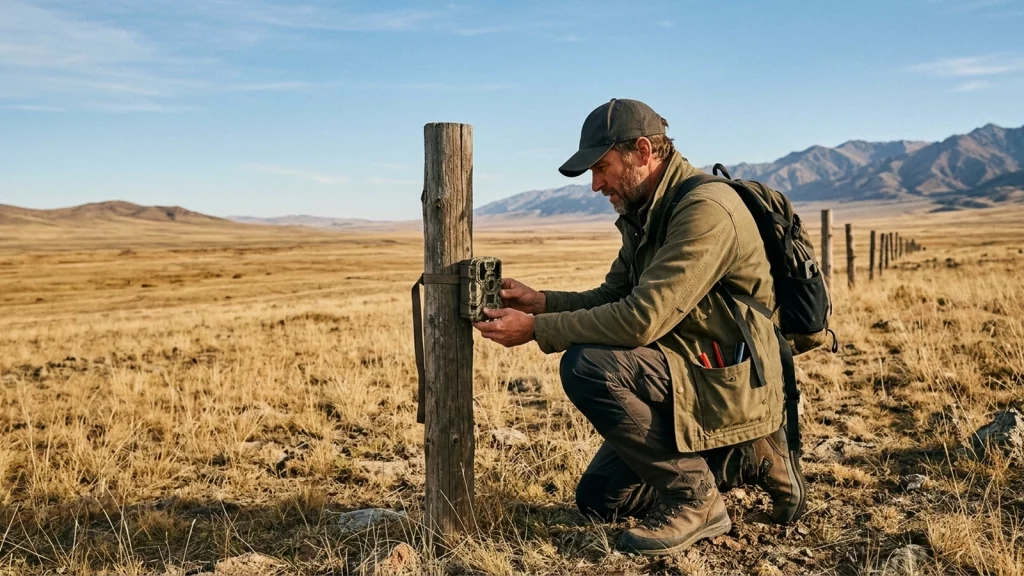
Researchers working in Kazakhstan can apply for up to £7,000 for a first small conservation project through Rufford Small Grants. Kazakhstan appears explicitly on The Rufford Foundation’s eligible-country list. Applications are accepted throughout the year, so an applicant preparing a proposal in autumn 2026 does not need to wait for a single annual competition deadline. apply.ruffordsmallgrants.org.
The programme focuses on people at an early stage of their conservation careers. Its central concern is the practical relationship between collecting evidence and protecting species or habitats. Funding must be received and managed by an organisation rather than paid into the researcher’s personal account. apply.ruffordsmallgrants.org.
Finding that organisation is an early preparation task for an applicant in Kazakhstan.
What a first applicant can request
The initial award, the 1st Rufford Small Grant, is capped at £7,000. The often-mentioned £18,000 ceiling belongs to the final funding stage, not a first application. The intermediate stages are a second grant of up to £8,000 and a Booster Grant of up to £12,000. Further applications depend on completing earlier work and reporting; progression is not automatic. apply.ruffordsmallgrants.org.
Build the proposal around the result that the first grant can deliver independently. Separating a workable fieldwork phase from a larger research ambition makes it easier to explain the resources needed. Potential support at later stages should not be treated as money already available to the project.
Who meets the career criteria
Priority goes to people undertaking an MSc or PhD, or who completed those studies within the past three years. Other applicants can be considered under the general criteria, including people who changed careers and entered conservation later in life. Undergraduate students are not funded. Enrolling in postgraduate study does not automatically qualify someone who already has an extensive conservation track record as an early-career applicant. apply.ruffordsmallgrants.org.
Assess this fit before drafting a lengthy narrative. Explain education, field experience and responsibility within the team consistently. A student label cannot substitute for a clear account of who will undertake the work and why they are equipped to do it.
Kazakhstan is an eligible location
Kazakhstan is named on the official list of countries where projects qualify for support. The geographical requirement concerns the project location. For applicants based in advanced economies, the foundation also considers the project’s conservation priority and efforts to develop local conservation capacity. apply.ruffordsmallgrants.org.
There is an existing connection with work in Kazakhstan. In February 2026, the foundation published Aibat Muzbay’s project on saiga migration corridors in Ustyurt. Its proposed methods include satellite GPS tags, camera traps and spatial analysis. Findings are intended to inform authorities and regional stakeholders. These are the project’s stated plans, rather than an independently verified account of completed conservation outcomes. rufford.org.
Which projects fit the programme
Rufford supports small-scale conservation projects and pilots. Work can address individual species, threatened habitats, human–wildlife conflict or community education. Species-focused applications must meet its global conservation-status rule: species classified as Least Concern on the IUCN Red List are excluded. Unassessed species can be considered if there is evidence that they are globally threatened. apply.ruffordsmallgrants.org.
Pure research without an obvious conservation benefit is excluded. The foundation also excludes expeditions for which applicants must raise participation funds, conference or seminar attendance, and publishing books. apply.ruffordsmallgrants.org.
A scientific proposal therefore needs to explain how its information will be used: who needs the findings, and what conservation decision or action they will support.
What the budget can cover
The programme considers project and fieldwork expenses. It does not generally support salaries, international travel or publication charges. Necessary subsistence, accommodation and movement during project delivery can be considered, alongside essential payments to people such as drivers and guides. Academic fees are outside its scope. apply.ruffordsmallgrants.org.
These distinctions matter when translating a research plan into a funding request.
The official application questions require an itemised budget in sterling and the assumed exchange rate. Any equipment item costing more than £1,000 requires an explanation of its necessity and what will happen to it after the project. Cash co-funding and contributions in kind must be distinguished. apply.ruffordsmallgrants.org.
Link each proposed purchase to a particular activity and output before including it. A budget should neither accumulate equipment without a clear purpose nor omit the travel needed to perform the stated fieldwork. Calculating quantities and prices makes those inconsistencies easier to identify.
An organisation must manage the money
Arrange for an organisation, such as a conservation NGO or university, to receive and administer the grant before applying. Applicants do not have to be employed by that organisation. It can be based in another country, subject to having the necessary permissions and willingness to manage the funding. An overhead charge of up to 10% of the grant may be accepted. apply.ruffordsmallgrants.org.
The foundation ideally provides between 50% and 100% of a small project’s cost. Evidence of co-funding is required when it is not the only donor. That does not mean every first-time applicant must provide half the budget personally. Later funding stages have their own expectations concerning additional support. apply.ruffordsmallgrants.org.
Prepare the project before the form
Published application questions cover the project site, biodiversity threats, conservation importance, methods, team, stakeholders and sustainability. Applicants are asked to identify three to five outcomes, with activities, timing and indicators. They must explain permissions, including any that cannot be issued until funding is awarded. apply.ruffordsmallgrants.org.
Develop the project logic before polishing its language. Each outcome should have a way to assess progress, and each activity should have someone responsible for delivering it. Compare the timetable against the budget before submission. This often reveals whether a proposed method depends on resources that have not actually been included.
Three referees need advance notice
Three references are required in English. Referees must know the applicant personally and have read the proposal. One must be associated with an established relevant institution, one must be from the project country and one from outside it. An MSc or PhD student must include their supervisor, and applicants should not use multiple referees from the same institution. All references must arrive within 12 weeks of submission. apply.ruffordsmallgrants.org.
Agree on participation early and share the finished proposal. Applicants must not draft their own references for someone else to sign. Providing project background is acceptable, but the referee must produce the independent assessment. That distinction protects the purpose of the reference process. apply.ruffordsmallgrants.org.
The published form questions require an institutional email address rather than personal webmail. They also recommend a letterheaded document signed by the referee. apply.ruffordsmallgrants.org.
Tell referees about these conditions early so that avoidable document changes do not delay the application.
Submit and allow time for review
Applications are accepted only through the official online portal. Create an account, complete the personal profile and prepare the application in English. A started application must be submitted within 90 days. Submitted forms cannot be edited. Although there is no annual deadline, the draft has a limited lifetime. Projects that have already started are not funded. apply.ruffordsmallgrants.org.
For planning, allow up to four months for assessment, as stated in the FAQ. Rejected applicants must wait 12 months before reapplying. Recipients must provide updates and a final report, and discuss substantial project changes with the foundation before implementing them. apply.ruffordsmallgrants.org.
A concise programme summary and the official portal link are available in RAEM’s Russian-language grant directory entry Rufford Small Grants: до £7000 на природоохранный проект в Казахстане. For a comparison of support formats, RAEM’s Russian-language article $1000 на необычную экологическую идею: Awesome Foundation ждёт заявки до 27 ноября examines another small environmental funding route. Regional collaboration is discussed in the archived article Call Closed: Central Asian Climate Innovation Projects Eligible for Grants up to €80,000 via SGCIF; its closed call should not be treated as an available alternative.
The next practical step for Rufford is to establish eligibility, agree on the receiving organisation and contact referees, then assemble one achievable project with a calculated budget. Rolling applications allow these foundations to be prepared before starting the online draft.