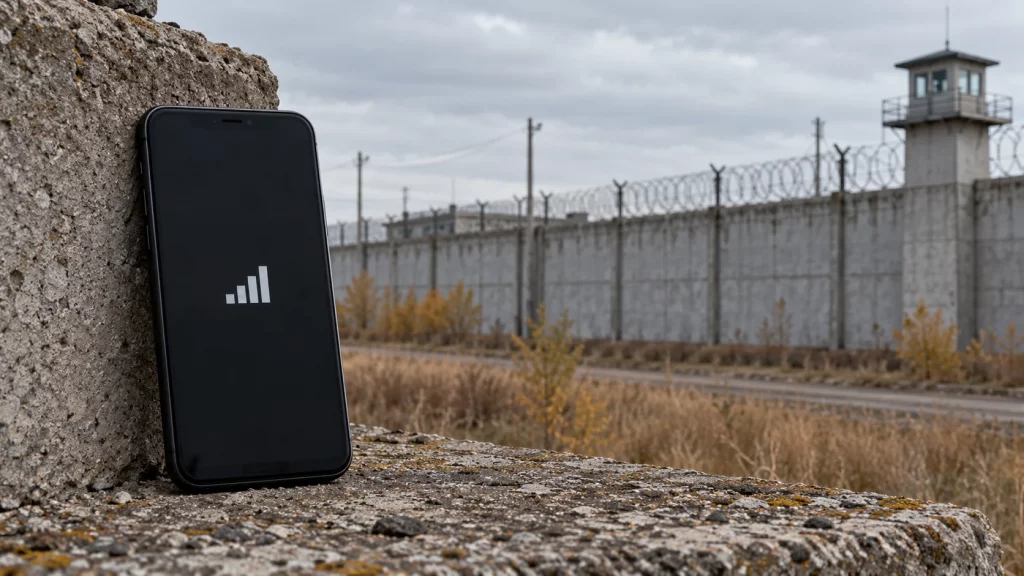
Telecom operators are typically reprimanded for poor network coverage. In Kazakhstan, however, Beeline, Kcell, and Tele2 have been fined for signal strength that was too strong — within three correctional facilities across the Kostanay region.
An inspection revealed that mobile signal levels inside the correctional facilities exceeded permitted thresholds. According to the regional prosecutor’s office, the carriers failed to comply with signal dampening and restriction requirements. All three operators have been held administratively liable.
Mobile connectivity inside prisons carries concrete security risks. Prosecutors reported an inmate who used a smartphone while incarcerated to carry out fraud exceeding 4 million tenge.
Why the Operators Were Penalized
Signal measurements were conducted jointly by prosecutors, the State Radio Frequency Service, the Department of the Penal System, and representatives of the telecommunications operators.
Violations were identified across the networks of KaR-Tel LLP (operating as Beeline), Kcell JSC, and Mobile Telecom-Service LLP (operating Tele2 and Altel). The fines were imposed under Paragraph 16, Part 1, Article 637 of the Code on Administrative Offenses. The exact fine amounts were not disclosed in the official statement.
The colloquial phrase “fined for good reception” captures the unusual nature of the case, but the statutory basis is precise: the operators failed to enforce the mandatory signal dampening required in correctional facilities.
Citing Article 97 of the Penal Code, prosecutors noted that telecommunications providers are legally obligated to optimize their radio networks and take proactive measures to suppress signal leakage within detention facilities.
Prison Fraud Exceeding 4 Million Tenge
During the investigation, mobile devices were confiscated from the inmate. The prosecutor’s office stated that criminal charges have been filed. Specific details of the scheme, victim counts, and how the phones entered the facility were not disclosed.
Prosecutors cited the case as an example of crimes perpetrated using unauthorized mobile devices inside detention facilities. The report did not specify which telecom carrier’s network the inmate was connected to.
The prosecutor’s office confirmed that regulatory inspections and enforcement to prevent illicit mobile access inside penal institutions will continue.