
Mass societal unemployment driven by artificial intelligence has not materialized. However, entry-level hiring across tech and corporate digital industries has experienced a severe freeze: junior specialists are increasingly screened out, technical support teams are downsized, and entry doors into white-collar professions are slamming shut. The greatest long-term hazard is not job loss today, but breaking the foundational talent pipeline from junior novice to future industry expert.
The Junior Squeeze: The Disappearing First Rung
In traditional corporate engineering organizations, hiring junior developers was treated as an operational investment. A junior wrote boilerplate code, fixed minor CSS bugs, documented legacy endpoints, and resolved customer support tickets. While their immediate productivity was modest, within two to three years of mentorship they matured into self-sufficient middle and senior architects.

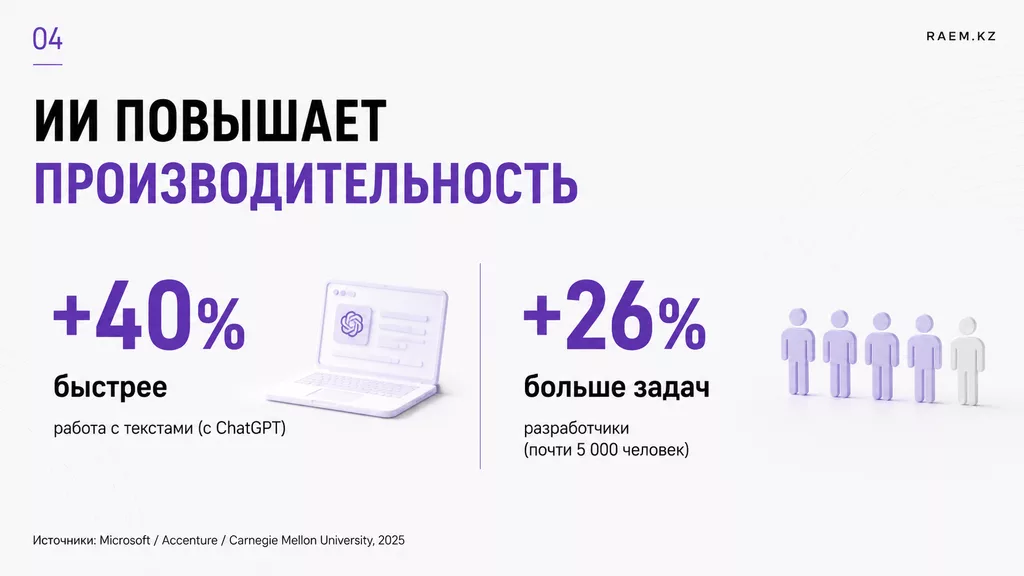
Today, generative AI tools (GitHub Copilot, Claude 3.5 Sonnet, Cursor) generate boilerplate, translate SQL queries, write unit tests, and format documentation in seconds. A single senior engineer equipped with AI assistants can produce the daily code volume formerly requiring two junior assistants.
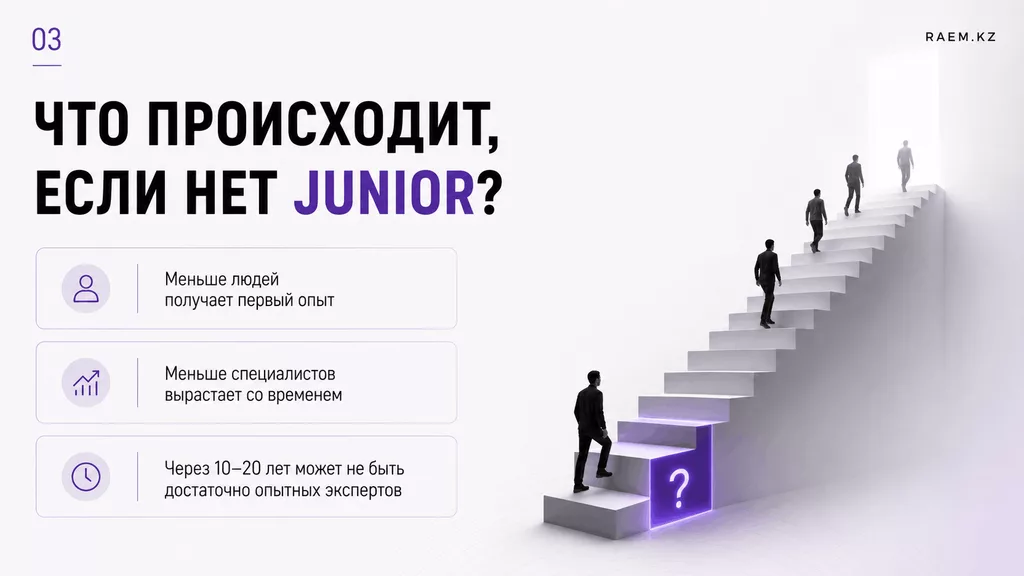
Consequently, CFOs and engineering directors view junior hiring through a purely short-term lens: Why pay salary and mentorship overhead for an entry-level worker when an enterprise AI license costs $30 per month?
The Senior Mirage: The Looming Experience Cliff
Corporate management is falling into a catastrophic systemic fallacy. While firing junior teams boosts quarterly margins, it creates a fatal talent cliff five years down the line: If no company trains juniors today, where will senior engineers come from in 2030?
Senior engineering intuition is not taught in bootcamps; it is forged by fixing hundreds of mundane bugs, observing production outages, and making mistakes under supervision. By delegating all early-career tasks to neural networks, companies are eliminating the very training ground that creates architectural mastery.

The Backlash: Re-Hiring Humans After Automation Failures
Early enterprise adopters who aggressively replaced customer service and junior QA teams with autonomous AI agents are already encountering painful blowback: brand damage from hallucinated support responses, subtle security vulnerabilities in machine-generated code, and degraded institutional memory.

Forward-thinking organizations are restructuring their hiring frameworks: instead of expecting juniors to write manual syntax, they train them as AI-orchestrators and verification auditors—verifying code correctness, testing edge cases, and supervising model outputs under senior review.
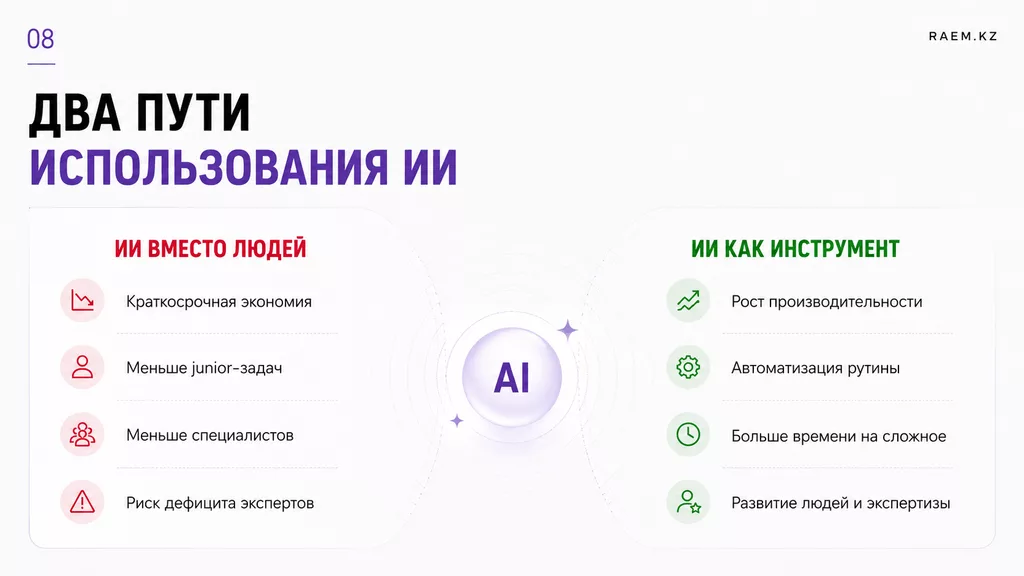
Companies that maintain deliberate junior apprentice pipelines today will monopolize the scarce senior talent pool of tomorrow, while those that completely outsourced junior roles to AI will face crippling leadership deficits.