Illustration: AI
Kazakhstan’s first state laboratory making custom orthoses using 3D technology has opened in Almaty. The project provides for devices to be made free of charge for children who need them on medical grounds, according to the Labour Ministry’s Telegram channel, enbekgovkz (t.me). Orthoses support and stabilise specific parts of the body, help correct their position and enable the movements patients need.
What happened
The laboratory was established at the National Scientific Centre for the Development of Social Protection under Kazakhstan’s Ministry of Labour and Social Protection. It will provide personalised prosthetic and orthotic care for children and adults. The facility is intended to improve access to modern rehabilitation aids.
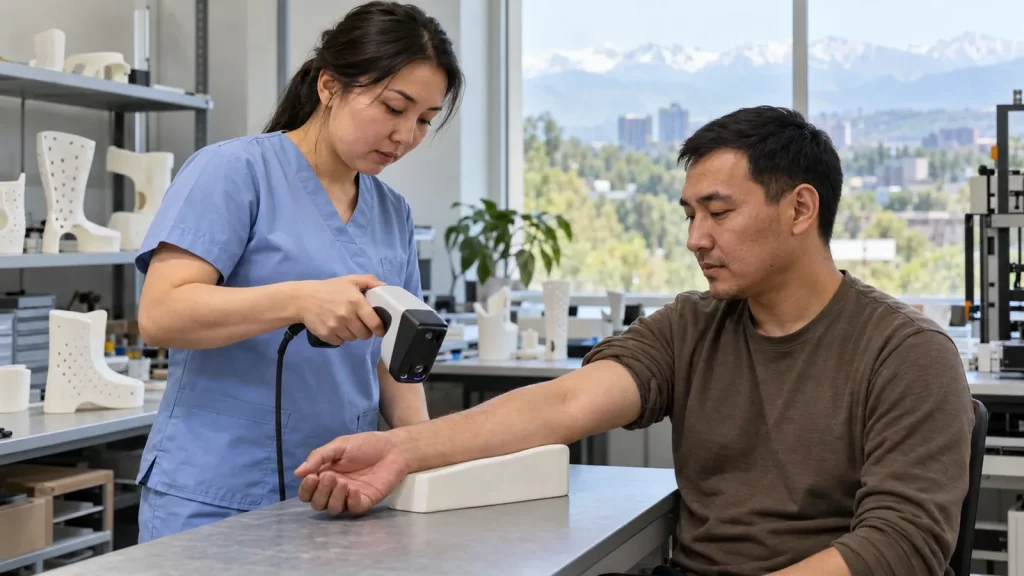
At the opening, guests were shown the full process of making an orthosis, from examining the patient and digital scanning to production and fitting. Those attending included Minister of Labour and Social Protection Askarbek Yertayev, members of the Almaty maslikhat, representatives of civil society organisations and rehabilitation specialists.
What this means for patients
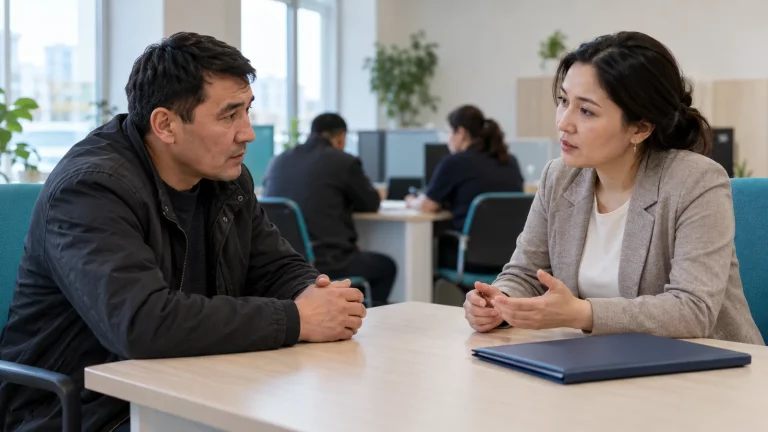
A key focus will be providing orthoses early in life for children with musculoskeletal disorders. Custom production allows each child’s anatomy and rehabilitation needs to be taken into account. Relevant specialists determine whether an orthosis is needed, how it should be designed and when it should be worn, based on the patient’s health and medical needs.
Once the device has been made, specialists fit it, check that it matches the patient’s measurements and make any necessary adjustments. The patient is then taught how to use the orthosis. Patient care also includes rehabilitation support.
How 3D technology is used
After examining the patient, specialists scan the relevant part of the body to create a digital model. They use this model to design a custom orthosis in specialised software. The design is then sent for production, where the device is made using modern equipment.
The digital approach helps account for each patient’s anatomy and improves design accuracy. If needed, the data can be saved so the design can be adjusted or the device made again later.
What else the laboratory will do
“It is important to us that modern technology helps people directly,” Askarbek Yertayev said at the opening.
The minister said the laboratory would also serve as a research and practice centre for developing new solutions and studying their effectiveness. Its establishment is linked to the objectives of Kazakhstan’s Inclusive Policy Concept for 2025–2030.