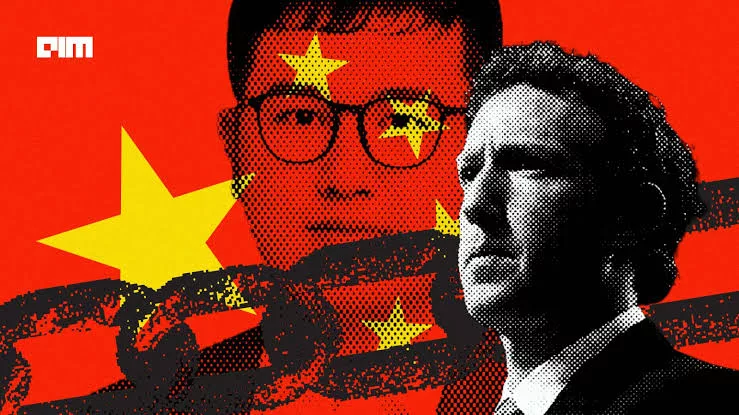
Chinese regulatory authorities have intervened to halt Meta’s acquisition of agentic AI pioneer Manus, a cross-border transaction valued in excess of $2 billion. In under eight months, Manus had grown from an obscure applied research lab into one of the world’s most sought-after autonomous workflow startups. Beijing’s veto underscores an escalating geopolitical reality: artificial intelligence models and technical talent are now treated as sovereign strategic assets that nation-states refuse to permit foreign powers to absorb.
While Western commentary frequently portrays state intervention as a novel tactic by Beijing, the United States has spent nearly a decade utilizing the Committee on Foreign Investment in the United States (CFIUS) to aggressively block or forcibly unwind cross-border technology transactions. For diplomatic and sovereign tech alignments across Eurasia, explore our investigation into Kazakhstan’s position between US and Chinese AI alliances.
Manus: Scaling a $2B+ Agentic AI Valuation in Eight Months
Founded by Chinese artificial intelligence researchers and software engineers, Manus rapidly separated itself from standard conversational LLMs by demonstrating genuine end-to-end task execution. Rather than outputting descriptive text, Manus could conduct deep financial audits, scrape complex web portals, write code, deploy test servers, and compile multi-page investment memoranda autonomously.
Recognizing the strategic value of autonomous agents, Meta moved aggressively to acquire the venture, offering a premium valuation exceeding $2 billion to integrate Manus’s reasoning architecture into Meta AI and WhatsApp business suites.
The Illusion of Singapore Relocation
Anticipating regulatory friction, Manus’s executive team attempted a playbook common among Chinese tech founders: redomiciling headquarters to Singapore, establishing international holding entities, and transitioning customer data to offshore cloud environments.
Beijing’s Cyberspace Administration and Ministry of Commerce made clear that corporate paper restructuring in Singapore does not extinguish Chinese regulatory jurisdiction. Because core algorithmic intellectual property, model weights, and primary research teams originated within mainland research clusters, the transaction fell squarely under China’s revised technology export control catalog, requiring formal state authorization that Beijing refused to grant.
Historical Symmetry: The Long Precedent of US CFIUS Blockades
Beijing’s intervention closely mirrors the regulatory apparatus Washington has maintained for years. Through CFIUS, the United States has systematically blocked Chinese entities from acquiring American technology assets, repeatedly forcing divestitures years after deals closed:
| Target Entity | Regulatory Action | Stated US National Security Rationale |
|---|---|---|
| Lattice Semiconductor | Presidential executive order blocked sale to Chinese state-backed fund in 2017 | National defense microelectronics and strategic FPGA chip supply chains |
| Grindr | Chinese owner Beijing Kunlun forced to divest ownership post-acquisition in 2019 | Exposure of sensitive user geolocation, health records, and messaging telemetry |
| PatientsLikeMe | Chinese biotech iCarbonX forced to liquidate controlling stake in 2019 | Protection of American patient genomic data, bio-samples, and machine learning models |
| Musical.ly / TikTok | Presidential divestment order issued against ByteDance in 2020 | Algorithmic influence operations and behavioral data harvesting of US citizens |
The Decoupling of Global Venture Capital and AI IP
For two decades, Silicon Valley venture capital flowed seamlessly into Beijing and Shanghai, seeding companies like Alibaba, Tencent, and ByteDance, while Chinese engineers studied at American universities and founded US tech ventures. That era of borderless technological integration is officially over.
Both superpowers now enforce rigid technological containment regimes: the US bars exports of cutting-edge NVIDIA GPUs and restricts American investment in Chinese AI firms, while China bars the outbound transfer of proprietary algorithmic IP and AI talent to American conglomerates. In this bifurcated landscape, technological independence and sovereign compliance dictate corporate survival. For regulatory frameworks governing sovereign data compliance, explore our guide on cross-border data transfer rules and sovereign data compliance.
Sources: Wall Street Journal Geopolitical Briefings; Financial Times Cross-Border M&A Telemetry; Cyberspace Administration of China (CAC) Regulatory Bulletins; US Department of the Treasury CFIUS Enforcement Records.