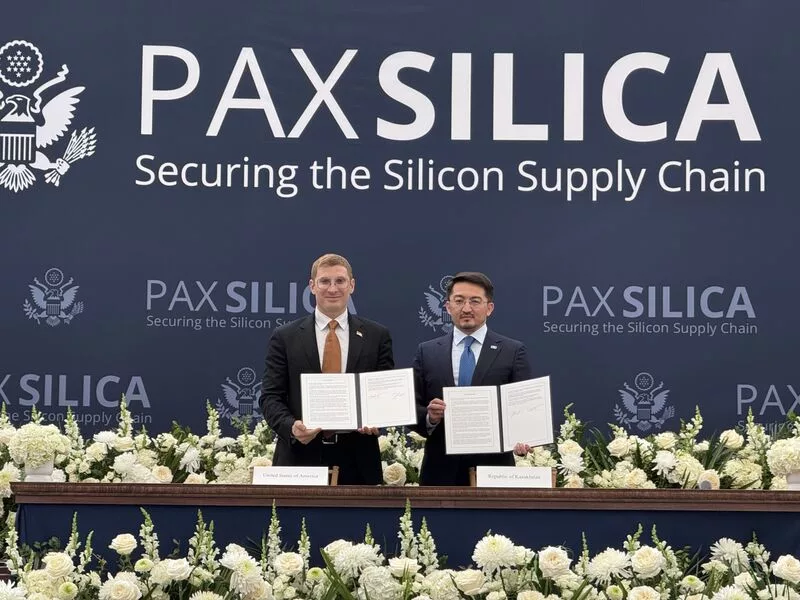
Reuters obtained a leaked draft diplomatic communication from the US State Department prepared for distribution to 35 international partners. The message delivers an unambiguous geopolitical directive: sovereign nations cannot simultaneously belong to both the United States’ semiconductor and AI alliance and China’s competing technological bloc. According to diplomatic records reviewed by Reuters, precisely one country currently holds dual membership in both coalitions: Kazakhstan.
Kazakhstan Joined Both Coalitions—A Global Exception
The United States previously established the Pax Silica initiative—an international alliance governing trusted semiconductor supply chains, foundation AI model architectures, and critical rare-earth elements. In June 2026, Kazakhstan became the first Central Asian nation to formally join Pax Silica alongside 24 global allies, including Japan, Australia, and South Korea. To understand regional sovereign AI developments, read our profile on Huseyin Atakan Varol and the development of KazLLM at ISSAI.
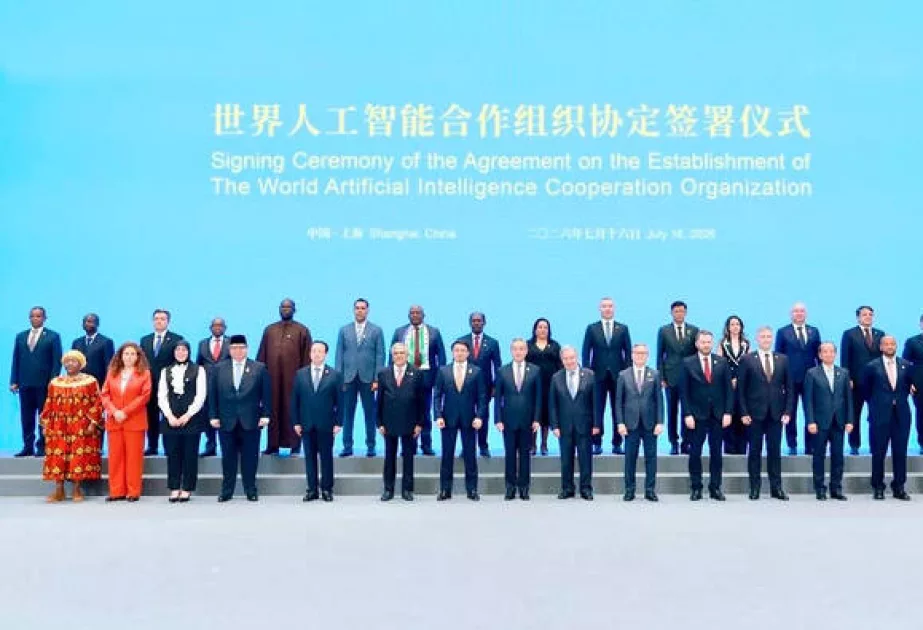
In July 2026, during the World Artificial Intelligence Conference in Shanghai, Chinese President Xi Jinping unveiled a parallel multilateral institution: the World Artificial Intelligence Cooperation Organization. Twenty-nine countries joined Beijing’s initiative—including China, Russia, Pakistan, and Kazakhstan. Consequently, Kazakhstan became the sole nation participating in both technological pacts simultaneously, triggering intense scrutiny in Washington.
Diplomatic Pressure: “To Belong to Everything Is to Belong to Nothing”
The leaked State Department draft employs stern language rarely seen in multilateral communiqués: “To be a part of everything is to be a part of nothing. Signing the Pax Silica declaration is not merely ceremonial membership; it is a binding commitment.” The memorandum explicitly calls upon allied capitals to align technological standards and security architecture strictly with democratic partners.
While the State Department declined to comment on leaked internal drafts, China’s Embassy in Washington characterized the initiative as the politicization of international technological commerce. Diplomatic representatives in Astana emphasize multi-vector balance.
The Underlying Driver: Critical Rare-Earth Minerals
The geopolitical tug-of-war is not ideological; it centers upon critical minerals essential for semiconductor fabrication, AI supercomputers, and high-density permanent magnets. With China leveraging its near-monopoly on rare earths in recent trade disputes, Western powers seek to secure alternative supply chains in Kazakhstan, while Beijing aims to prevent Central Asian reserves from exclusively feeding Western defense and microelectronics supply chains.
Precedents and Digital Sovereignty
This dynamic mirrors cross-border scrutiny previously applied to individual corporate M&A—such as regulatory scrutiny forcing the unwinding of cross-border AI software sales. Now, technological bloc competition applies directly to sovereign states. To understand how domestic legal frameworks protect national data infrastructure, consult our guide on Kazakhstan’s Personal Data Law and sovereign data center requirements.