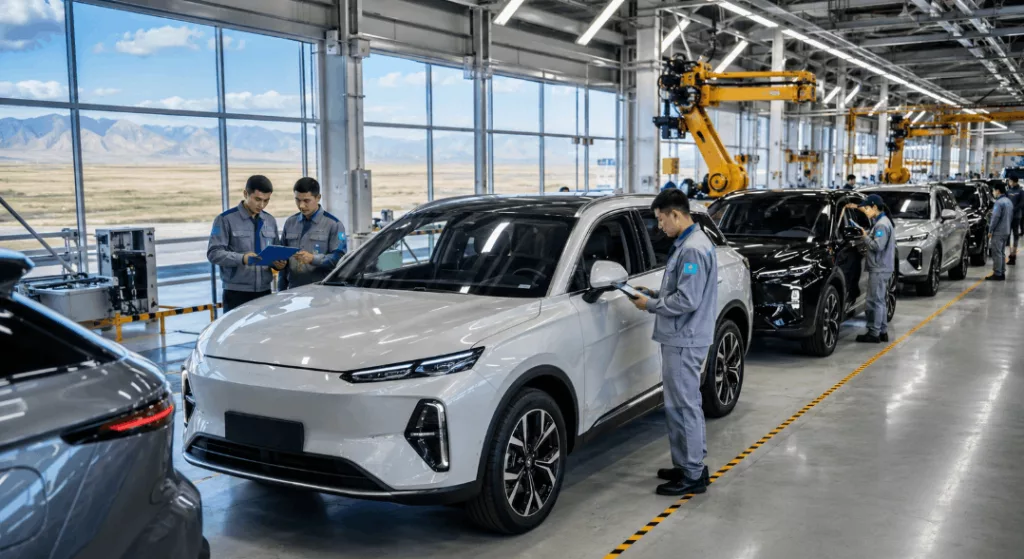
Over the first five months of 2026, Chinese automotive brands captured 36% of all new passenger car sales in Kazakhstan. The domestic automotive landscape has decisively shifted: Chinese automakers no longer treat Central Asia merely as an export destination, but are transitioning toward large-scale localized manufacturing within Kazakhstani borders.
According to verified registrations from the Kazakhstan Automobile Union (KAU), official dealerships registered 66,400 new passenger vehicles between January and May 2026. Nearly 24,000 of those vehicles originated from Chinese automotive corporations—solidifying a market share where more than one in every three newly registered vehicles is Chinese-engineered.
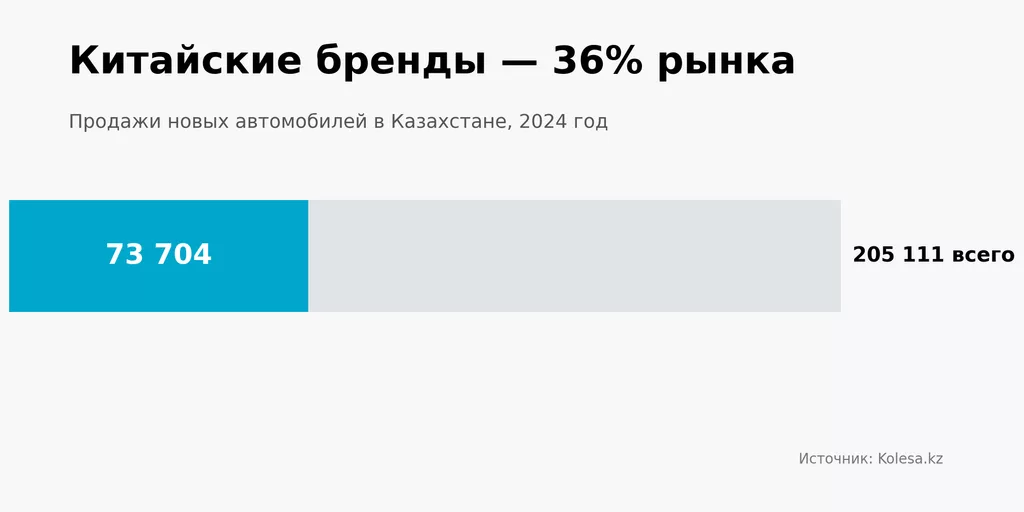
One in Three New Cars in Kazakhstan Is Chinese
Three Chinese manufacturing champions now anchor Kazakhstan’s national Top 10 sales rankings: Chery, Haval, and Geely. In the premium electric and range-extender plug-in hybrid segment, Zeekr and Li Auto dominate sales volumes, decisively displacing traditional European and Japanese competitors through superior price-to-technology value propositions, extended range batteries, and luxurious digital cockpits.
Li Auto Signs Manufacturing Agreement with Allur
On July 16, 2026, Kazakhstani automotive conglomerate Allur and Chinese EV pioneer Li Auto entered into a formal production agreement to assemble smart electric vehicles in Kazakhstan. The landmark document was signed during presidential bilateral summits in Akorda. While production site selection, model line allocations (L6, L7, or L9), and exact capital commitments remain under commercial finalization, the strategic intent signals a significant transition.
By late 2025, Li Auto reported cumulative global vehicle deliveries exceeding 1.54 million units. Having established robust export distribution across Kazakhstan, Azerbaijan, and Egypt, the automaker is now positioning Kazakhstan as an assembly foothold for the broader Eurasian Economic Union.
Chery Expands Factory Lines, Geely Builds Charging Infrastructure
Concurrently, Astana Group and Chery signed technical licensing agreements to manufacture OMODA and JAECOO vehicle lines at the Astana Motors Manufacturing Kazakhstan multibrand industrial complex in Almaty. In parallel, a comprehensive consortium comprising Samruk-Kazyna, Freedom Holding, the Akimat of Astana, and Geely signed agreements to deploy nationwide DC fast-charging networks and integrate AI fleet telemetry across municipal transit.
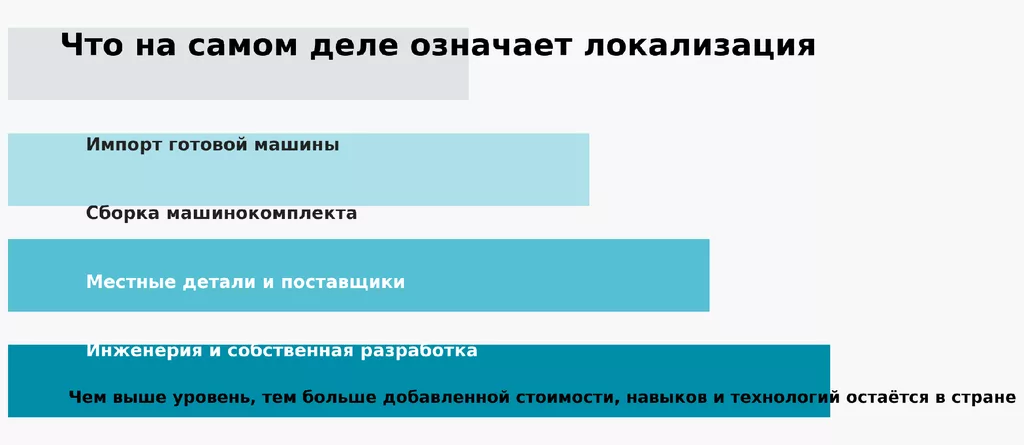
The Real Test: Deconstructing «Made in Kazakhstan»
To accurately evaluate macroeconomic value creation, each automotive joint venture must be scrutinized across five critical parameters:
• The verifiable domestic content share (CKD welding and painting vs. simple SKD kit assembly);
• High-skill engineering jobs generated across manufacturing and R&D;
• Actual foreign direct capital invested in robotic tooling and paint shops;
• Volume of vehicles exported from Kazakhstani plants to neighboring regional markets;
• Local supplier networks for glass, wiring harnesses, tires, fluids, and telematics software.