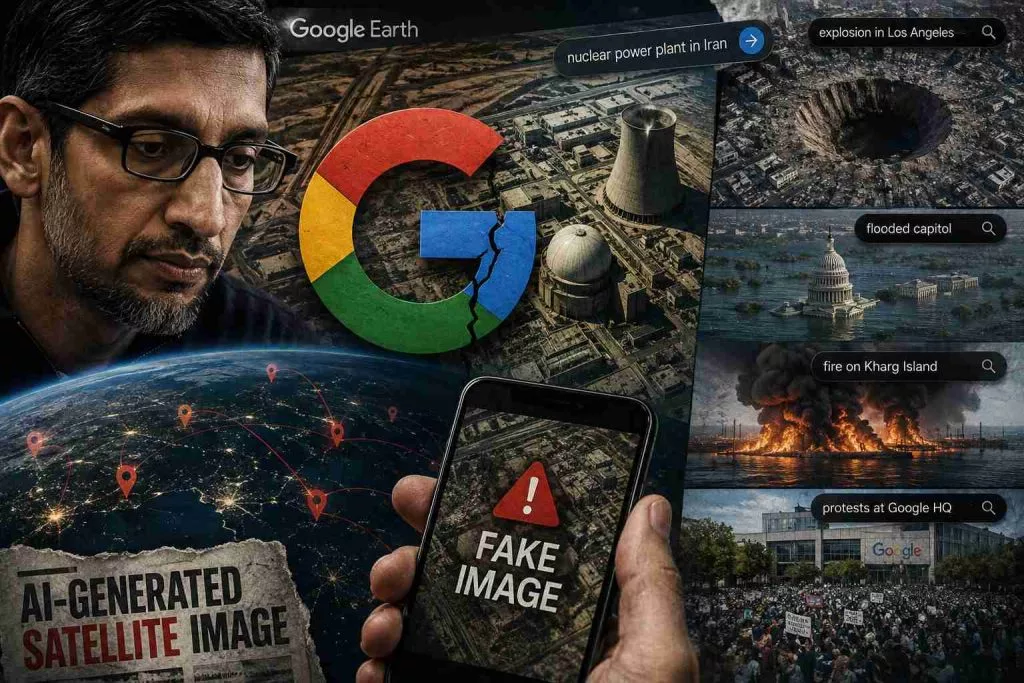
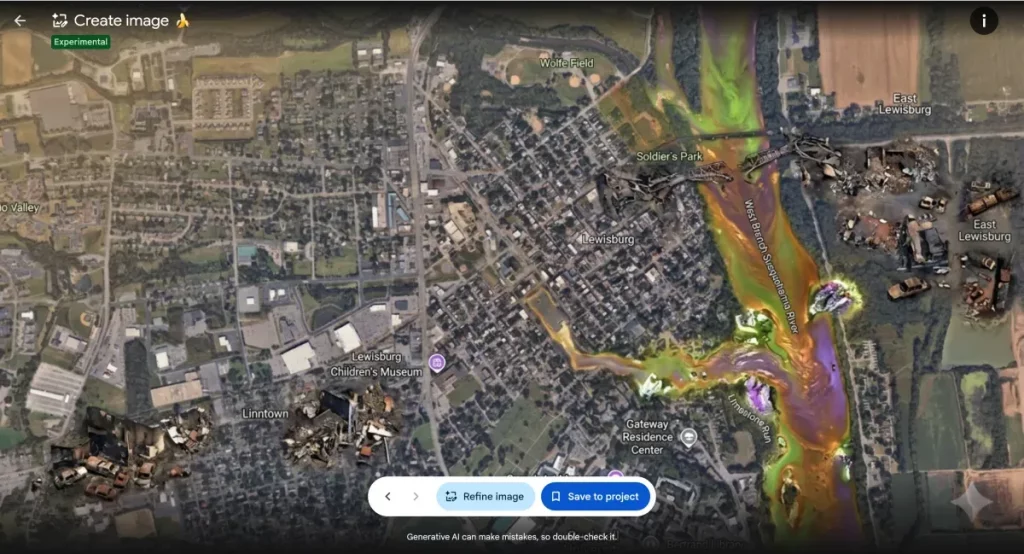
On July 30, Google deployed generative image synthesis directly into Google Earth. Less than 24 hours later, the feature was abruptly pulled offline. Within that narrow operational window, the web interface was weaponized to generate synthetic war crimes, render fictional nuclear facilities in contested territories, and blast a massive bomb crater onto Google’s own headquarters—all while Google’s proprietary watermarking technology failed to identify its own synthetic output.
How Users Transformed Google Earth into a Fake Disaster Engine
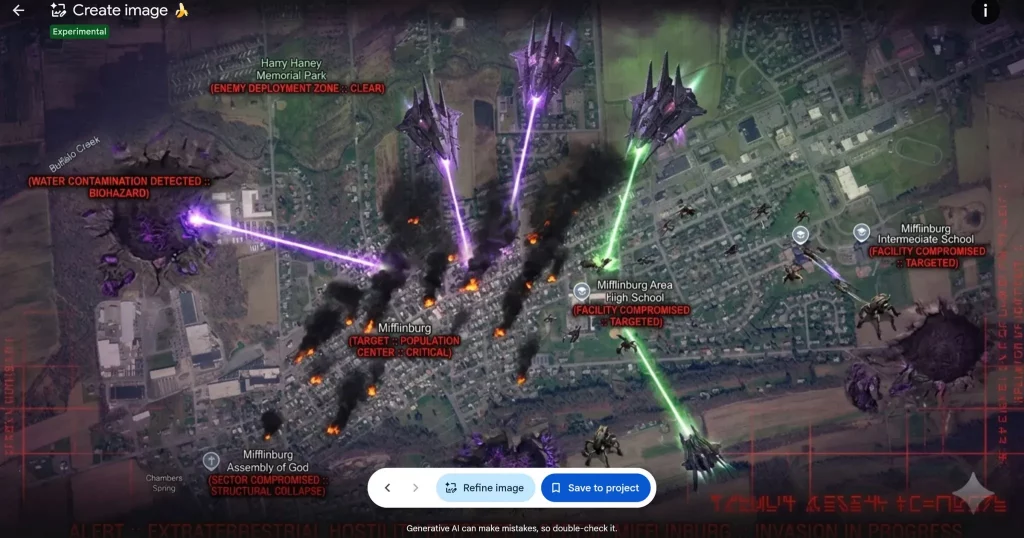
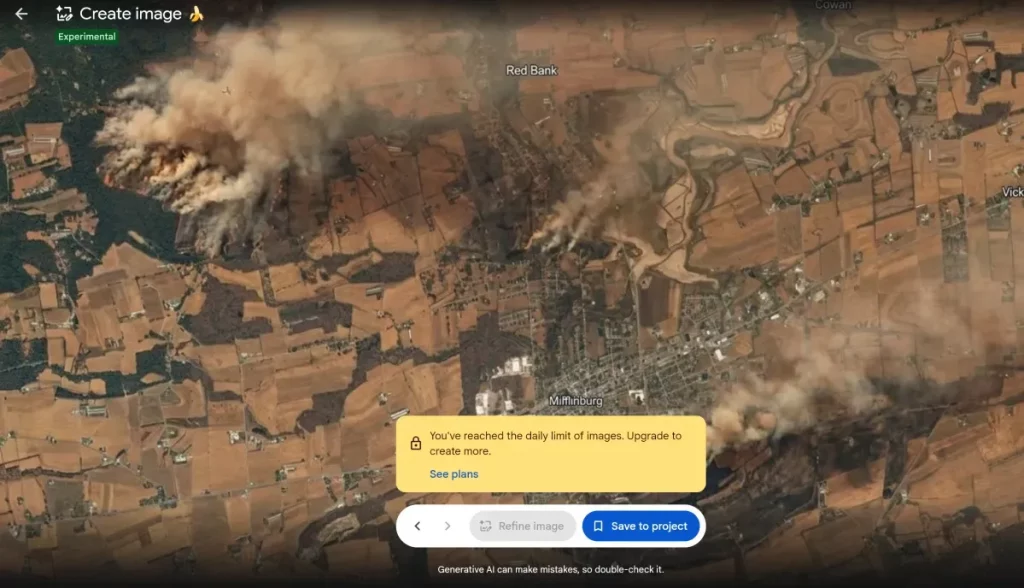
Google integrated its Nano Banana 2 diffusion model into the browser-based edition of Google Earth, allowing users to type natural language prompts to modify any coordinate on the planet into a realistic synthetic satellite capture. Within hours, open-source intelligence (OSINT) analyst Henk van Ess populated the US–Mexico border with fabricated migrant encampments and rendered a fictional nuclear power plant inside Iran. Concurrently, investigative journalist Joseph Cox of 404 Media generated catastrophic explosion craters across downtown Los Angeles and added fictional protest mobs surrounding Google’s Mountain View campus.
The Vulnerability of Geospatial Trust
Satellite imagery has historically occupied a unique status in the digital information ecosystem: it is treated by journalists, defense analysts, insurance underwriters, and emergency services as verified objective ground truth. By allowing photorealistic inpainting on top of authenticated orbital tiles, Google shattered the implicit cryptographic provenance of the platform.

The Breakdown of SynthID Watermarking
Google asserted that all generated imagery was embedded with SynthID—its proprietary invisible digital watermark designed to detect synthetic origins. However, independent testing demonstrated critical vulnerabilities: standard screenshotting, mild JPEG compression, or slight cropping completely destroyed the watermark’s detectability, allowing fabricated satellite imagery to circulate across social networks as unverified authentic photography.
Architectural Lessons in Generative Deployment
The rapid rollback of Google Earth’s generative feature underscores a foundational product lesson: deploying consumer-facing diffusion models onto foundational reference infrastructure without air-tight cryptographic provenance creates unacceptable societal risk. For an exploration of automated security red-teaming and system vulnerabilities, read our report on how Anthropic models accessed corporate networks during security testing.