
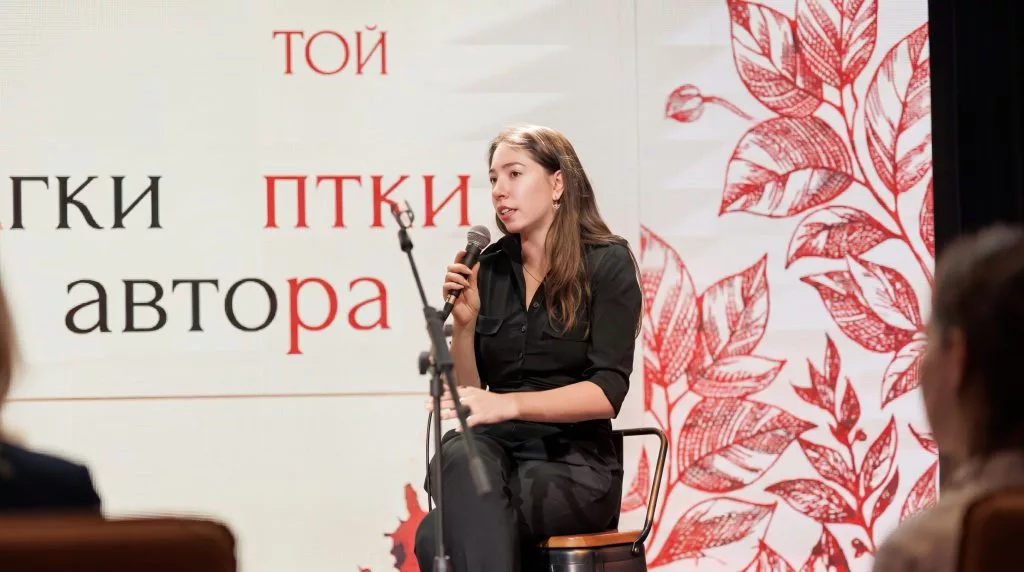
Katerina Kucherova spent six years writing her book, turned down publishers’ offers and released it herself. Financially, she is still in the red, and says so openly.
Self-publishing is presented as a simple process: upload a manuscript, obtain an ISBN, get listed in stores and wait for sales. The process works, but its economics are not quite what they appear from outside.
Katerina Kucherova is a journalist and editor with 14 years of experience. Originally from Almaty, she now lives in Barcelona. She writes commissioned books as a ghostwriter, whose name does not appear on the cover, and helps experts publish their own. She has taken five authors through the full process, from manuscript to bookshop shelf.
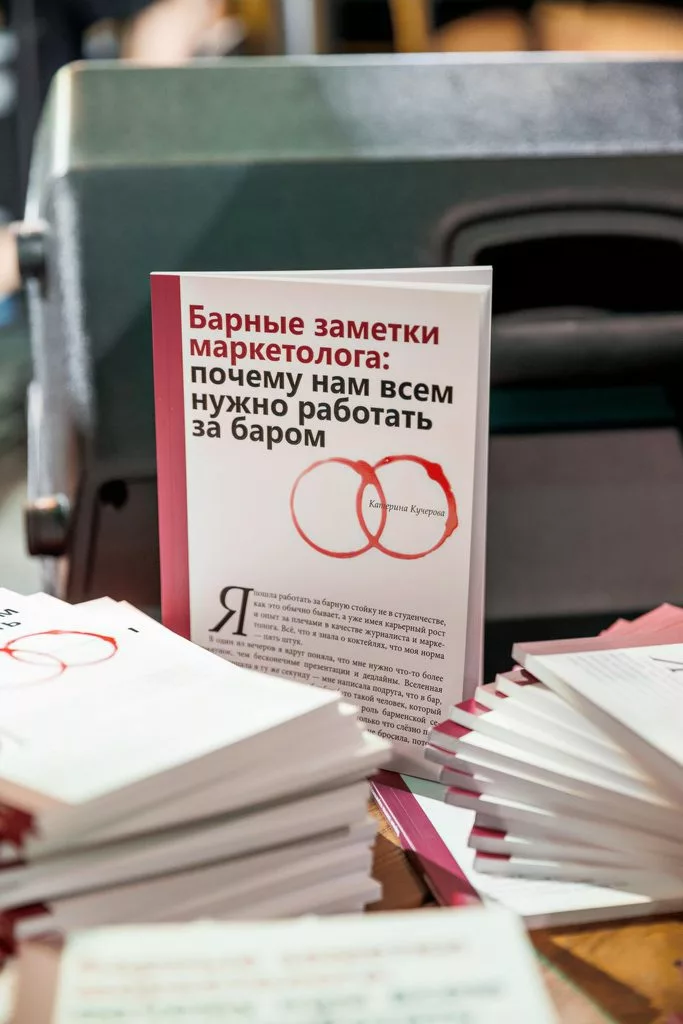
Her 97-page book, “A Marketer’s Bar Notes: Why We All Need to Work Behind the Bar,” was published through Ridero. E-book and audio versions are available on Yandex Books (books.yandex.ru).
Around 200 copies have been sold across all channels: 87.6 through Ridero’s platforms, 25 through Meloman, 53 at a launch in Almaty, 31 through pre-orders in Spain and another four sent to the US. Production cost around KZT 1 million, at friends’ rates rather than market prices.

A Column From Behind the Bar Became a Book
Tell us a little about yourself.
My name is Katerina. I am from Almaty, but now live in Barcelona, Spain. I have worked as a journalist and editor for the past 14 years.
I also write books, both my own and commissioned ones, mainly business literature for entrepreneurs. I work in publishing too, helping authors take books from the first line to sales in shops.
How did “A Marketer’s Bar Notes” come about?
At one point I worked in marketing and PR at an advertising agency, an emotionally demanding job. To relieve stress, I started bartending: PR during the day, behind the bar in the evening. It was my first experience of manual work, and much harder than it looked.
At the same time, I wrote a bar-notes column for a publication about what happens behind the counter. Readers liked it, and eventually our whole team decided it should become a book. That is how it happened. I self-published it, although I had several offers from publishers.
Why did your own book take six years?
With a commissioned client project, we finish in around three months. Your own book is different: work constantly distracts you, and unlike a client, you are not afraid of letting yourself down. It is a small book and, honestly, not worth six years, but that is how it turned out.
Why Katerina Kucherova Would Choose a Publisher Now
Do you regret self-publishing?
Now I would probably choose a publisher. When you publish a book yourself, you control all the financial flows, which feels good. But you also carry all the responsibility for promotion and marketing.
Without a team, a dedicated person and free time, it is a losing option: other tasks constantly distract you and you cannot fully commit. I will probably give my next project to a publisher, or launch it when I have a team that can work on it systematically.
Is it worth self-publishing to earn money?
Selling a physical product is daily work, not a hobby for a couple of hours a week. I have a client whose book we published together. It occasionally gets into book clubs and sells at Meloman, but we both understand that promoting a book is a separate job for a separate person. You cannot do it effectively alone.

Digital First, Print Later
How did you sequence the releases?
The e-book has been on sale since last year. The printed book launched in March this year and has been available at Meloman since April.
I initially tested platforms with the electronic version. Printing costs money, whereas publishing online is free.
Which platforms did you use, and why?
I started with Ridero, an aggregator covering several Russian-language platforms at once: LitRes, Ridero itself, MyBook and Yandex Books. There is no need to upload separately to Apple Books or Google Books; everything is picked up automatically.
For an English-language project, a book by Kazakhstanis living in the US, we selected different platforms targeting the American market. Amazon came first because of its reach, but we also used smaller platforms: they are free and simply take time.
87.6 Books Through Ridero and 25 at Meloman
What were your sales results on Ridero?
I have not checked recently, but the figures were good in the first few months, when the platform promotes a new release. Once that advertising ends, sales fall sharply.
The bare figures are around 87.6 books sold in total. It is a fractional number because some platforms pay according to pages read. Yandex Books accounted for 92% of sales; LitRes and Ozon made up the remaining 8%.
How did the book sell in Kazakhstan?
Twenty-five copies at Meloman, with no promotion at all. I left Kazakhstan soon afterwards and did not physically promote the book here.
At the Almaty launch, which used a pay-what-you-want donation format, around 53 books went out. Another 31 were pre-ordered in Spain, and I sent around four to the US.
Why was Yandex Books’ share so large?
I do not have separate audio and text figures, but I think accessibility drove it. With a subscription, you read everything for free, which is fine: you do not have to go to a shop and buy a book for KZT 3,000. I receive around KZT 6 for one such book read. Yandex Books is about reach.
It is also about accessibility: open it whenever you want, read and move on. You do not need a special place, time or phase of the moon.
Perhaps that accessibility and low cost make it harder for authors to earn. But I think accessible reading is good. Let people read for free; what matters is that they read.
In self-publishing, copies sold do not translate directly into income. On Ridero, authors receive between 15% and 68% of the retail price, while subscription services calculate earnings by pages read (ridero.ru).

About KZT 1 Million Invested, and Still in the Red
How much did the printed book cost to publish?
The small print run of 500 copies cost around KZT 300,000. Layout, design, editing and proofreading cost around KZT 700,000.
My figures are very different from market prices: these are close friends I have worked with for years. At market rates, it would have cost roughly two and a half times more.
Have you recovered the investment?
I am in the red. But the launch covered its own costs, and pre-sales paid for the layout and some proofreading. For me, those are small victories.
I did not expect to burst onto the literary scene, and the book was not really designed for that.
How much did you raise at the Almaty launch?
I recovered the launch costs in full. It came to around KZT 150,000–200,000.
Do your clients earn money from their books?
Honestly, I do not know; I do not track it. For most experts writing their own books whom I have spoken to, earnings are not the priority.
It is usually about something else: finishing something and saying “I did it,” or rewarding yourself for the effort. For some, it is a logical career milestone, especially for a self-made expert who built a career or business rather than working for someone else. What their peers and people close to them say matters more than revenue.
“I Write the Books Myself”
What do you think of books written entirely by AI?
I am relaxed about it; it has a place. If people can earn money from it, I am happy for them. The question is what they actually want to get out of it.
Do you use AI in your work?
I write books myself. I use AI for other things: checking information and discussing structure, as I would with an editor when mine is not nearby. It handles factual, scientific and non-fiction texts reasonably well, but struggles with creativity.
I do not trust AI with design; a designer does that. I made one workbook for the English-language market, a “write a book in 90 days” planner, almost entirely with AI, apart from the cover, which a designer drew separately. It produced a decent text base, but such material always needs editing. AI style is easy to spot, especially when you work with it constantly.
Have people brought you AI-written books to prepare for sale?
Yes, partially AI-written ones, not entire books. We edited them, removing characteristic AI turns of phrase, sentence structures and terminology.
Experts often have impostor syndrome: they doubt their competence even when they objectively possess it. They immediately ask AI to check a theory they already know perfectly well, simply to be certain. Unfortunately, they think AI writes and communicates ideas better than they do. Yet what attracts people is someone’s personality, not a correct explanation of terminology.
Does AI speed up any everyday work processes?
Yes, but not the books. AI writes and sends me emails, keeps statistics, fills in spreadsheets and helps with documentation: routine tasks. I use it as an assistant. I give it a task, it does it, and I check.
Advice for People Who Want to Work With Books
What would you advise?
Read. Read everything, starting with what interests you. You cannot be a writer and publish books if you do not read yourself.