On August 18, 2026, ground was officially broken in Astana for the QAZBOT Robotics & AI manufacturing complex. Initial development is capitalized at approximately $200 million, backed by primary technological partner AgiBot, a leading Chinese humanoid robotics venture. On paper, Kazakhstan gains an integrated manufacturing ecosystem—from mechanical chassis assembly to sovereign AI foundational models. Yet the central metric of the transaction remains undisclosed: how much core intellectual property will truly reside inside the country.
On stage, the bipedal robot demonstrated its algorithmic dexterity by performing the traditional Kazakh dance «Qara Zhorgha». Industrial manufacturing, however, obeys far sterner physics: an exhibition showcase lasts minutes, whereas authentic industrial localization is measured across years of capital investment, domestic engineering cadres, precision tooling, and sovereign software rights.
In this installation of RAEM’s «Kazakhstan × China» industrial series, we analyze the architectural substance of the AgiBot partnership: what commitments have been formally documented, what parameters remain unverified, and how to assess whether Kazakhstan is building a sovereign robotics sector or providing a regional showroom for Chinese technology.
Groundbreaking Underway—Yet Full Industrial Readiness Remains Ahead
The groundbreaking ceremony occurred on August 18, 2026. The Akimat of Astana announced that the project has transitioned from bilateral memoranda of understanding to physical construction and technological site preparation. This marks a meaningful milestone: the project has advanced beyond aspirational press releases, yet it is still far from an operational production line.
The publicly announced capital commitment for Phase 1 stands at approximately $200 million. This gross valuation does not mean the entire sum has been deployed. To date, there is no public accounting of debt-to-equity financing, institutional lenders, capital equipment leasing schedules, or development milestones.
Crucial baseline operational parameters likewise remain unconfirmed:
• Commissioning date for the primary robotic assembly lines;
• Total plant square footage and annual manufacturing unit capacity;
• Permanent high-skilled engineering jobs created on site;
• Specific humanoid and industrial robot models slated for local assembly;
• Commercial wholesale pricing and confirmed enterprise anchor customers.
Accurately stated: physical site preparation has commenced, and $200 million represents the stated capital envelope for the inaugural construction phase.
Chronology of the Agreement: From Digital Almaty 2025 to Shanghai Deals
The commercial transaction developed over an 18-month trajectory. In February 2025 at the Digital Almaty summit, AgiBot announced preliminary intentions to form a Kazakhstani joint venture to manufacture and commercialize robotic systems. The Chinese company, founded by former Huawei prodigy Zhihui Jun (Peng Zhihui), has rapidly ascended into one of China’s preeminent humanoid robotics developers, backed by sovereign venture funds and Hillhouse Capital.
In July 2025, during President Tokayev’s state visit to China coinciding with the SCO Summit in Shanghai, the initiative gained bilateral diplomatic backing. Among agreements valued in billions of dollars, the Ministry of AI and Digital Development signed commercial frameworks with AgiBot for localized robotics manufacturing.
The Localization Equation: CKD Assembly vs. Intellectual Property Transfer
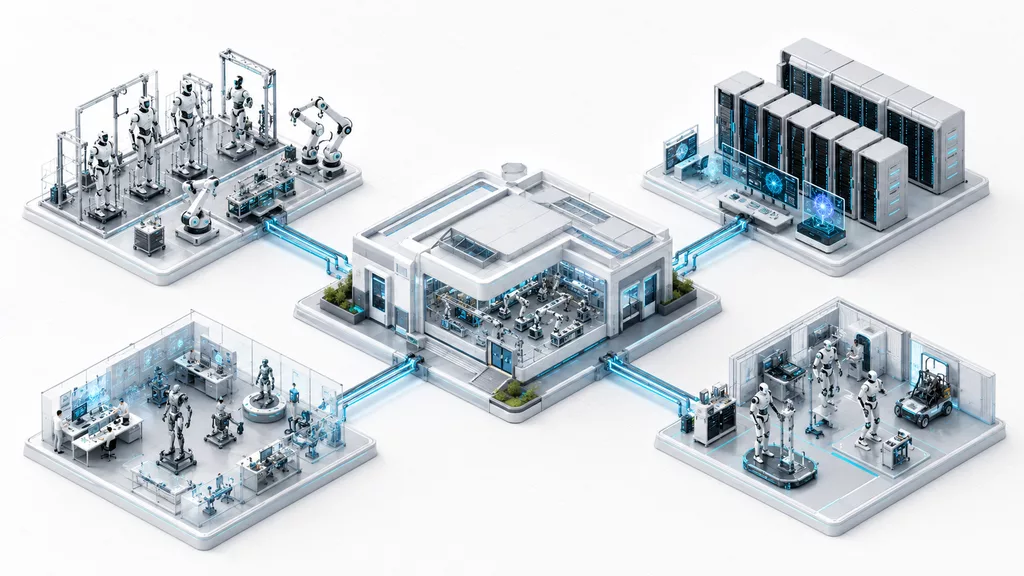
In manufacturing economics, industrial localization exists on a multi-tiered spectrum:
1. SKD (Semi-Knocked-Down) Assembly: Pre-assembled sub-components and complete robotic joints arrive in shipping crates from Shenzhen; local workers merely perform final chassis bolting, packaging, and cosmetic badging. Economic value retention is minimal (10–15%).
2. CKD (Completely Knocked-Down) Production: Robotic components, stamped metal frames, electrical wire harnesses, and circuit boards are fabricated or surface-mounted domestically, requiring local supply chain vendors. Economic value retention rises to 35–50%.
3. Deep Technology Transfer: Local software engineers possess full read-write access to robotic operating system source code, motion-planning neural weights, kinematic control algorithms, and firmware architectures, enabling domestic modification without vendor permission. Economic value retention reaches 70–80%.
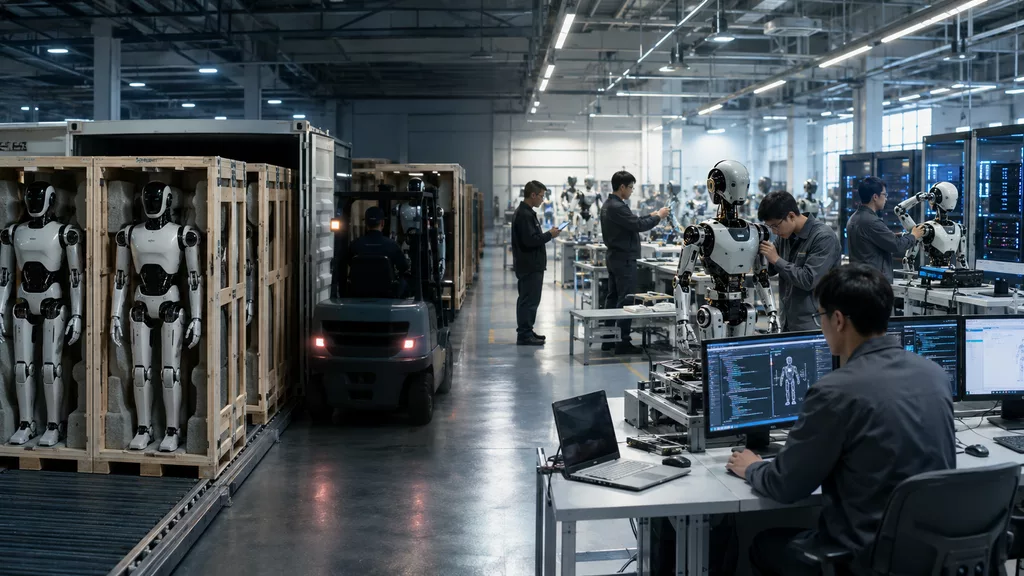
Importing finished hardware versus cultivating a sovereign engineering foundation represent diametrically opposing levels of industrial localization. RAEM Analytical Graphic
To date, these exact localization benchmarks remain uncodified in public disclosures. QAZBOT executives emphasize full-cycle technological deployment and domestic cloud telemetry storage within Kazakhstan. However, formal IP-licensing boundaries, domestic hardware procurement percentages, and software ownership terms have not been published.
Why AgiBot Needs Kazakhstan: Regional Gateway to Central Asian Markets
In official communications from AgiBot, Kazakhstan is designated not merely as an isolated domestic consumer market, but as a strategic springboard for the re-export of advanced robotics across Central Asia and the broader Eurasian Economic Space.
For Kazakhstan, serving as a regional technological bridge offers evident dividends: an export hub aggregates regional service contracts, spare parts distribution, and engineering troubleshooting. However, corporate motivations remain fundamentally distinct: AgiBot prioritizes market penetration and export volumes, whereas Kazakhstan’s economic planners need sovereign industrial capabilities, high-value engineering jobs, and domestic technological ownership.
Emerging Competition: UBTECH Robotics Sets Up in Almaty
Significantly, Kazakhstan is avoiding single-source dependency on AgiBot. During the same Shanghai bilateral engagements, Akorda ratified parallel robotics initiatives: the Akimat of Almaty, NERO Group, and UBTECH Robotics agreed to develop municipal robotics and AI hubs, while Al-Farabi Kazakh National University established an engineering agreement with Jiangsu Huibo Robot Technology.
A dual-track robotics architecture is thus materializing: Astana anchors the QAZBOT–AgiBot industrial hub, Almaty advances with UBTECH, and major academic institutions cultivate engineering curricula. While healthy competition spurs aggressive pricing and rapid pilots, it also carries the risk of fragmented, sub-scale demonstration projects rather than a unified national robotics cluster.
The True Acid Test: Verifiable Metrics Beyond Ceremonial Groundbreakings
As the construction dust settles, the authentic success of QAZBOT will be evaluated against measurable industrial milestones rather than stage performances:
• Commercial commissioning of the primary assembly lines and delivery of the first enterprise batch;
• Full publication of plant capital structure, annual capacity, and verifiable capital expenditure;
• Deployment of paid commercial pilots across domestic mining, manufacturing, and logistics facilities;
• Measurable year-on-year increases in domestic component manufacturing and local software engineering contributions;
• Signed commercial export contracts supplying Kazakhstani-assembled robotic units to international buyers.
The humanoid robot has demonstrated its dance moves on stage. Now, the enterprise faces an infinitely more rigorous challenge: proving the viability of an industrial manufacturing plant, training domestic engineers, and delivering paying corporate customers.