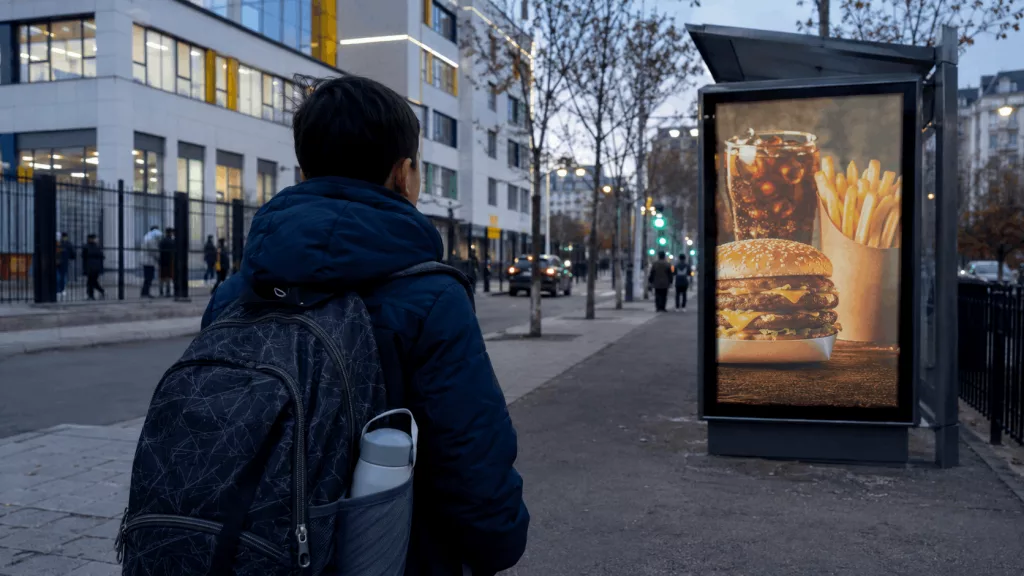
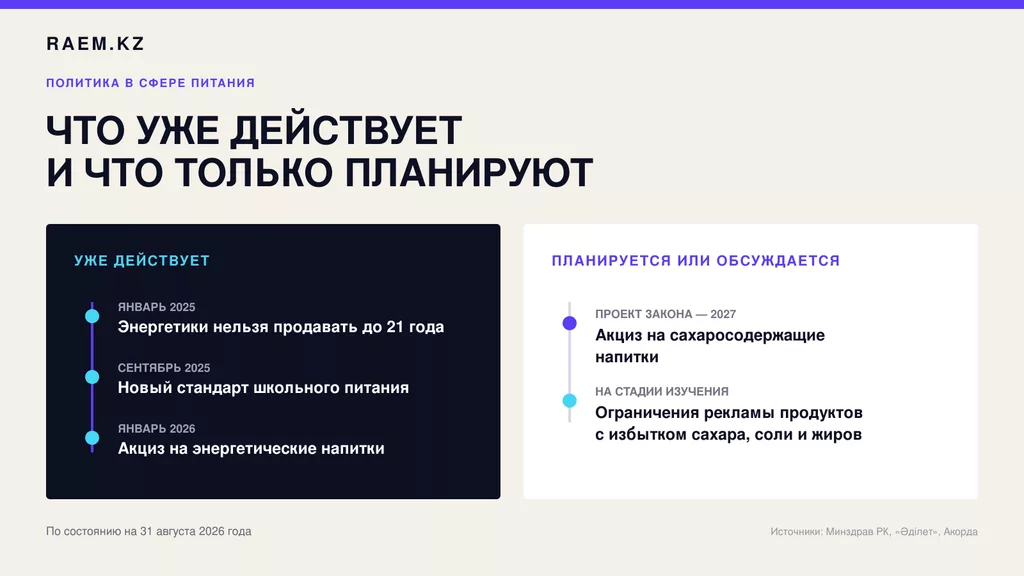
Kazakhstan’s government is reviewing proposals to restrict marketing and advertising for foods high in sugar, sodium, and saturated fats. Concurrently, tax authorities are preparing excise duties on sugar-sweetened beverages, while energy drinks have already been legally banned for sale to individuals under 21. While these public health initiatives appear intuitive, they raise a fundamental policy dilemma: What accessible alternatives will the state provide to children and families?
Policy Origins: Presidential Mandates and Public Health Data
On August 26, President Kassym-Jomart Tokayev addressed the National Teachers Conference, speaking forcefully regarding the detrimental effects of ultra-processed fast food, sugary sodas, and synthetic snacks on child health and academic focus. Following these remarks, the Ministry of Healthcare confirmed that working groups are drafting regulatory amendments restricting child-targeted food marketing across broadcast and digital channels.
World Health Organization (WHO) epidemiological studies indicate that over 21% of school-age children in Kazakhstan are overweight or obese, with childhood type-2 diabetes diagnoses multiplying significantly over the past decade. The pervasive visibility of fast food commercials during children’s programming and on social media algorithms (TikTok, YouTube Kids, Instagram) has exacerbated this dietary shift.
The Regulatory Mechanics: Proposed Bans and Excise Duties
The legislative package under consideration mirrors international public health frameworks established in the UK, Chile, and the European Union:
- Broadcast Watershed Restrictions: Prohibiting television and radio advertising for high-sugar, high-fat foods before 21:00.
- Digital Marketing Restraints: Restricting paid influencer sponsorships and targeted online ads promoting junk food to audiences aged under 18.
- Sugar Excise Tax: Introducing tiered excise duties on carbonated soft drinks exceeding 5 grams of sugar per 100 ml, directly incentivizing manufacturers to reformulate recipes.

Why Prohibitions Alone Cannot Solve the Crisis
Public health economists warn that marketing bans and sin taxes will fail to alter consumption behavior if structural economic realities are ignored:
School Cafeteria Realities: While municipal regulations ban soda and chips in school canteens, perimeter commercial kiosks and convenience stores located 50 meters outside school gates remain stocked with low-cost sugary snacks. Until school cafeterias provide hot, nutrient-dense meals that students genuinely enjoy eating, children will continue spending their pocket money on packaged confectionery.
Price Elasticity and Healthy Food Subsidies: Fresh fruits, vegetables, and quality dairy in Kazakhstan have experienced sharp inflationary spikes. Ultra-processed snacks remain the cheapest source of dietary calories per tenge spent. Banning advertisements does not make fresh organic produce more affordable for low-income households.
Economic Impact on Domestic Media: Fast food chains and soft drink conglomerates constitute major advertising revenue pillars for domestic TV networks and digital content creators. Imposing sudden marketing blackouts without transition periods will impact independent media production budgets.
Meaningful public health reform requires a balanced, dual-track approach: combining targeted advertising guardrails and sugar excise taxes with subsidized school nutrition programs, youth athletic infrastructure, and clear nutritional front-of-package traffic-light labeling.