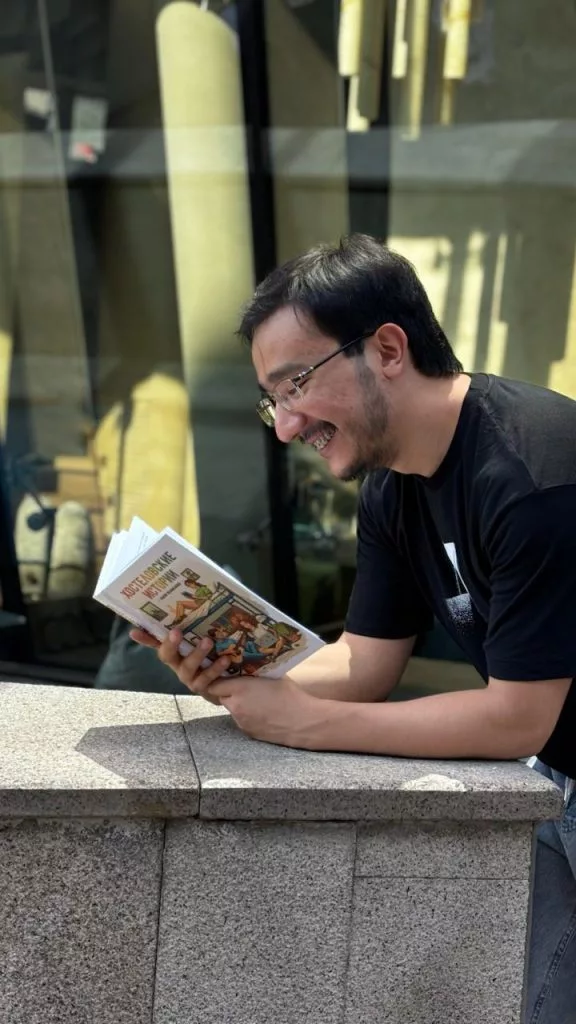
Shakir Islambakiyev is an author, software engineer, and former owner of an Almaty hostel. Over five years, his establishment welcomed approximately 6,000 guests from more than 100 countries. That immersive experience gave birth to Hostel Stories—a candid look at running a small hospitality business, lessons learned from painful mistakes, and transient travelers who became family.
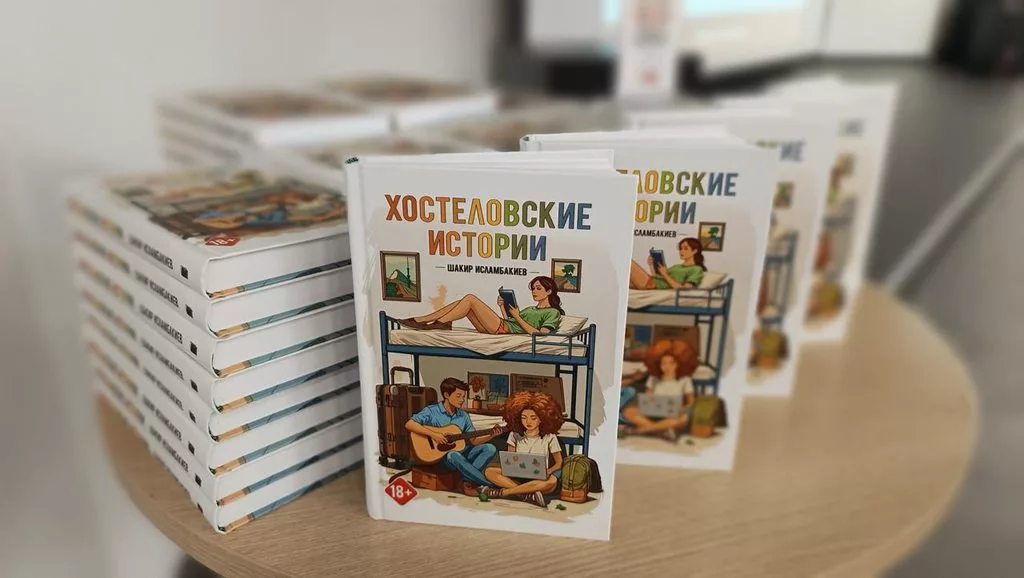
The book was published in 2025 with an initial print run of 1,000 copies. By the time of this interview, nearly half of the physical run had been sold, while digital and audio editions debuted on Yandex Books, LitRes, Google Play Books, and Amazon. We sat down with Shakir to discuss four years of drafting, the raw unit economics of a single book sale, translating with AI, and why readers outshine paid advertising.
Six Thousand Guests and the Entire World in One Kitchen
How would you introduce yourself to someone hearing your name and book for the first time?
My name is Shakir Islambakiyev. I am a software engineer and writer. Coding is my primary profession, while writing is a lifelong creative passion. Last year, my book Hostel Stories came out—rooted entirely in my five years owning and managing a hostel in Almaty.
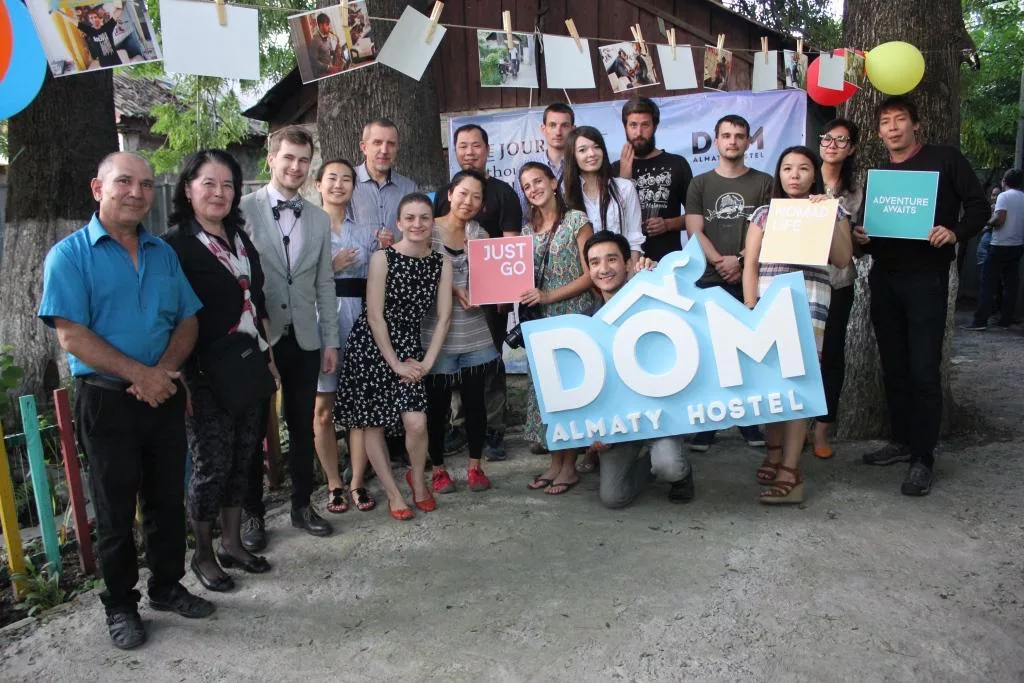
During that time, we hosted around 6,000 travelers from over 100 countries. The book serves both as an honest reflection on entrepreneurial struggles and an intimate chronicling of the eccentric souls I met. I wanted to depict what building a grassroots business in Kazakhstan from scratch really looks like—without inherited wealth or venture safety nets, relying purely on determination.
At what point did you realize your hostel experiences had to become a book?
A hostel is an extraordinary crucible of human existence—a miniature world. Sharing the same communal kitchen table, you could find a German cyclist traversing Eurasia, an Australian painter seeking Central Asian inspiration, and a heavily indebted young Kazakhstani entrepreneur. And lingering in a corner might be a petty pickpocket scouting his next mark.
For five years, I conversed with these radically different personalities. It was an around-the-world voyage where I never had to leave the hostel lobby. Some stories broke my heart, others sparked joy, and many demanded deep introspection. The guests themselves became the living narrative.

So the book wasn’t just a compilation of diary notes?
No. It is a cohesive literary narrative based on real events. I deliberately avoided writing a dry operational handbook on hospitality management. My goal was to explore the human condition, critical decisions, and painful mistakes that matured me as an entrepreneur.
Drafting Stretched Over Four Years
How long did it take to complete the manuscript?
I wrote Hostel Stories over four years. That doesn’t mean I sat at my laptop every single day. I struggled with consistency: I might write a chapter with intense passion, then leave the manuscript untouched for a month. That ebb and flow prolonged the timeline.
How did the book reach print?
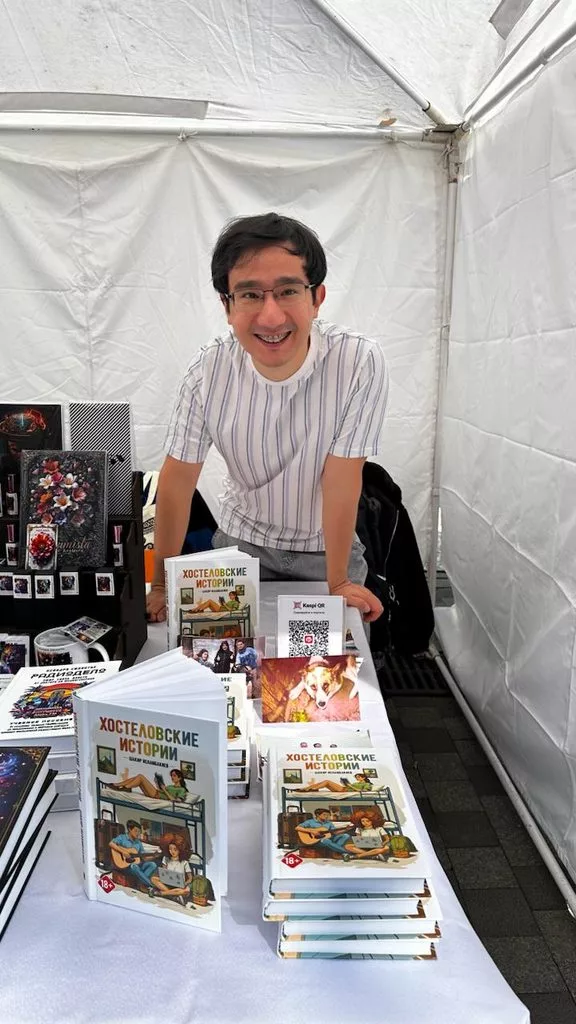
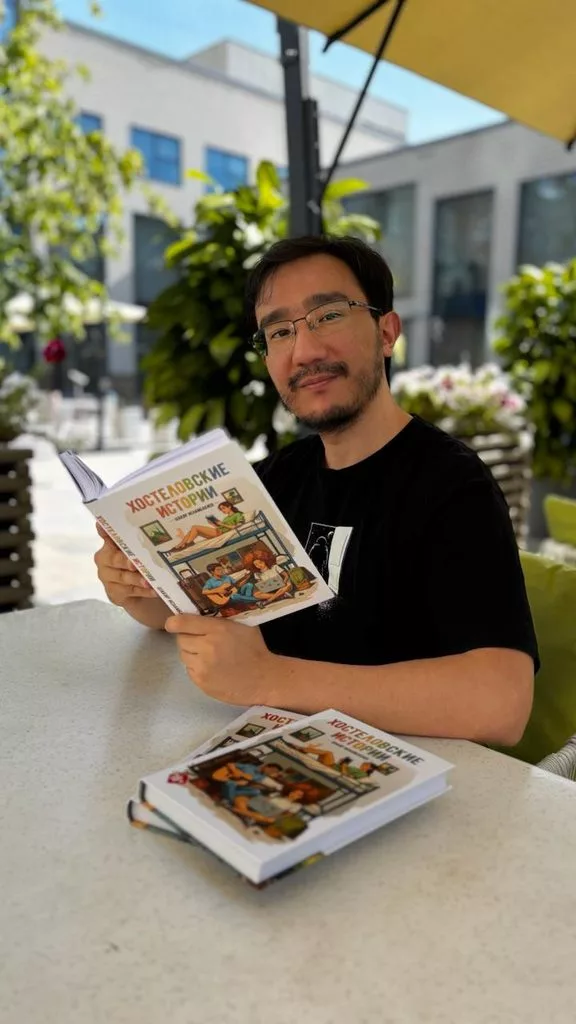
I self-funded the publication, but partnered with professionals. Working with AmalBooks, we executed full prepress production: cover design, typography layout, professional proofreading, obtaining an official ISBN, and state catalog registration. The result was a polished volume pleasant to hold. Contractual terms prevent me from disclosing the exact print invoice.
The print run was 1,000 copies. When we spoke, nearly half had sold. My primary focus right now is clearing the remaining physical inventory before investing in a dedicated voice-recorded audiobook.
Reaching Yandex Books Through Ridero
In what sequence did the digital editions roll out?
The print edition came first. Then I wanted to expand reach, prioritizing Kazakhstani readers. The most direct channel in our region is Yandex Books: the platform curates regional Kazakhstani authors and surfaces titles on its homepage and algorithmic feeds.
Yandex Books does not contract directly with independent authors—it requires distribution via an accredited publishing aggregator. I uploaded the electronic edition via Ridero, which subsequently syndicated it to Yandex Books, LitRes, Google Play Books, and partner platforms.
What reach did Yandex Books deliver by the time of the interview?
Approximately 700 readers read the text version, while others listened via automated AI narration generated by the platform—reaching a combined 1,269 readers. On Yandex, recommendation algorithms give debut authors a real chance by placing titles in thematic lists or regional top charts.
From a 6,000 Tenge Retail Price, the Author Keeps ~600
What is the actual unit economics of a printed book for an independent author?
When you account for offset printing, editorial proofreading, graphic design, launch presentations, and initial PR, the pure cost of goods sold per book is approximately 3,200 KZT ($6.70). The book retails on average for 6,000 KZT ($12.50).
When selling via Kaspi or physical bookstores, marketplace commissions and shipping consume roughly 1,800 KZT. Taxes take 180 KZT, while packaging materials take another 200 KZT. In the end, the author nets around 600 KZT (~$1.25) per copy—and that is strictly contingent on selling out the entire print run. Every unsold copy sitting in storage remains pure net loss.
Do digital streaming platforms yield meaningful royalties?
Digital platforms pay modest streaming royalties per reading session. However, digital syndication acts as a high-intent marketing funnel that drives high-margin direct print orders and corporate speaking opportunities.
Amazon Offers Higher Royalties, but Reader Discovery Is Brutal
What was your experience publishing on Amazon?
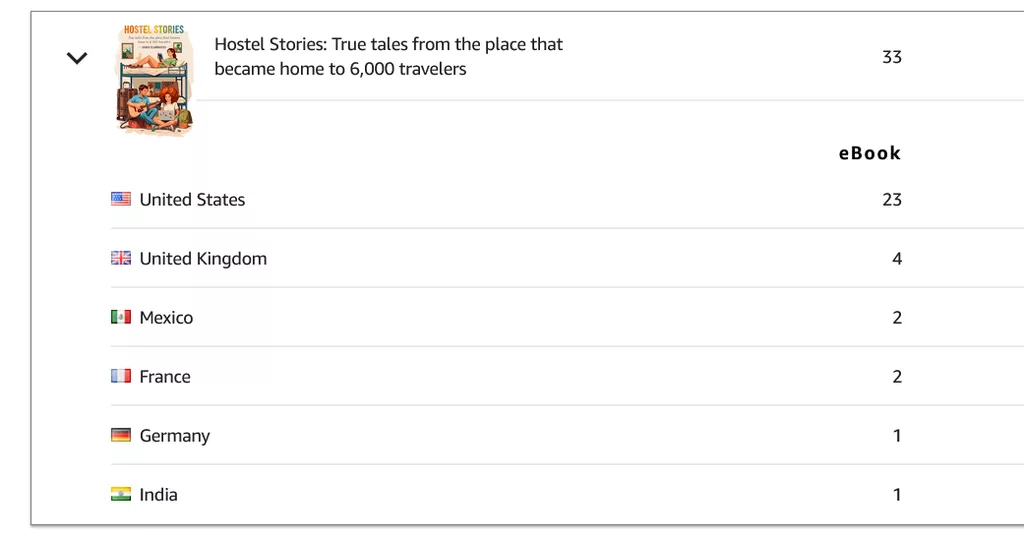
On Amazon Kindle Direct Publishing (KDP), royalty rates reach up to 70% on digital sales, which sounds fantastic on paper compared to traditional distribution. However, organic discoverability on Amazon is near zero without heavy ad spend. If you don’t pour dollars into Amazon Ads or possess a massive pre-existing English-language audience, your book simply disappears into an ocean of millions of titles.
AI Assisted with Translation, but Wrote Zero Words of Prose
How did you use artificial intelligence during localization?
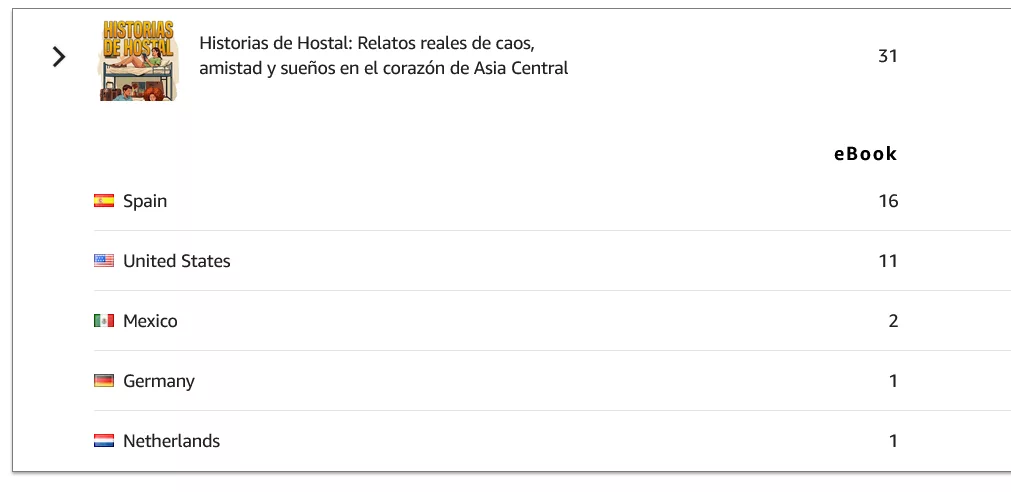
I bench-tested translations across ChatGPT, Gemini, and Claude. My goal was to retain my authentic narrative cadence while culturalizing colloquialisms so English and Spanish readers could easily grasp Almaty nuances.
Did you use AI to draft any of the original manuscript?
Never. I hold a strong personal aversion to AI-generated writing. I write because I savor the creative struggle and psychological introspection. Offloading that craft to an algorithm defeats the entire purpose of artistic expression.
I understand commercial content mills produce programmatic ebooks for quick passive revenue, but that was never my ambition. My goal was to share an authentic human experience and empower others to venture into the unknown.
Readers Deliver Better ROI Than Paid Advertising
What promotional channels drove the best results?
I never launched massive paid ad campaigns. Organic posts, short-form Instagram Reels, and Threads updates brought steady engagement. But word-of-mouth recommendations outperformed everything. Recently, a reader posted an unprompted Reel reviewing the book; it went viral and drove a wave of direct purchases. Readers trust other readers infinitely more than author self-promotion.
Book club gatherings and live author Q&As have also proven invaluable. Local literary communities read the book in advance, invite the author, and spark deep public discussions.
How much time do you currently spend on book marketing?
Very little. Software engineering remains my full-time career, and book marketing takes a back seat. Yet the book has taken on a life of its own. An improvisational theater coach read it and proposed creating a stage performance based on its chapters—an initiative born organically from readers embracing the text.
One Reader Resigned After Reading the Book
How do you gauge whether the book succeeded, even before breaking even?
I frequently receive messages from readers sharing that the book motivated them to launch their own venture, embark on solo travel, or finally pursue a long-deferred dream. One reader even wrote to tell me they quit an unfulfilling corporate job after finishing the final chapter.
That impact is the ultimate validation. Every author dreams of a bestseller, but I had no illusions about retiring on royalties. If my story inspires even a handful of individuals to reshape their lives, the four years spent drafting were completely worth it.
Celebrating the Book’s Anniversary with Readers on September 5
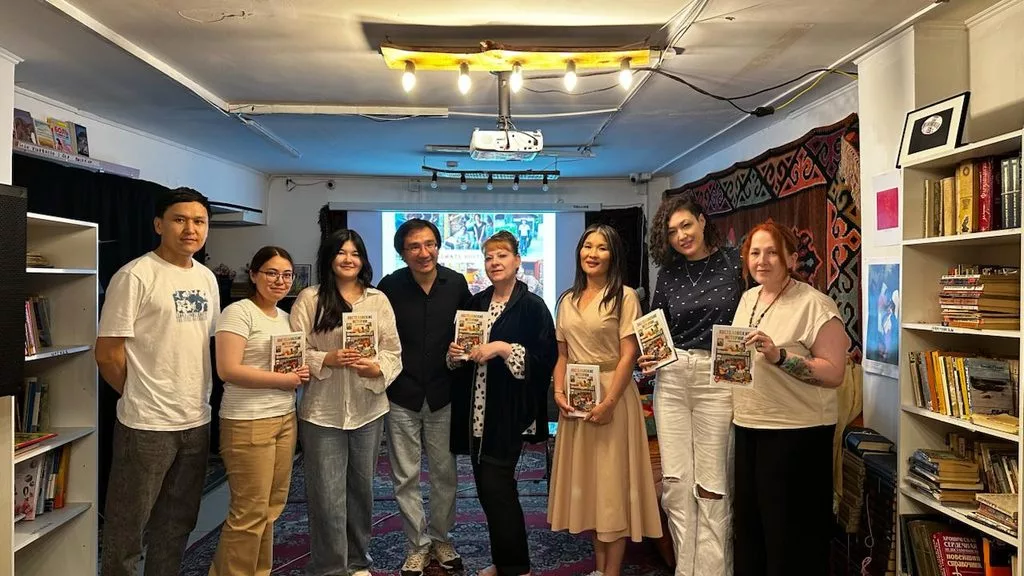
On September 5 at 15:00, GAKA Art Space in Almaty hosted an anniversary reader gathering for Hostel Stories, featuring a Q&A session with Shakir Islambakiyev and an improvisational performance inspired by the book’s narrative.