Photo: Erik Uruci / Pexels
Participants at AI & Digital Bridge 2026 in Astana discussed what artificial intelligence could offer small film crews. AAIFF Foundation founder Almas Zhali believes AI will help filmmakers show their vision for a film before they start looking for a producer. The forum’s organisers reported the discussion (drive.google.com).
What happened
The discussion on the future of filmmaking with artificial intelligence took place at the forum in Astana. Participants discussed pre-production, creating visual scenes and interactive stories in which viewers influence the plot.
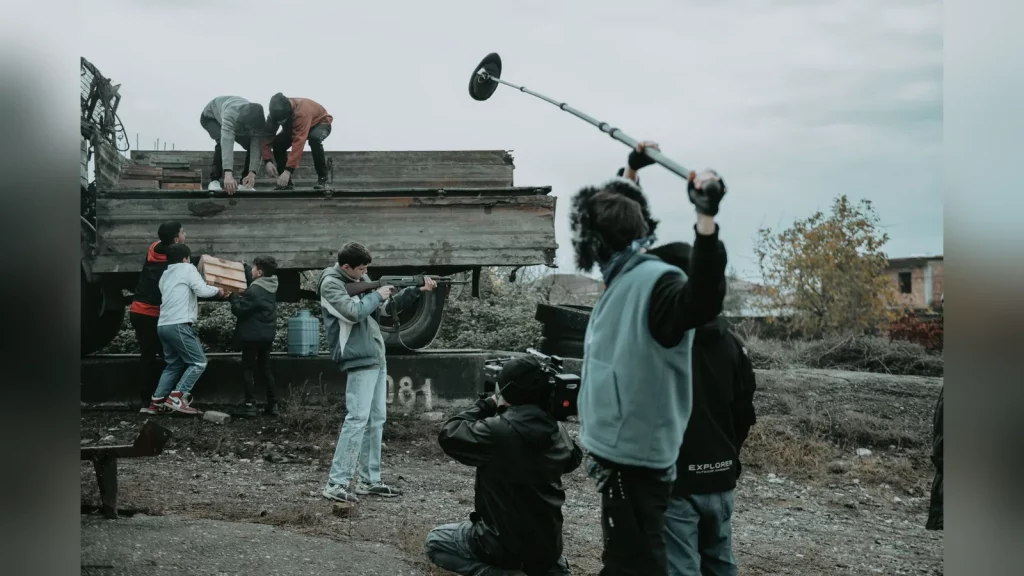
AAIFF Foundation founder and chairman Almas Zhali shared an example from his own experience. One recent feature film project took around a year of work, 47 shooting days and a crew of 160. Its budget was approximately $1.5 million.
Zhali said AI makes it possible to test ideas faster and visualise a screenplay before full production begins. He expects filmmaking to become more accessible to small teams and individual creators.
What this means for filmmakers
Zhali outlined a possible next step: screenwriters could create a visual prototype themselves to show what their film would look like.
“In a few years, screenwriters won’t necessarily have to look for a producer first. They’ll be able to turn an idea into a visual prototype themselves and show what their film looks like,” he said.
Pin Ma, dean of the Institute of Artificial Intelligence Research at China Film Group Co., linked these new possibilities to interactive cinema. He said the need to shoot additional scenes had made such projects expensive. Generative tools reduce those costs and make it possible to create stories in which viewers influence how the plot unfolds.
Why directors need their own perspective
Director Robert Gaudette, an Astana AI Film Festival finalist, believes technical quality will become less of a distinguishing factor between films. In his view, as models improve, a filmmaker’s perspective becomes more important.
Gaudette advised aspiring directors to write, watch films, study art, travel and build up personal experience. Former French culture minister Audrey Azoulay highlighted AI’s potential for working with cultural heritage and archives. At the same time, she said, artificial reconstructions must not distort history or replace reality.
AI & Digital Bridge 2026 took place on 1–3 October in Astana. It was organised by Astana Hub, Kazakhstan’s Ministry of Artificial Intelligence and Digital Development, and the capital’s city administration.