Photo: Yuri Shkoda / Pexels
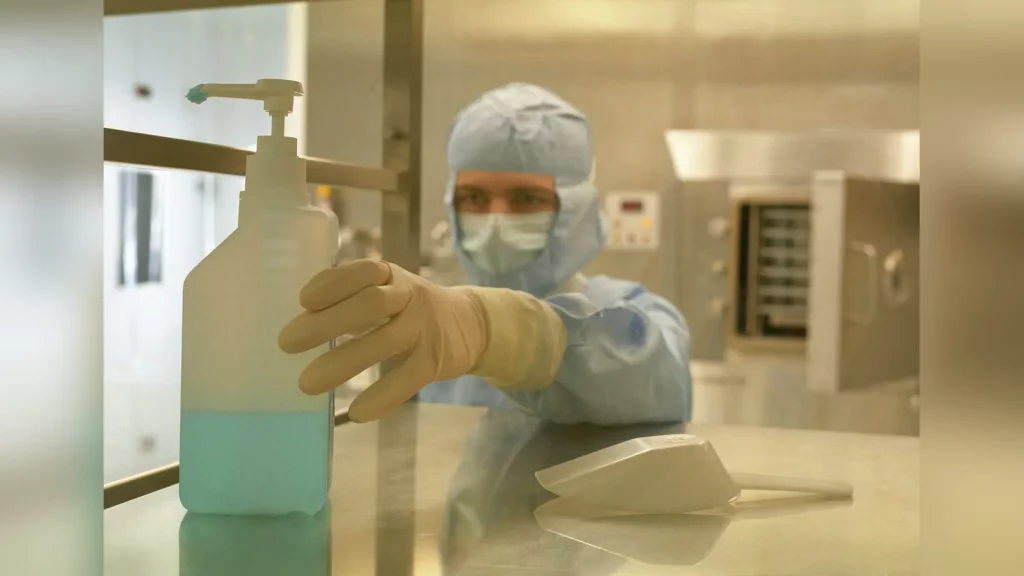
The central laboratory at the I. Zhekenova City Clinical Infectious Diseases Hospital in Almaty can process up to 15 thousand biological samples a day and perform up to 5 million tests a year, the Ministry of Healthcare reports on its Telegram channel. Vice Minister of Healthcare Manas Ramazanov visited the 2,480-square-metre facility with heads of healthcare departments. The ministry describes Almaty’s approach as “a promising model for developing laboratory services in Kazakhstan’s regions”.
How the laboratory works
At the heart of the facility is an automated track system that incorporates artificial intelligence. It handles the entire process, from receiving and sorting samples to testing and sending results to the doctor.
The system reads the barcode on each tube, identifies the tests ordered for the patient and automatically directs the sample to the appropriate equipment. If several tests are needed, it maps out a route for the tube through every stage. The system also centrifuges samples, checks their quality and flags unsuitable ones, while monitoring equipment workloads in real time. According to Almaty’s Public Health Department (gov.kz), the track system handles up to 850 tubes an hour, and a complete blood count takes about a minute. In future, AI is expected to predict reagent needs.
According to hospital director Aigul Abdrakhmanova, human involvement is limited to “loading biological material”. The laboratory covers five areas: automated testing, ELISA, PCR, microbiology and parasitology.
Why the city needs it
Automation reduces manual tasks and errors, delivers results faster and limits staff contact with biological material — a matter of biosafety for an infectious diseases hospital. A digital data exchange system connects the laboratory with medical facilities across Almaty, and biological material is delivered through a centralised service.
The facility opened in June 2026, with Minister of Healthcare Akmaral Alnazarova and Almaty Akim Darkhan Satybaldy attending the opening. “Our main goal is to improve the quality and reliability of laboratory testing,” laboratory head Laura Alikulova said at the time. Staff say automation does not replace laboratory technicians but frees them from routine tasks, leaving more time for quality control.