Скриншот: Изображения: Жандос Кадыркулов (концепты, сделаны с помощью ИИ)
Zhandos Kadyrkulov is developing Ascar the Ascaridaddy, an adult 3D animated series from Kazakhstan. He says the first release will be a 5–8-minute pilot (t.me). University conversations with a friend about imaginary worlds have grown into a project with a completed script for its first episode. The creators are still looking for production funding. raem.kz looks at the work behind the series, drawing on responses from the Creative Shift participant and his co-creator, Dmitry Kim.
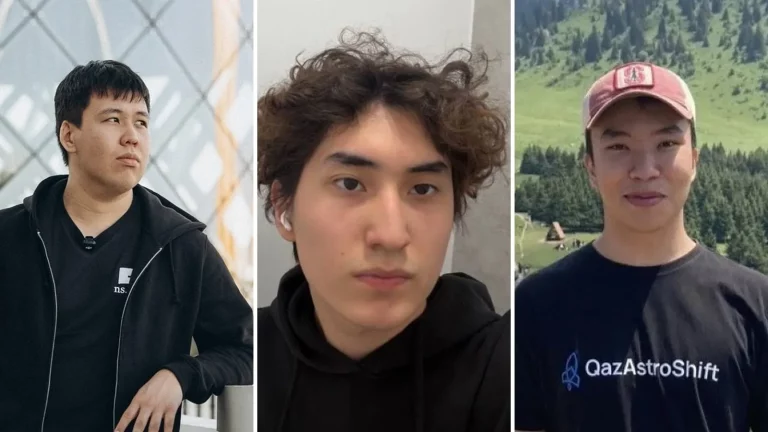
Zhandos Kadyrkulov came up with Ascar with a friend
Zhandos works as an FX artist and technical director in the animation industry. FX stands for visual effects. He chose 3D animation for his own project because, he says, that is where the team has more experience.
Dmitry Kim is the co-creator and head writer of Ascar the Ascaridaddy. Back at university, the friends would discuss ideas for different worlds. They were interested in how to invent a world and develop it in detail. In his responses, Zhandos calls this worldbuilding: creating a fictional world.
“We’re both really into creating and fleshing out worlds,” Zhandos explains. He says those discussions grew into Ascar last year. Now the conversations have a concrete next step: getting the first episode ready for production.
The choice of 3D also reflects how the creators picture the series. Zhandos thinks it will look more interesting in this format than in 2D animation. It is a creative preference for a team that has decided to work with a process it knows.
Screenshot of a conversation in Russian and Kazakh with small participant avatars. · Screenshot: Изображения: Жандос Кадыркулов (концепты, сделаны с помощью ИИ)
An adult story aimed at an international market
The series centres on Ascar, an immortal, intelligent parasite. In Dmitry’s description, the characters use superpowers to investigate the anomalies of ancient gods. Behind the fantastical creatures, the writer wants them to have relatable problems and stories of their own.
“But above all, we want to let our characters follow their own paths, rather than serve as tools for any agenda,” Dmitry says. For him, the characters’ independence is part of the project’s premise. In his responses, he stresses the desire to choose freely what stories to tell and how to tell them.
Zhandos mentions BoJack Horseman and Rick and Morty when explaining how he imagines the series. The latter provides more inspiration for its wild situations. The creators also settled on an adult audience from the start: Ascar is conceived as animation for adults.
“We’re targeting an international market and an adult audience. We see no reason to limit ourselves to Kazakhstan and the CIS,” Zhandos says. The international market remains a target for now. Dmitry says the project does not yet have an audience: the team still needs to produce the pilot before it has something to release.
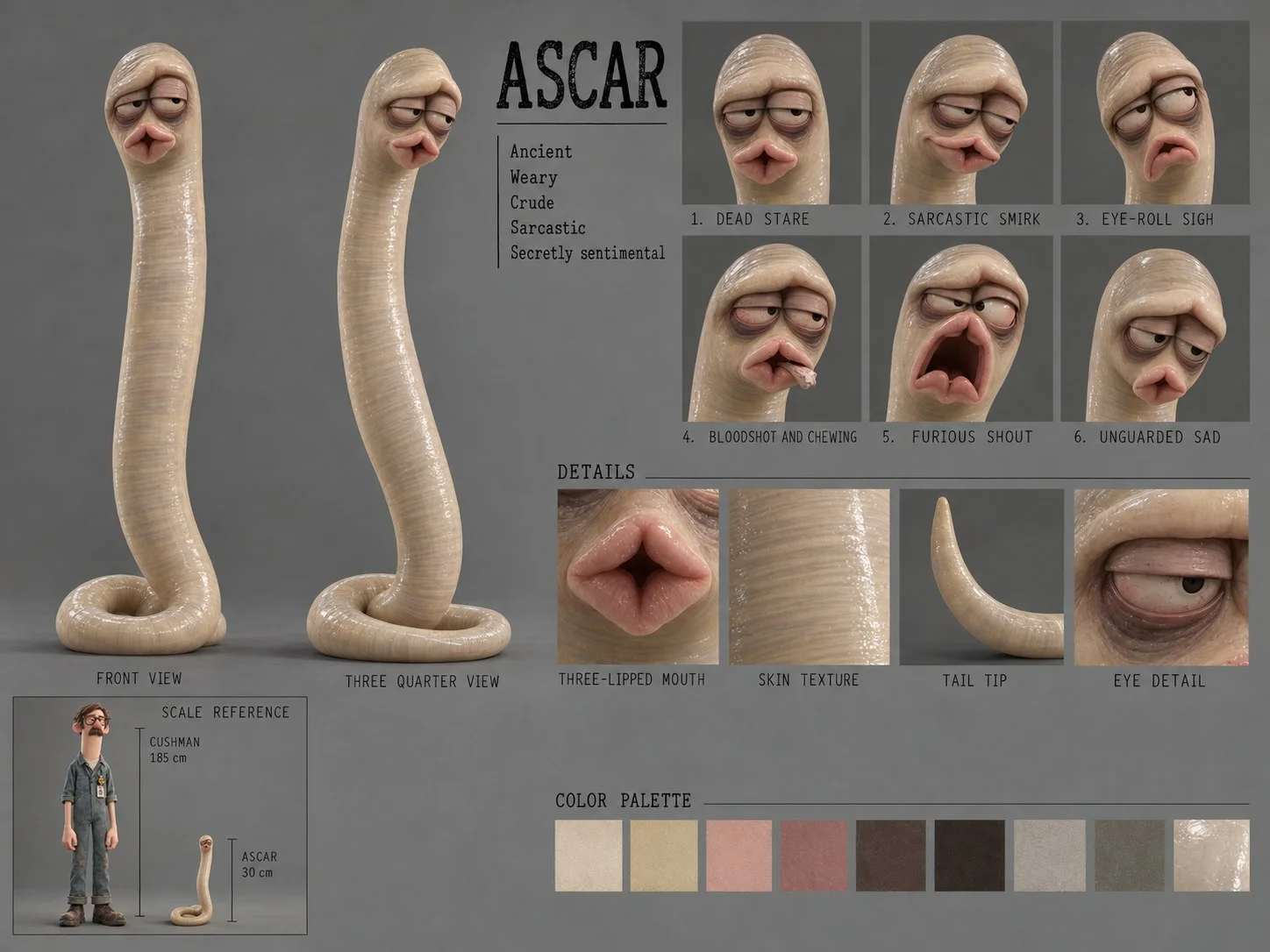
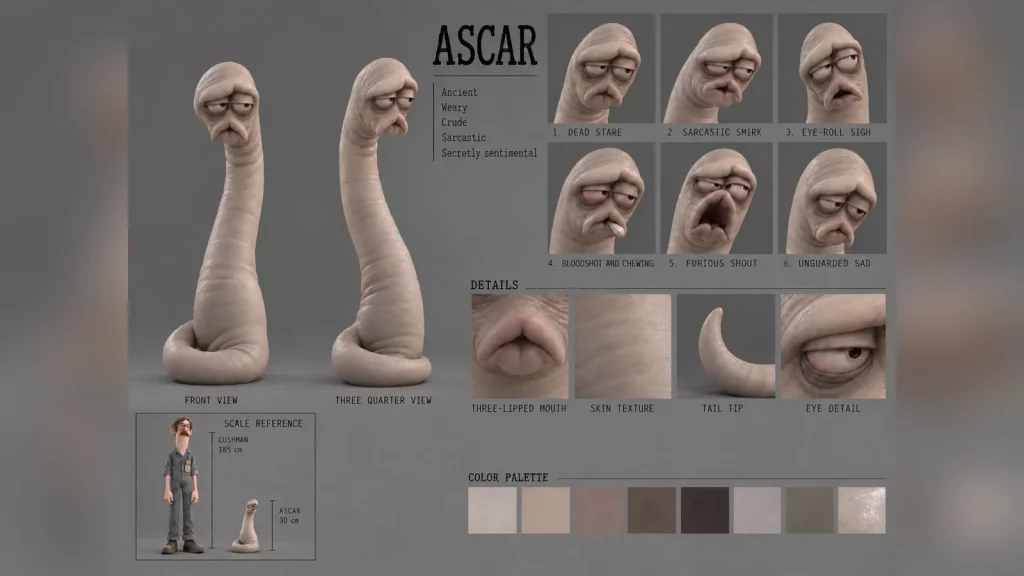
Design sheet of a wormlike 3D character with facial expressions, body details, and a human figure for scale. · Screenshot: Изображения: Жандос Кадыркулов (концепты, сделаны с помощью ИИ)
Scripts for 12 episodes are in development, with a pilot planned first
Zhandos says the creators are gradually developing scripts for 12 episodes. They are also putting together a series bible, a document describing its world. Work on that material is ongoing, so the future episodes are still in development.
The creators want to start with a pilot. This will be the first episode, after which they plan to assess the results of its release. Zhandos says its expected running time is 5–8 minutes. The script is already written; next, they need good concept art and a storyboard.
Concept art helps show what the characters and their surroundings could look like. A storyboard breaks a scene down into a sequence of shots. Ascar already has test character sheets for Cushman and Ascar, as well as a storyboard for scenes 8–10 of the pilot. Zhandos identified these materials as having been made with AI assistance.
The environments also need work before production can begin. “Ideally, I’d also like to work on creating assets for the location, but time is a bit tight at the moment,” Zhandos says. Assets here are individual objects used in a scene. He would like to make more progress on them, but currently cannot spare enough time for the project.
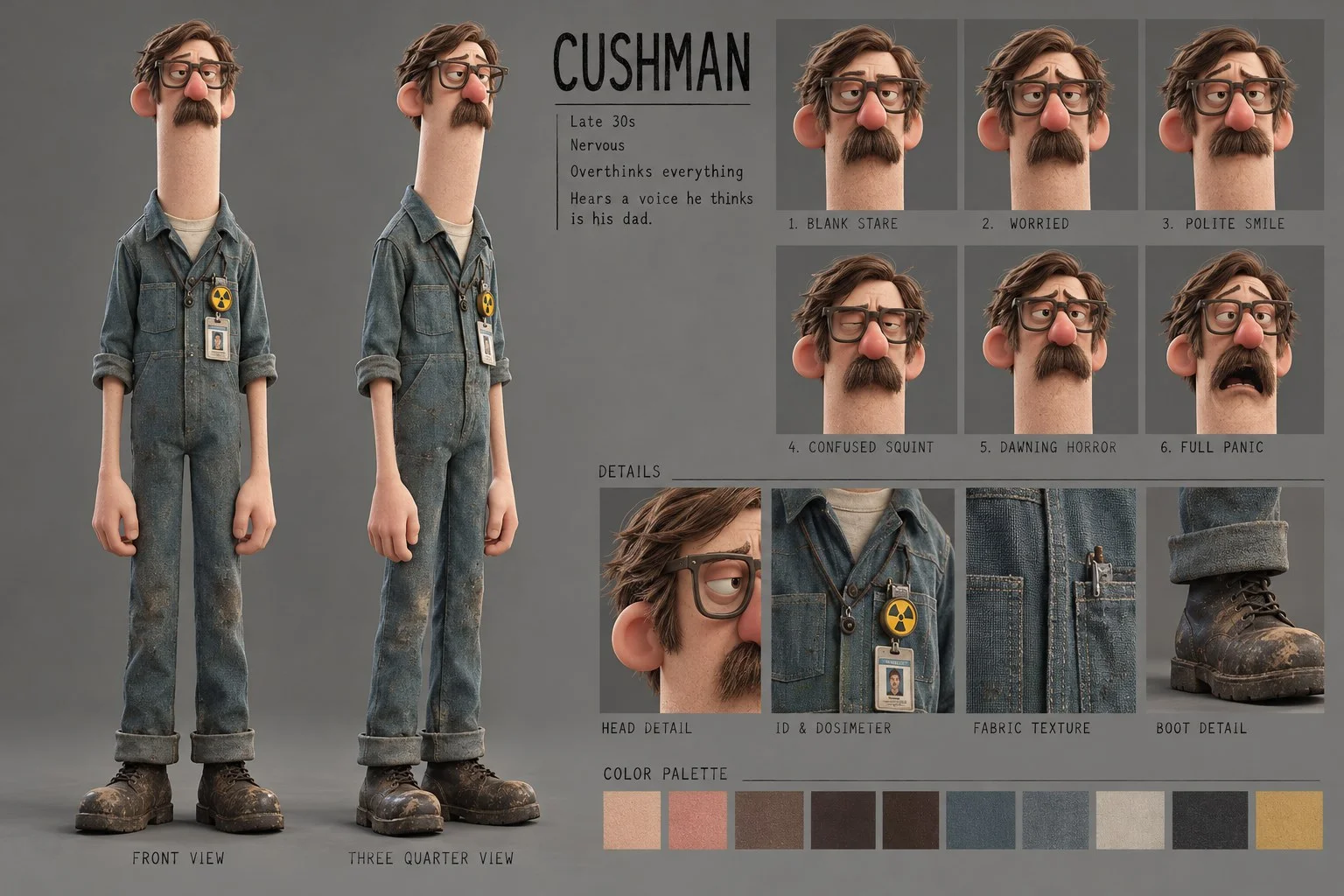
A cartoon 3D character design sheet showing a worker in coveralls, multiple views, expressions, clothing details and a color palette. · Screenshot: Изображения: Жандос Кадыркулов (концепты, сделаны с помощью ИИ)
Production funding still needs to be found
Zhandos sees the main difficulty in the production ahead: securing funding for the pilot episode. Dmitry says the project has no investors or financial backing yet. Having a script therefore does not mean the team can fully commit to producing the episode.
“The hardest part is finding the money and the time. We find time late at night after work and on weekends. We haven’t found the money yet,” Dmitry says. The creators currently fit Ascar around their jobs. They develop the project in whatever hours they can spare in the evenings and on weekends.
One detail matters here: Zhandos is cautious even about plans for the coming year. He explicitly ties further progress to money. Script development is already underway, but producing the pilot depends on whether they can secure funding.
That makes the team’s immediate financial task quite specific: finding the money for the first episode. Zhandos plans to keep looking for funding beyond Creative Shift as well.
Creative Shift brought experience and connections
Zhandos is taking part in Creative Shift with Ascar. When discussing what he has gained from the programme, he puts experience and connections with like-minded people first. He enjoyed being able to talk to participants from different regions of Kazakhstan, as well as mentors.
“Creative Shift gave me experience and connections with like-minded people,” Zhandos says. For a project still being developed outside working hours, taking part offered a chance to discuss how to move forward. A clearer understanding of the next steps is exactly what he hopes to take away from the programme.
“By the end, I’m hoping for a clearer idea of where to go and how to turn the project into something we can release,” he explains. That brings together Ascar’s current tasks: preparing materials, finding funding and releasing the first episode. The result the creators are working towards is a pilot that audiences can watch.
With funding, the pilot could be made within a year
Zhandos estimates that, with funding, the team could produce and release the pilot episode within a year. After its release, the creators want to start measuring the results. This estimate describes how work could proceed if funding is secured; the project has no set release date yet.
“What I can say for sure is that we’ll look for funding outside Creative Shift too, so we can really get to work on the project,” Zhandos says. Looking for money remains his definite next step. He is cautious about longer-term plans because they depend on the outcome of that search.
Asked what the project needs, Dmitry also singles out people who are ready to act. He describes them as people who “don’t just talk, but get a lot done.” That is how the co-creator describes the kind of involvement he wants in the work on Ascar.
“Just do it and do the maths”
Zhandos’s advice to new creators combines courage with a habit of doing the maths. He believes working in the creative industry means building up the courage to do what you enjoy. But he puts keeping track of money alongside creative work.
“I think I can offer only two pieces of advice: Just do it and do the maths,” he says. By that, he means tracking expenses, income and debts. Zhandos considers that habit essential to working in animation.
For anyone launching a project, he recommends developing that skill alongside creative courage: “Whether you survive in the animation industry specifically depends on the second skill.”