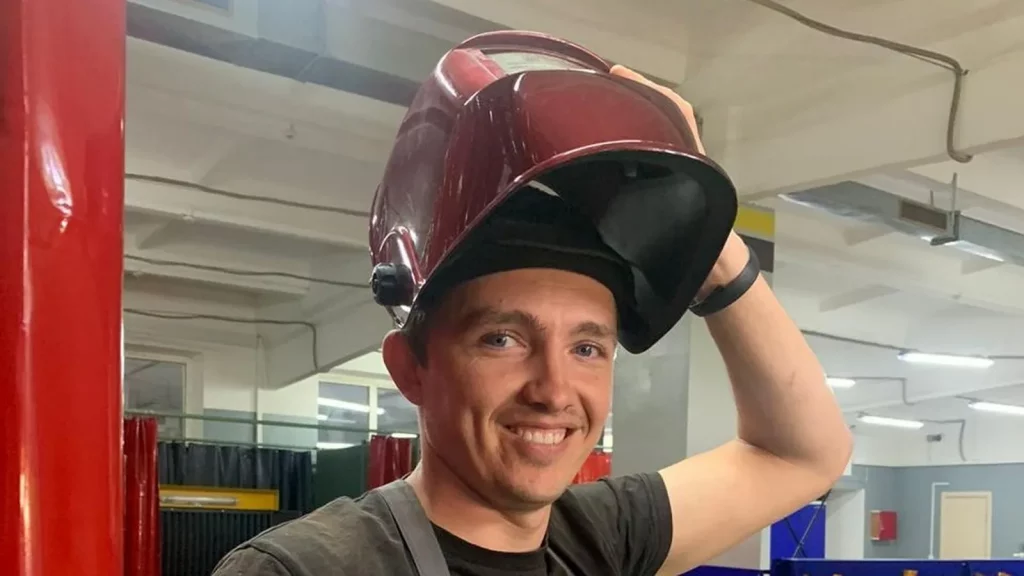
Фото из личного архива
Alexey Shemyakov, a welder from Astana, built the dating service Tanys (tanys.space) in just over five months. A human moderator reviews every profile before it goes live. According to figures from the admin dashboard shared by the founder, the service had 3,127 profiles and 1,826 matches, meaning mutual likes, as of November 12. He had no programming background: he built the first version with AI directly in Telegram. Alexey says he invested around 400,000 tenge of his own money, excluding development. raem.kz spoke to him about human moderation, a mode for people with low vision and the attempts to attract users that fell flat.
A welder, three children and a service in Telegram
Alexey is a welder by trade. He lives in Astana, is married and has three children. He says he launched Tanys on June 1, 2026. The idea came from something he had noticed: many people want to meet others online but do not trust dating services. There are fake profiles, teenagers and strange messages, and it is hard to know who you are talking to.
“I’m not a programmer: I built the first version of Tanys with AI directly in Telegram,” he says.
The service started in Telegram because people were already on their phones and would not need to download anything. It is a mini app inside the messenger, with an interface in three languages. Alexey says a standalone app has been submitted to RuStore and Google Play, and he plans to launch on the App Store by the end of 2026.
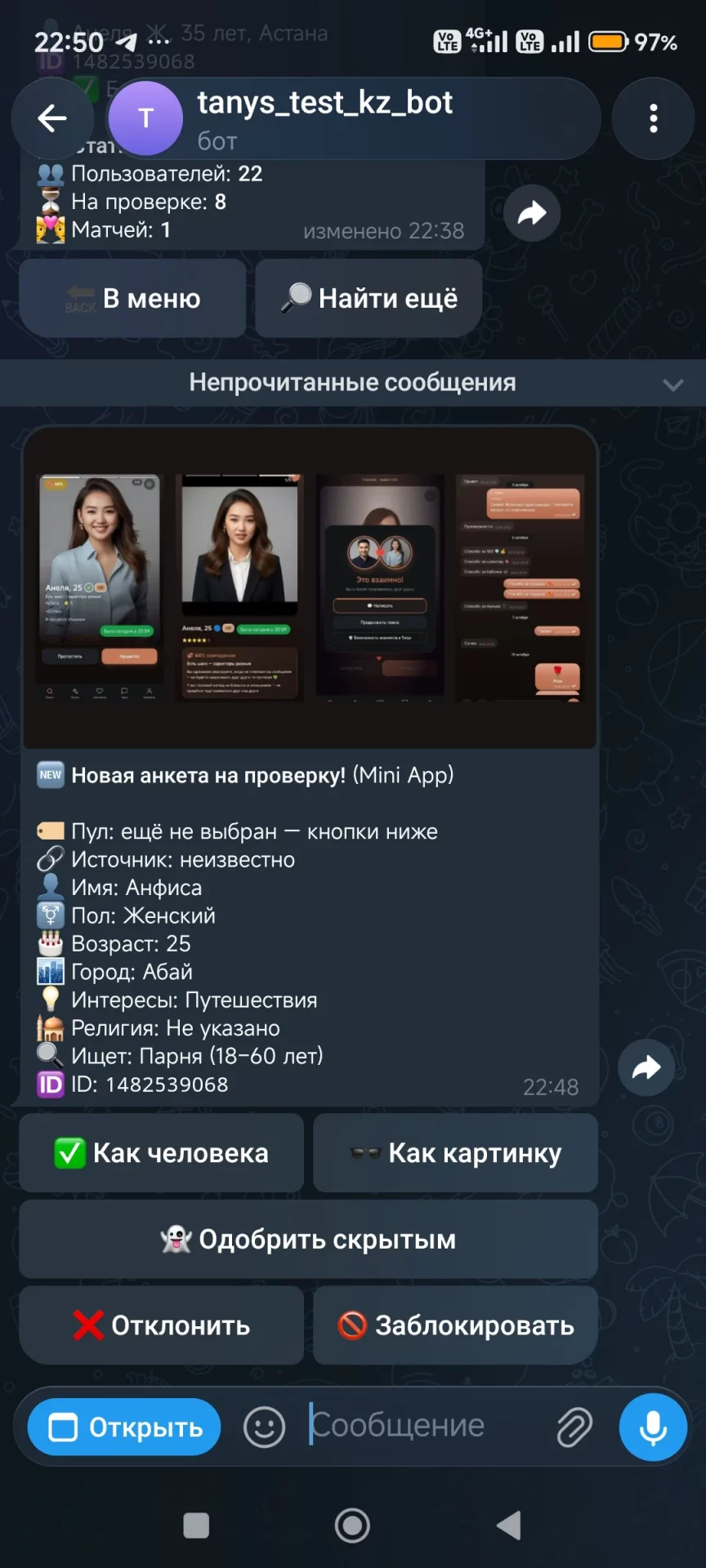
Screenshot of a Telegram bot showing a profile awaiting review and dating app screens. · Screenshot: Tanys
Safety is built into the product
Alexey sees the main difference between Tanys and Tinder or Mamba as safety being built into the product, rather than coming into play after complaints.
“I wanted to build a dating service with safety built into the product,” he explains.
According to Alexey, users register, choose a language, confirm they are at least 18 and submit their profile for review. They can start liking profiles straight away. Messaging and the ability to see who has liked them become available only after verification. A chat opens when two people like each other. Phone numbers and links in messages are hidden automatically. Users can exchange contact details only once both have tapped “Ready to meet”.
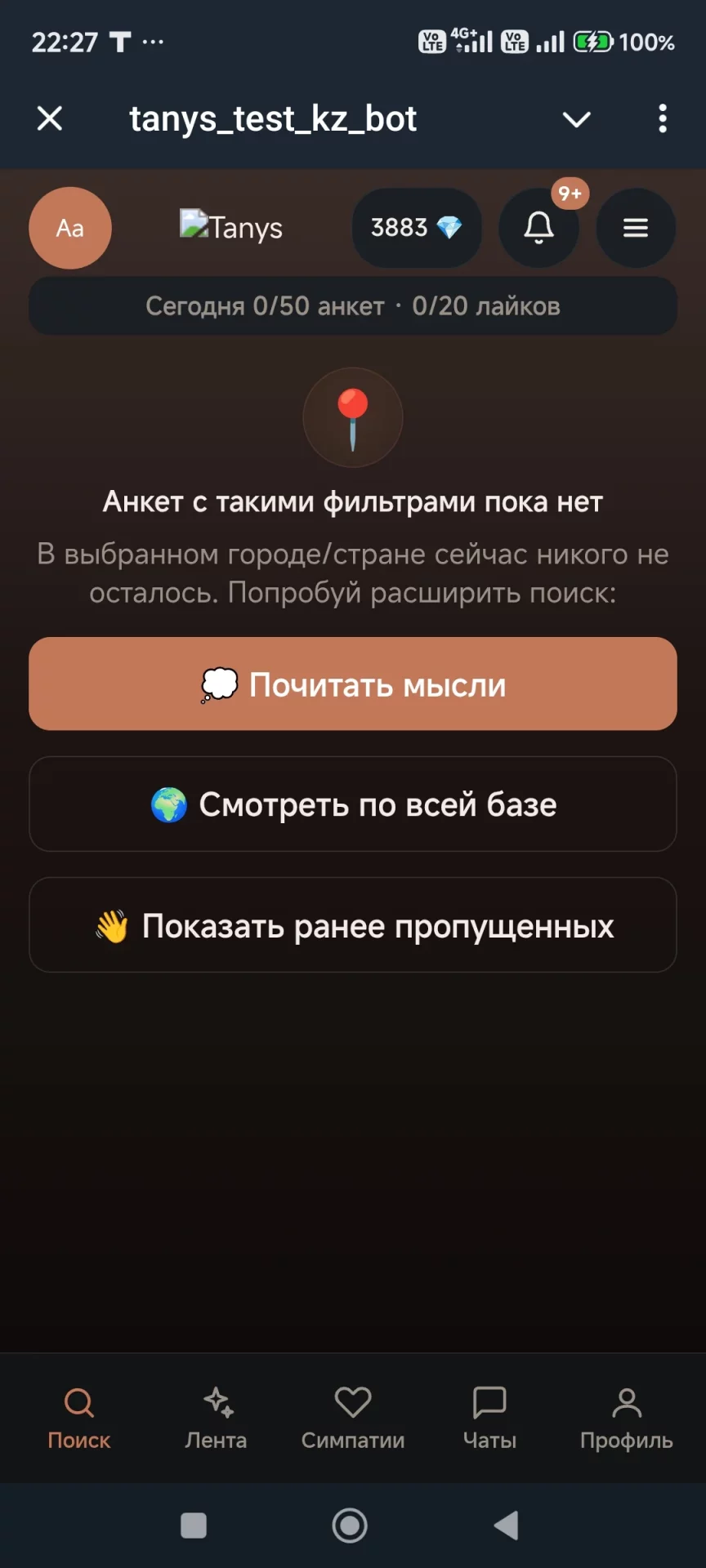
Screenshot of the Tanys dating app interface · Screenshot: Tanys
A human moderator checks every profile before it goes live
Alexey says moderation runs from 7:00 to 00:00 Astana time, with reviews taking about five minutes on average. Roman Zakirov handles moderation, while Diana Shemyakova handles user support.
“Automation doesn’t see what a person sees: a fake photo, a minor, an indecent profile,” Alexey says.
The moderator searches publicly available sources for the profile photo. If the photo cannot be found online, the profile goes into a pool of real people with genuine photos. If the photo turns up online or is just an image, the profile goes into a separate pool for images. This helps users understand who they are dealing with.
Alexey says verification is required to send messages: users submit a photo showing an open palm, which the moderator checks against their profile and then deletes. Anyone whose profile lists their age as 18 to 21 must also submit a photo of their ID. Users cover their individual identification number themselves; the moderator checks their face and year of birth.
According to the admin dashboard figures Alexey shared, 479 profiles have been rejected since launch, most often because of fake or inappropriate photos. Currently, 43 accounts are blocked for indecent photos, offers of sexual services and attempts by minors to register.
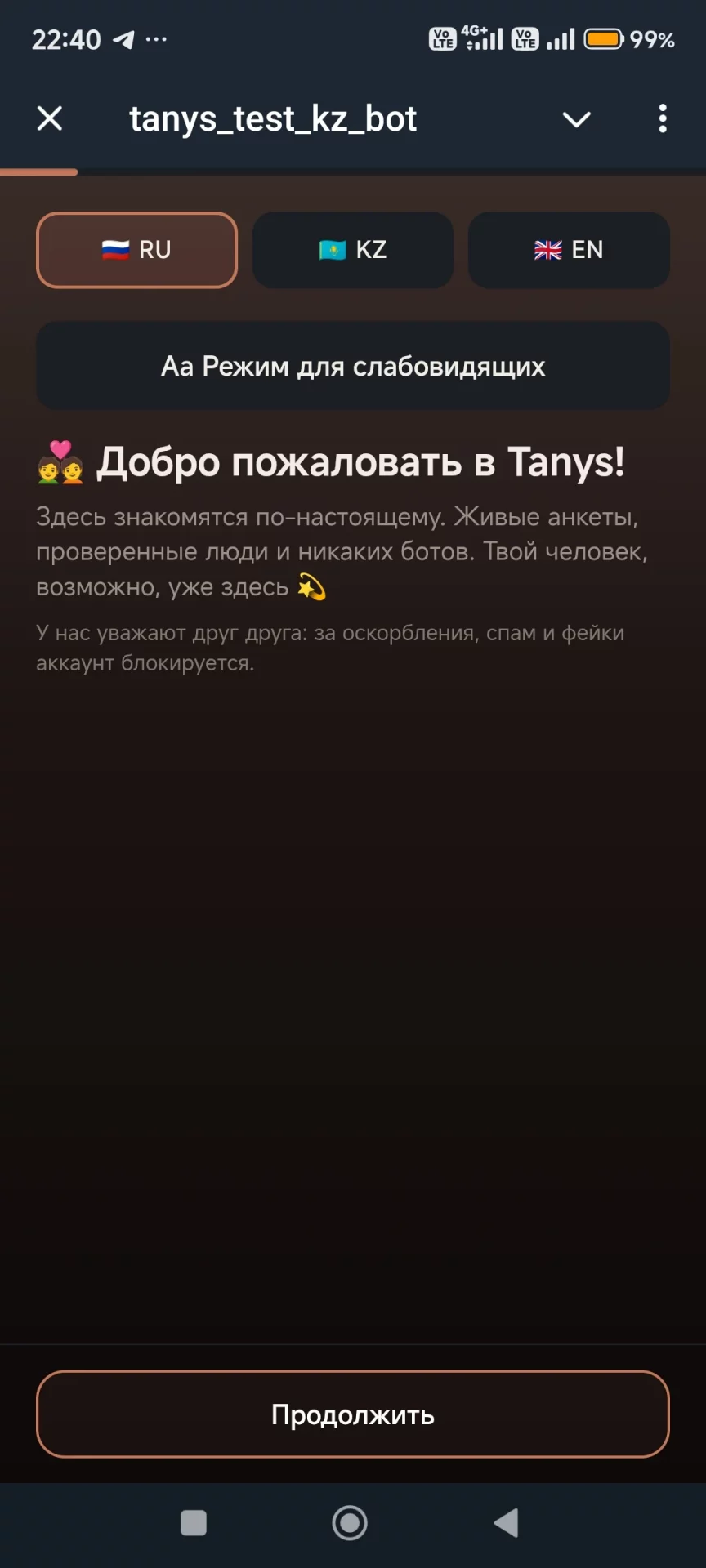
The Tanys welcome screen in Telegram. · Screenshot: Tanys
“Aa” mode for people with low vision: speech on the team’s own server
The standard VoiceOver and TalkBack screen readers did not work with Tanys buttons inside the Telegram Mini App. So the team built its own speech feature. The “Aa” button in the top-left corner increases the font size across all screens and enables spoken button labels. Users can turn it on from the first registration screen.
The speech feature uses the Piper engine. Speech is generated on the team’s own server, without cloud services. The app sends the button text, and the server returns audio. The voices are Irina for Russian, ISSAI for Kazakh and Amy for English. Photo descriptions are not available yet but are planned. The mode is not yet available in the standalone apps either.
A young woman with low vision contacted Alexey through Threads. The first test revealed bugs, which were fixed, and they are testing the mode together. The Nasledie public association and the Center for Social Inclusion Programs foundation also responded. Initial contact has been made, and they are discussing how to work together.
What worked to attract users and what did not
Alexey says there is almost no money for advertising, so he assesses ideas using the ICE method: what impact they could have, how confident he is and how easy they would be to carry out. Each idea has a success criterion set in advance. He says he has worked this way since joining the CASE accelerator on October 20.
Since June, Alexey says he has tried Telegram, Instagram, Threads, TikTok, YouTube, Odnoklassniki and VKontakte. He paid bloggers for bringing in users and launched a refer-a-friend programme. He says media coverage and an affiliate link worked best. According to Alexey, a woman working as an affiliate earns 100 tenge for each person who registers and passes moderation. As of November 13, her link had brought in 879 people.
On a typical day, Alexey says, the service gets 20–40 registrations through organic traffic. There are spikes when a social media post takes off. According to the admin dashboard figures he shared, there were 497 registrations in the seven days leading up to November 12. His founder’s diary on Threads brought him the young woman with low vision and two organisations working on inclusion.
Bloggers proved less successful. Alexey had no money to pay them.
“Bloggers stopped bringing people in when I ran out of money to pay them,” he says.
Exchanging recommendations with other CASE projects and offering users VIP status in return for posting Stories produced no results. Some city Telegram channels declined to collaborate. Alexey says five organisations for people with low vision did not reply to emails sent on November 7. He removed the option to buy in-app currency through Telegram Stars: getting more people to join matters more right now.
The numbers and costs
Alexey says 1,586 people had been active in the past 30 days as of November 13. Across 1,694 chats, 34 pairs marked themselves as ready to meet, and 22 pairs exchanged contact details. A total of 46 people activated VIP status using the in-app currency, “katabaly”.
Alexey says users are not paying real money yet. He operates as a private individual because the project has no revenue. He promises to register a business as soon as it starts earning money. The server is in Almaty. There are no investors: Alexey put around 400,000 tenge of his own money into promotion, the server and the domain, excluding development.
Plans: 10,000 users and Demo Day
Alexey says that once the service has around 10,000 users, he wants to earn money from venues and shops that join the app. He will then register a business and be able to hire moderators, including people with special needs.
He says the accelerator gave him a more structured approach.
“I used to do everything at once, but now I have a financial plan, a payment calendar, a list of ideas with scores and a tracker,” he says.
Alexey outlines the next steps. RuStore raised three minor issues, and they are waiting for a decision. A 14-day closed test with 12 testers is underway on Google Play. The CASE accelerator’s Demo Day is scheduled for December 8. Alexey wants to finish refining the accessibility mode with the people who use it.
The main takeaway: one channel cannot sustain the project
One channel cannot sustain the project, Alexey believes: “you need several small ones, and each needs its own number.” In his experience, word of mouth matters especially in dating: people are more likely to join a service where they already know someone and where profiles are checked.
Stories of other Kazakhstani founders building products with AI, such as Alex Mashrabov of Higgsfield, are collected in our section on biographies of Kazakhstan’s founders. Our EdooX profile in Startup Radar also shows how a small team can launch a product without a large investment.
Startup Radar: Tanys