
Following high-level diplomatic and commercial summits in Shanghai, the Kazakhstani administration announced the signing of more than 70 bilateral commercial agreements valued in excess of $15 billion. The pacts span artificial intelligence, heavy industrial robotics, electric vehicles, logistics corridors, cross-border banking, and infrastructure. Yet behind the multi-billion-dollar headline, a crucial analytical gap remains: only 17 documents have been publicly itemized, with the remainder kept behind closed doors.
In this comprehensive investigation from RAEM’s «Kazakhstan × China» series, we audit the verified components of the $15 billion transaction portfolio, isolate definitive binding contracts from aspirational memoranda of understanding (MOUs), and evaluate the fiscal balance between incoming Chinese foreign direct investment and escalating sovereign debt obligations.
Out of 70 Announced Agreements, Only 17 Are Publicly Disclosed
On July 16, 2026, President Kassym-Jomart Tokayev convened high-level roundtable discussions in Shanghai with chairpersons and CEOs of leading Chinese technology and industrial corporations.
Following the assembly, official communiqués highlighted more than 70 commercial compacts exceeding $15 billion. However, public registers itemize precisely 17 formal documents exchanged on stage during the official signing ceremony. What substantive commitments govern the remaining 50-plus bilateral agreements remains undisclosed to the public.
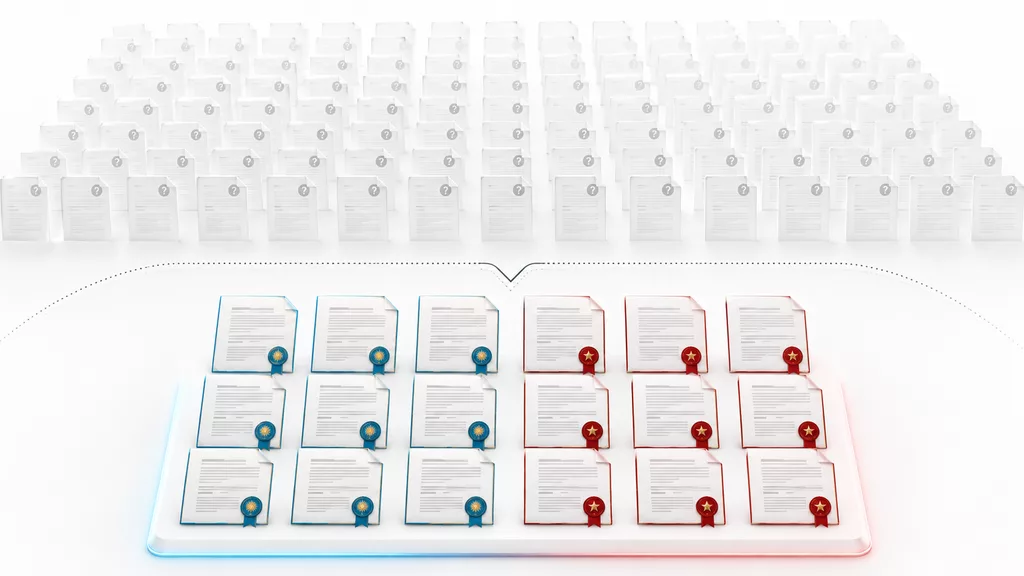
Out of more than 70 announced commercial compacts, only 17 have been publicly itemized. RAEM Analytical Breakdown
Sectoral Breakdown of the Published Agreements
Artificial Intelligence and Digital Cloud Infrastructure
Four major agreements establish Chinese technology across Kazakhstan’s digital architecture:
• Strategic partnership between the Ministry of AI and Digital Development and Huawei;
• Procurement of Huawei enterprise hardware and digital solutions for sovereign wealth fund Samruk-Kazyna;
• Direct equity and construction participation by Hengtong Group in the national Data Center Valley hyperscale project;
• Infrastructure development compact between Transtelecom and GuoDong Group covering cellular antenna towers and backhaul networks.
Chinese hardware and cloud software are securing structural positions across every tier of Kazakhstan’s digital state apparatus: telecom transmission, data centers, enterprise software, and government AI workflows.
Robotics and Advanced Hardware
Three core agreements govern robotics:
• QAZBOT Technologies and AgiBot breaking ground on the $200 million Robotics & AI industrial complex in Astana;
• Akimat of Almaty, NERO Group, and UBTECH Robotics developing an urban robotics testbed and AI center;
• Al-Farabi Kazakh National University executing an academic engineering partnership with Jiangsu Huibo Robot Technology.
Automotive Manufacturing and EV Ecosystems
Three automotive compacts accelerate Chinese EV penetration:
• Industrial agreement between Allur and Li Auto to assemble vehicles in Kazakhstan;
• Commercial licensing from Chery to produce OMODA and JAECOO models at the multi-brand Astana Motors plant;
• Four-party memorandum uniting Samruk-Kazyna, Freedom Holding Corp., Akimat of Astana, and Geely to build EV charging networks integrated with AI load balancing.
Nevertheless, critical manufacturing parameters for Li Auto remain undisclosed: exact vehicle models, CKD localization percentages, construction timelines, and capital expenditure figures have not been formally released.
Cross-Border Freight and Port Logistics
Three logistical compacts enhance transport throughput:
• Commercial investments in Phase 1 cargo terminals at the Caspian Port of Kuryk;
• Dedicated logistics corridor modernization bridging both sides of the Khorgos Free Trade Zone;
• Equipping land border checkpoints with automated Chinese x-ray inspection scanners, paired with domestic maintenance localization.
Bilateral rail freight between Kazakhstan and China reached 18.7 million tons in the first half of 2026. The primary challenge is no longer attracting freight, but whether physical rail corridors can absorb relentless volume growth.
Finance and Capital Markets
Development Bank of Kazakhstan (DBK) finalized an agreement with China Central Depository & Clearing (CCDC) to streamline Kazakhstani access to China’s onshore debt capital markets. This facilitates the issuance of Panda bonds denominated in Chinese yuan, establishing alternative institutional financing channels outside the Western financial system.

Macroeconomic trade flows, foreign direct investment, and external debt obligations between Kazakhstan and China. RAEM Chart
Bilateral Trade Approaches $50 Billion Milestone
In 2025, bilateral trade between Kazakhstan and China reached $48.7 billion—up 11% year-on-year. Across the first five months of 2026 alone, trade volume reached $22 billion (a 27% increase), positioning full-year turnover to comfortably surpass $50 billion on the path toward the stated $100 billion target.
Over half of bilateral exchange transits the Xinjiang Uyghur Autonomous Region, anchoring the overland Silk Road. Between 2005 and 2025, cumulative Chinese FDI into Kazakhstan exceeded $29.3 billion, with over 8,500 active joint enterprises registered nationwide.
The Debt Counterweight: Liabilities Reach $12.8 Billion
According to National Bank of Kazakhstan figures, external debt obligations to Chinese creditors stood at $10.3 billion as of mid-2025, with institutional estimates from Eurasianet pegging total commitments at $12.87 billion by early 2026. As Kazakhstani sovereign and state-owned entities increasingly issue yuan-denominated debt instruments, financial interconnectedness brings structural currency exchange risks alongside capital investment.
Crucial Undisclosed Parameters
Independent analysis reveals significant information gaps across the package:
• Lack of full disclosure regarding 50+ supporting commercial documents;
• Unspecified equity splits and corporate ownership structures in major joint ventures;
• Absent deadlines for plant commissioning and commercial production output;
• Uncodified local component manufacturing and technology transfer thresholds.
A $15 billion headline does not automatically equate to operational industrial factories. Authentic success will be evaluated by verifiable milestones: physical steel erected, domestic engineers trained, and export products shipped.