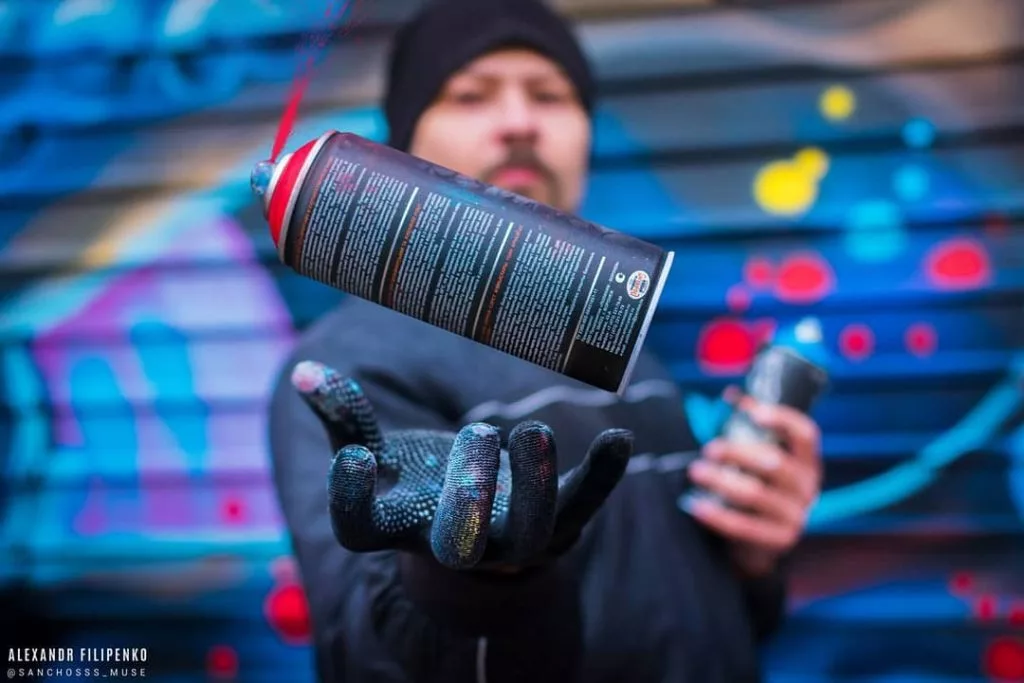
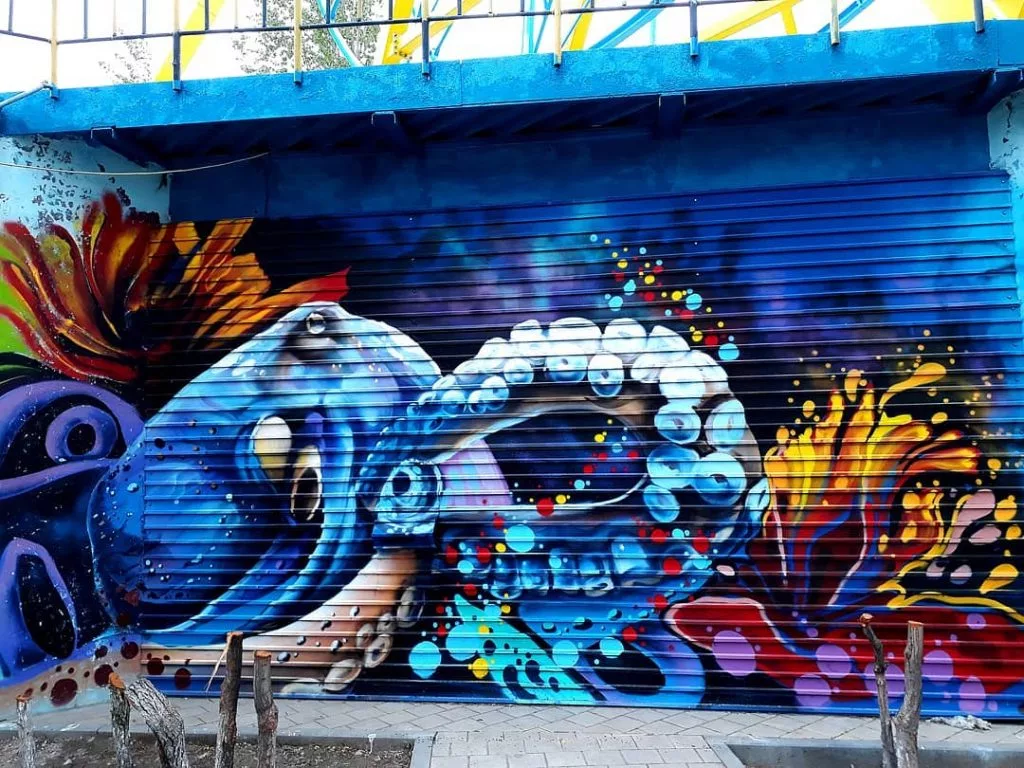
Aleksandr Voronchikhin is a prominent Kazakhstani street artist and muralist based in Almaty, renowned for large-scale architectural wall paintings, commercial decorative art, and custom graffiti. In an in-depth conversation with RAEM, Voronchikhin explores the intersection of physical street art and generative artificial intelligence: how tools like Midjourney cut preliminary sketch preparation in half, why human conceptual vision remains irreplaceable, why robotic wall printers cannot match hand-applied durability, and how artists must price craftsmanship over raw materials.
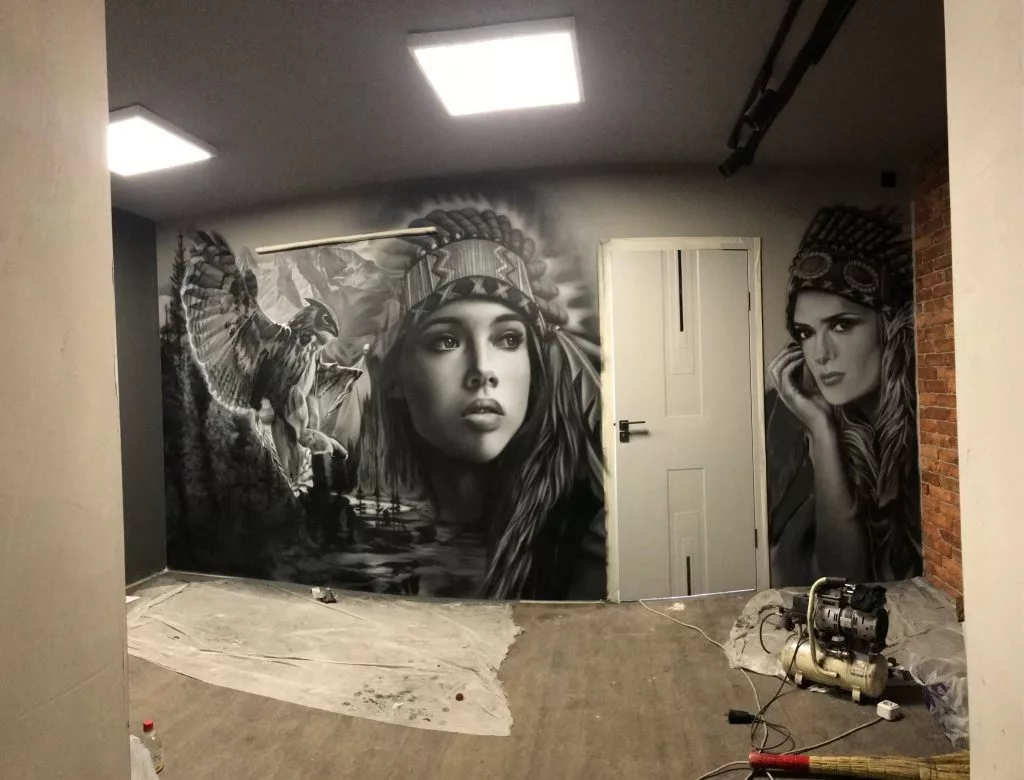
From Paper Sketches to Monumental Wall Murals
— Aleksandr, how did your journey in street art begin, and how has the profession evolved?
I’ve been drawing since childhood. Around the 2000s, like many teenagers, I got captivated by hip-hop culture, skateboards, and street graffiti. Back then, everything started on notebook paper: you sketched letterforms, tags, and stylized figures with ballpoint pens, pooled money together for spray cans, and practiced on back-alley walls.
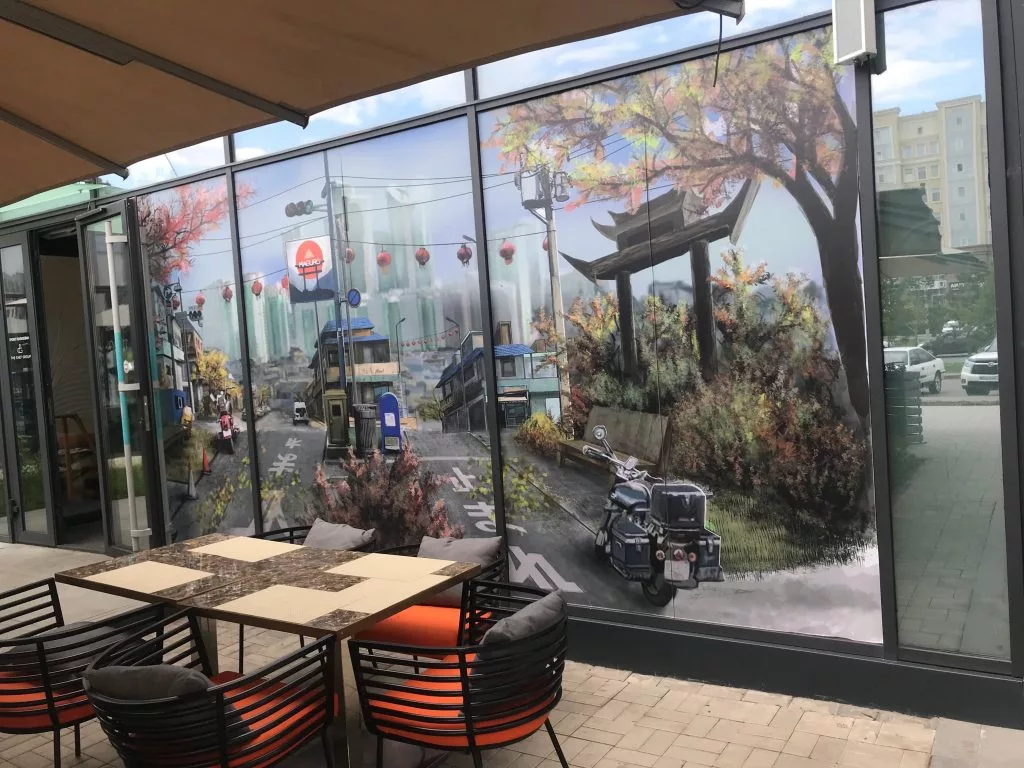
Over fifteen years, that youthful passion transformed into serious professional monumental art. Today, I execute decorative murals for corporate offices, restaurant interiors, private residences, and multi-story building facades across Kazakhstan. Street art is no longer seen as vandalism; it’s recognized as powerful contemporary design.
AI Accelerates Preliminary Sketches, Cutting Prep Time in Half
— When did neural networks like Midjourney enter your creative process?
About two years ago, when Midjourney reached Version 5. Before that, generative images were too abstract and anatomically distorted. But when the models learned accurate perspective, lighting, and textures, I immediately recognized their value as an assistive tool.
Previously, preparing a mural concept for a commercial client took days. You had to search through Pinterest, assemble mood boards, manually composite elements in Photoshop, draw intermediate color roughs, and hope the client understood the direction. Today, I can generate dozens of stylistic variations—exploring cyberpunk lighting, classical realism, surreal geometry—in a couple of hours.
AI effectively cuts the preparatory concept phase by 40% to 50%. It speeds up alignment with the client dramatically.
The Concept Remains Human: Why It Isn’t Merely «Neuro-Art»
— Does using AI diminish the artist’s individual creative voice?
Not in the slightest. The neural network generates pixels; it does not generate meaning. It has no lived experience, no cultural context, no understanding of the architectural space where the mural will live.
I never take a raw AI output and project it onto a wall 1:1. The prompt, the composition, the selection of color harmonies, and the narrative intent come entirely from me. I use AI the way a classical renaissance painter used studio apprentices: to prepare underdrawings and test color palettes. When you pick up the spray can or brush and face a twelve-meter concrete wall, every gesture, stroke thickness, and gradient transition is pure human technique.
When Clients Bring Their Own AI-Generated Sketches
— Do clients ever approach you with Midjourney pictures and say, «Paint exactly this»?
Constantly now. Clients think that because Midjourney rendered an image on a six-inch phone screen, it can effortlessly be transferred to a 50-square-meter curved wall. That’s where the professional artist’s real expertise comes into play.
AI images often feature impossible light sources, anatomically incoherent limbs, and perspective lines that break completely across real room geometry. I have to explain to clients how lighting behaves in their specific physical space, reconstruct the anatomy, and adjust color gamuts to real aerosol paints. AI gave the client a visual starting point, but translating it into architectural reality requires deep craftsmanship.
Wall-Printing Robots vs Hand Painting: Speed vs Durability
— What about vertical wall-printing machines? Do they threaten hand muralists?
Vertical UV wall printers have become popular among certain commercial contractors. On paper, they sound miraculous: you upload a file, press a button, and the printer rolls along the wall spraying ink.
In practice, their limitations are substantial. First, a wall printer requires a perfectly flat, plumb surface. If a wall has minor plaster indentations, brick texture, or electrical conduits, the printhead jams or banding occurs. Second, printer UV inks lay down microscopically thin ink layers that lack deep pigmentation. Under Kazakhstan’s intense continental climate—scorching summer sun and freezing winters—printed wall art fades and peels within two to three years.
A hand-painted mural using high-grade acrylics, specialized masonry primers, and UV-resistant aerosol enamels penetrates the surface porosity, maintaining vibrancy for a decade or more. Furthermore, machines cannot replicate metallic sheens, heavy impasto textures, or dynamic brushwork.
Pricing Craftsmanship Over Consumables
— How should artists structure their pricing in today’s economic climate?
A fundamental rule of professional craftsmanship: the primary markup must reflect labor hours, expertise, and vision—not the cost of paint cans. If materials and consumables exceed 30% of your total invoice, your business model is broken. Over the last eighteen months, imported spray paint and acrylic prices nearly doubled in Kazakhstan. If you anchor your fee to material markups, inflation erodes your livelihood immediately.
In bespoke decorative painting, at least two-thirds of the price must account for the artist’s time, technical skill, and diagnostic vision. It’s like consulting a surgeon: you don’t pay for the scalpel; you pay for the decades of practice that ensure the cut is precise.
Price dumping remains a frustration in our industry. Some novices slash prices to win projects, deliver poor quality, and vanish when the paint flakes off a year later. Unhealthy discounting undermines client trust across the entire creative sector.
Where AI Could Genuinely Help: Administrative Automation
— Where would you like to see AI develop further in your daily routine?
In client management and project coordination. At peak times, I’ve managed eleven simultaneous WhatsApp group chats with different clients, suppliers, architects, and scaffold contractors. Tracking revision requests, dimensions, invoice approvals, and delivery dates across eleven active channels is exhausting for any creative person.
If an AI agent could handle routine correspondence, draft commercial proposals, and log specifications reliably, that would be transformative. But until agents can guarantee data privacy and flawless accountability, human oversight is mandatory. A creative reputation built over fifteen years can be demolished in an afternoon by an unverified automated error.
Advice to the Next Generation of Artists
— What is your advice for young artists embarking on their creative careers?
Never stop expanding your knowledge base. Fine art is exceptional because it forces you to understand the world broadly: to render architectural space, you need geometry, optics, and material science. To paint human figures, you need anatomy. Even to paint a realistic industrial tractor, you need an understanding of mechanical engineering.
And remember this above all: if you cultivate your own powerful human intellect, no artificial intelligence will ever make you obsolete.
Explore Aleksandr Voronchikhin’s portfolio on Instagram: @aleksandr_alive_.
Interview conducted by Raimbek Iskendirov, Raem.kz. For broader context on how creative professionals adapt to technology, read our analysis on how artificial intelligence reshapes creative professions and workplace skills.