Applications closed on September 3, 2026. This material is preserved for archival and historical reference.
Astana Hub launched its recruitment intake for a 14-week Tech Incubator tailored for early-stage ventures in robotics, smart connected devices, unmanned autonomous systems, and cybersecurity. The program ran from September through December 2026 primarily on-site in Astana, backed by structured digital support between sessions.
Applications officially closed on September 3, 2026. Because precise closing timestamps were not specified on the public portal, submitting at the last minute posed procedural risks. This was an incubation program rather than a direct cash grant: the organizer did not guarantee cash disbursements or venture investment commitments.
Eligibility Criteria for Participating Startups
Applications were open to early-stage startups and individual technical founders developing proprietary solutions across three core technological verticals:
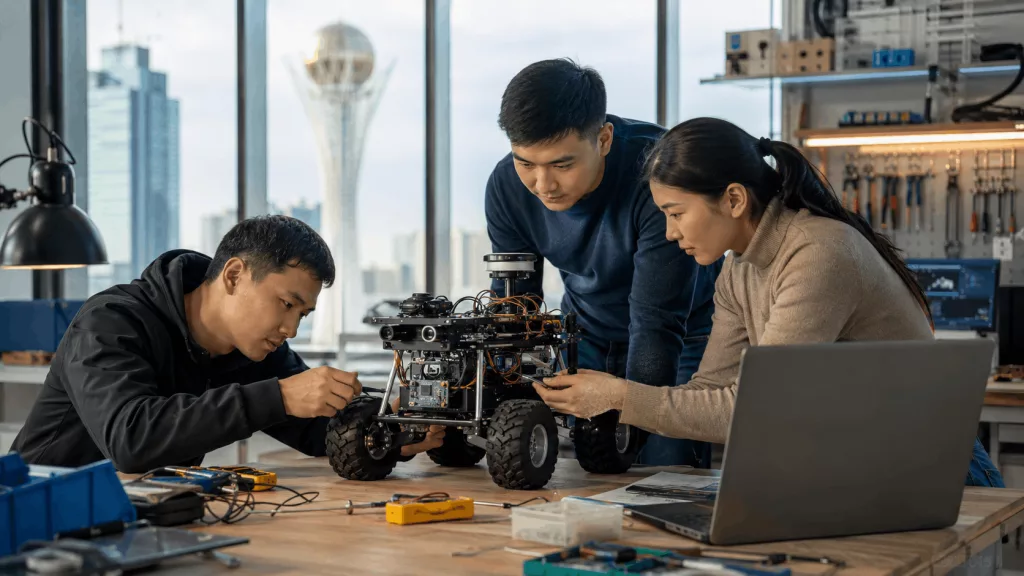
- Smart connected devices and industrial robotics;
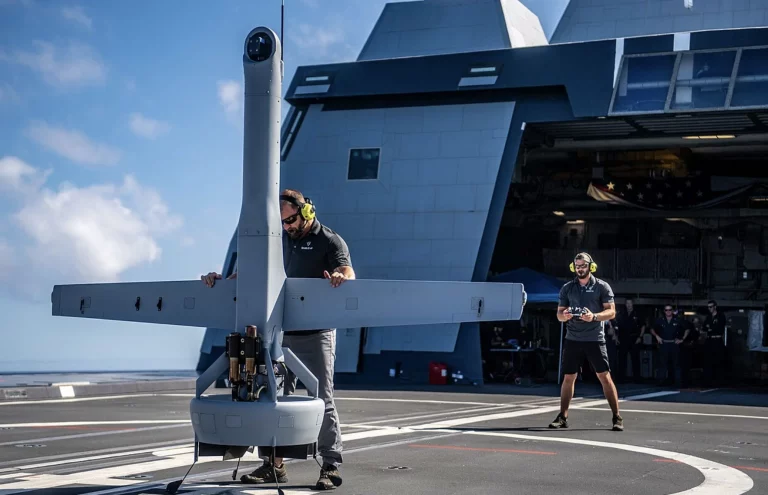
- Unmanned autonomous aerial and ground systems;
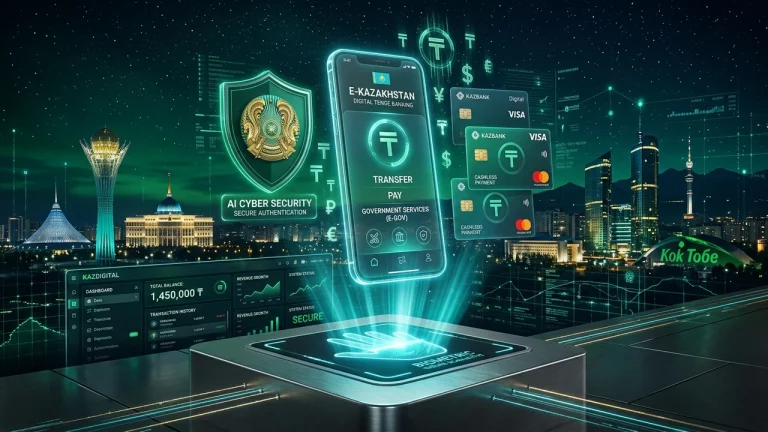
- Cybersecurity and information defense systems.
A finalized, market-ready commercial product was not mandatory upon entry: initial working prototypes or well-formulated technical hypotheses were eligible. However, by Week 9 (Checkpoint 2), teams were required to demonstrate a fully functional MVP.
The incubator specifically targeted industrial hardware engineers, robotics and electronics specialists, embedded firmware and IoT developers, CAD/CAM mechanical designers, automation and mechatronics engineers, as well as drone avionics and sensor fusion developers.
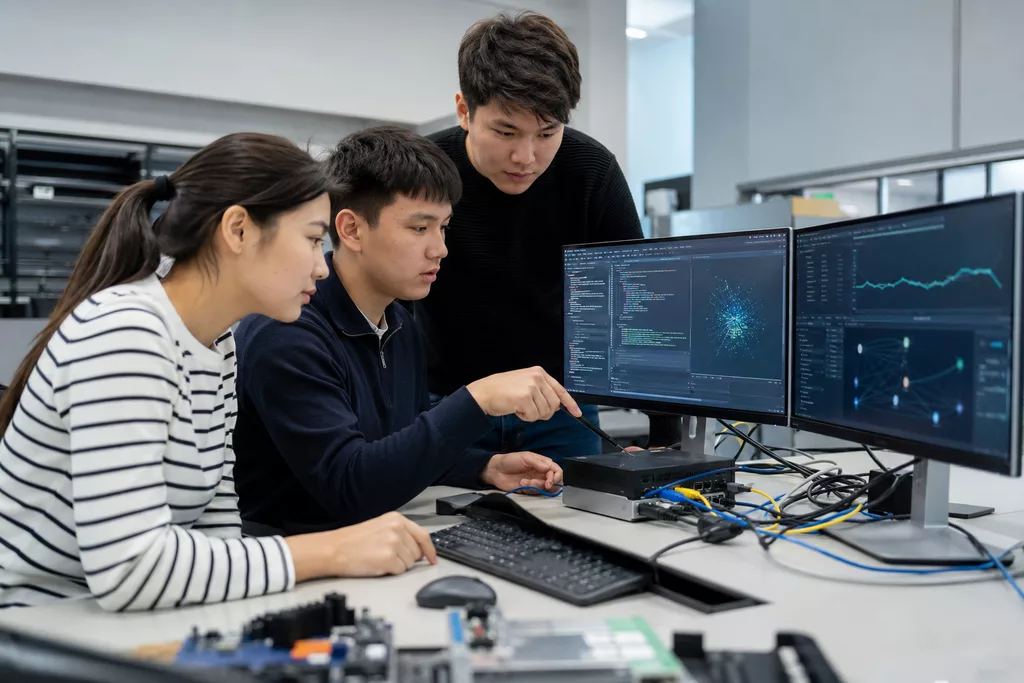
One of the three core incubator tracks was dedicated to cybersecurity and mission-critical enterprise systems.
Program Curriculum and Milestones
The 14-week incubator comprises 40 intensive business and technical workshop sessions. The initial cohort selects approximately 50 projects, with periodic elimination gates filtering the cohort down to 15 finalist teams for the culminating Demo Day.
Stage 1: Problem Definition and Target Audience Validation
During the opening four weeks, founders assemble teams, execute customer discovery interviews, test underlying market hypotheses, and formulate clear problem statements. Following Checkpoint 1, approximately 25–30 teams advance to the technical phase.
Stage 2: Engineering Solution to Working MVP
From Weeks 5 to 9, teams engineer prototypes, evaluate regulatory compliance standards, build functional MVPs, and test hardware with pilot users. Following Checkpoint 2, roughly 18–22 teams advance to the commercialization track.
Stage 3: Market Validation and Investor Pitching
The final phase focuses on corporate legal incorporation, financial modeling, B2B enterprise partner meetings, go-to-market strategies, fundraising preparation, and final pitch deck refinement. Exactly 15 teams reach the main Demo Day stage.
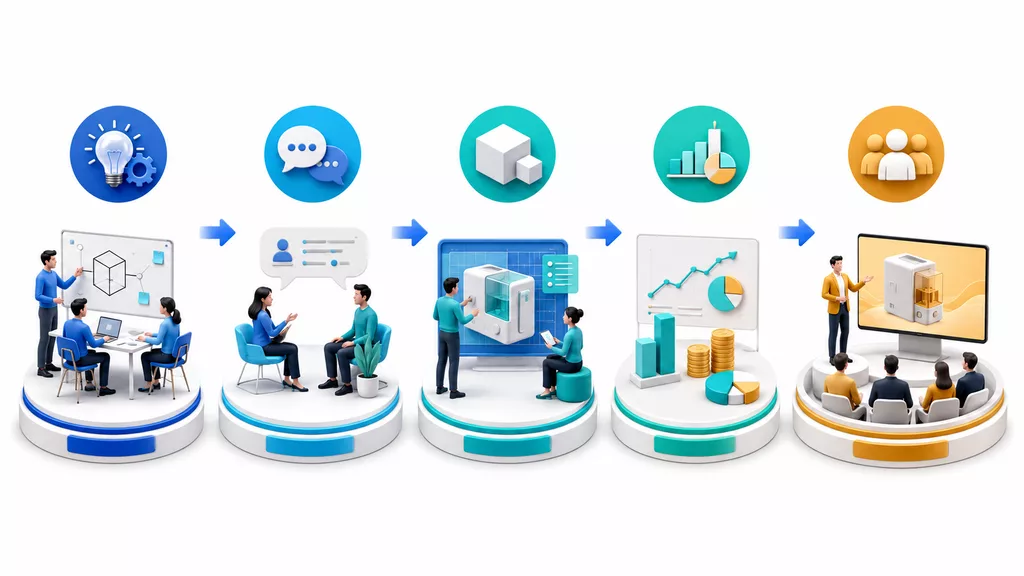
The founder’s progression: technical hypothesis, problem validation, functional MVP, commercial traction, and Demo Day investor pitching.
Incubator Benefits for Participating Teams
- Dedicated desks inside Astana Hub coworking facilities;
- Direct access to rapid prototyping laboratories, fabrication equipment, and AI compute tools;
- Assigned product and technical mentors;
- Dedicated venture trackers monitoring weekly progress between checkpoints;
- Corporate legal advisory and unit economics financial modeling support;
- PR, media, and technology community visibility;
- Curated pitch sessions with angel investors and institutional venture funds at Demo Day.
These institutional resources do not guarantee capital allocation: presenting at Demo Day or meeting investors does not guarantee equity investments or commercial pilot contracts.
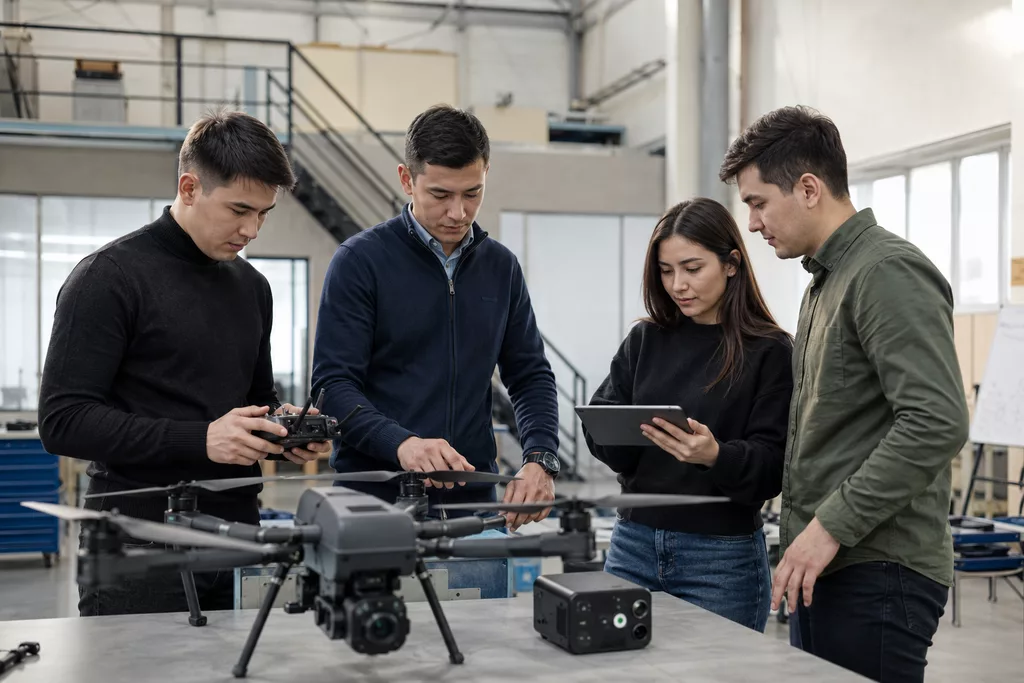
Startups accepted into the autonomous systems vertical required active hands-on work with physical hardware and laboratory equipment.
Format and Mandatory Operational Constraints
- The core format was in-person at Astana Hub, supplemented by online consultations between scheduled sprints;
- Accessing prototyping machinery and fabrication labs required consistent on-site team presence in Astana;
- Working languages and onboarding schedules were detailed upon acceptance into the cohort;
- Each stage concluded with a rigorous checkpoint evaluating tangible deliverables;
- Teams failing to meet checkpoint deliverables were eliminated from the primary cohort and barred from Demo Day.
Travel and accommodation expenses were not subsidized by the organizer. Regional teams from outside Astana were expected to independently fund their living costs in the capital.
Key Application Components
Applicants were advised to prepare concise, evidence-backed answers covering:
- The exact commercial problem the venture solves and the specific target customer profile;
- The designated program vertical (Robotics, Autonomous Systems, or Cybersecurity);
- Current development readiness: wireframe, CAD schematic, bench prototype, or preliminary lab tests;
- Core team technical competencies and identified skill gaps;
- Concrete measurable deliverables projected for the 14-week incubation sprint;
- Accessible enterprise pilot partners, early beta testers, or industrial facilities;
- Feasibility plan confirming dedicated in-person attendance in Astana.
How to Stand Out in Hardware Selection
- Avoid describing pure technology in a vacuum: frame the prototype around an acute industrial pain point;
- Formulate a realistic technical goal for Checkpoint 1 and a verifiable path to an MVP by Week 9;
- Include photos, CAD renders, or short video demonstrations of physical hardware;
- Clearly separate verified functional capabilities from speculative roadmap features;
- Identify specific industrial deployment partners and define testing scenarios.
Dates and Program Coordinates
Application Deadline: September 3, 2026.
Program Duration: September – December 2026.
Format: In-person at Astana Hub, supplemented by digital sprint reviews.
Official Information: Astana Hub Tech Incubator Portal
Related Reading:
- Archive: Astana Hub Battle Awards Four $25,000 Grants to Tech Startups
- Astana Dynamics: How Kazakhstani Engineers Build Autonomous Construction Robotics
- TrustExam AI: Kazakhstani AI Proctoring Wins Astana Hub Battle and Enters Stanford StartX
In RAEM Grants Directory: Astana Hub Tech Incubator 2026 — program terms, selection criteria, application intake status, and official portal links.