Скриншот: из архива Азамата Бералина
Azamat Beralin says he built Prepity AI, a free platform for applying to universities abroad, at 15. About 1,930 people visited it in a month, according to its founder (raem.kz). He started with small projects, then built the service himself to tackle a problem he faced while preparing his own university applications. In written answers to questions from raem.kz, Azamat explained how the platform works, where its visitors come from and what he still needs to finish.
Azamat Beralin started coding at around 13
Azamat says he became interested in programming at around 13. He now attends BINOM School named after Abish Kekilbayev. He taught himself about technology, experimenting with small projects in his spare time.
“I became interested in programming at around 13, when I started learning about technology on my own and trying to build small projects in my spare time,” Azamat says.
He says advances in artificial intelligence in 2025 helped him move from those experiments to fully fledged products. In his answers, he specifically mentions vibe coding, which he credits with making development more accessible.
Azamat says he did all the technical work on Prepity AI himself. As he describes it, building the platform involved choosing features, getting to grips with the technology and fixing bugs. He calls the journey from an idea to a working service the hardest part of the project.
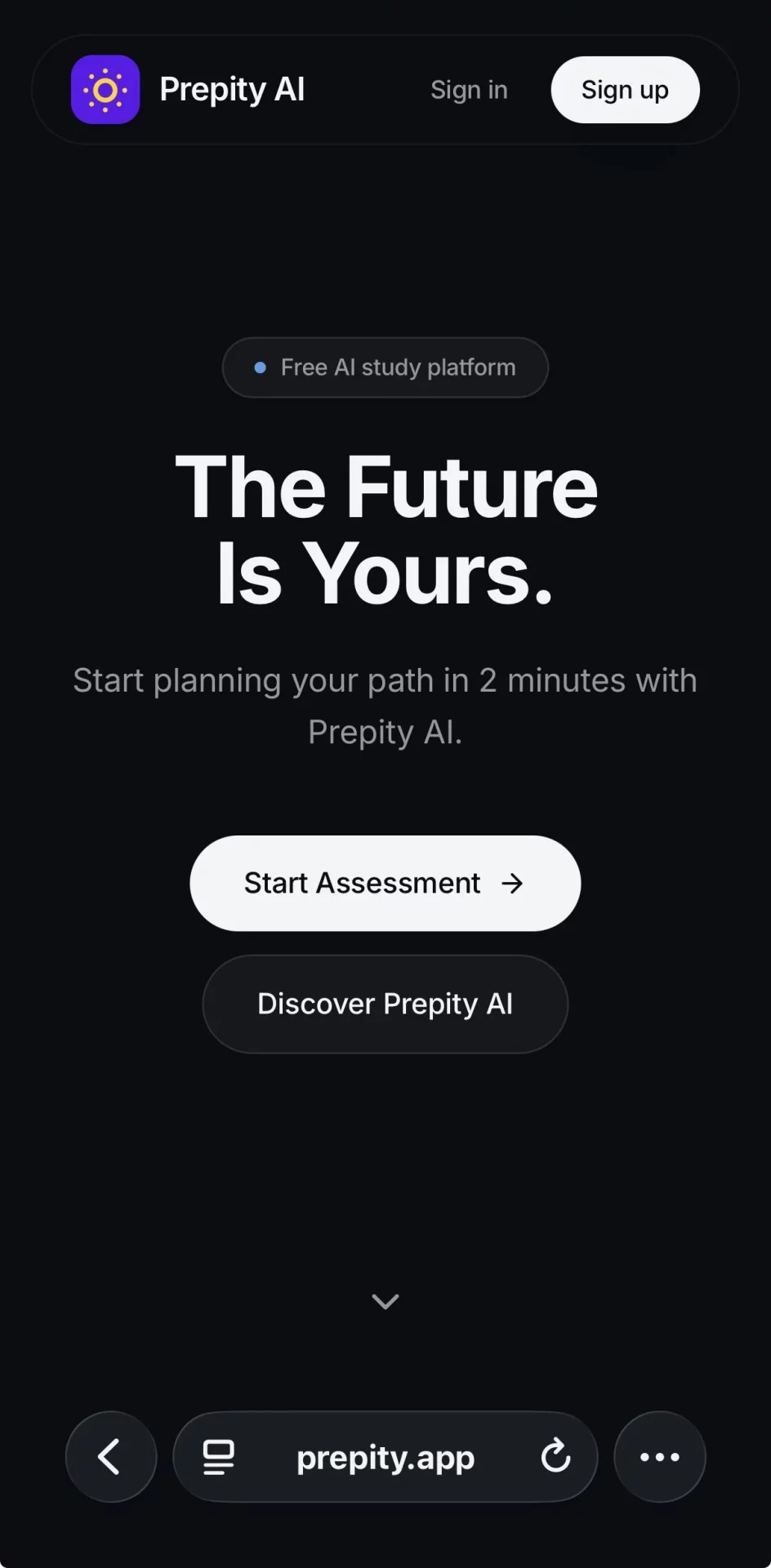
Screenshot of the Prepity AI mobile page with sign-up and assessment buttons. · Screenshot: из архива Азамата Бералина
His own application preparations inspired the platform
Azamat is preparing to apply to university himself. He says the idea for Prepity AI came from a workload he knows well: keeping up his grades, preparing for exams, building a portfolio and researching universities. Several parts of a future application need attention at once.
“The idea came from my own experience: I’m going through the process of preparing to apply myself, and I understand how hard it is to work on grades, exams, a portfolio and a university search all at once without getting overwhelmed.”
Azamat decided to bring these tasks together on one platform. Prepity AI is aimed at school students preparing for university, especially abroad. His own experience helped him decide which tools to include in the service.
“I decided to bring the tools students need together on one platform,” the founder explains.
He describes his goal as making university admissions more accessible. Students need to understand what to work on and how to move forward. Azamat is trying to help them do that through profile analysis and personalised recommendations.
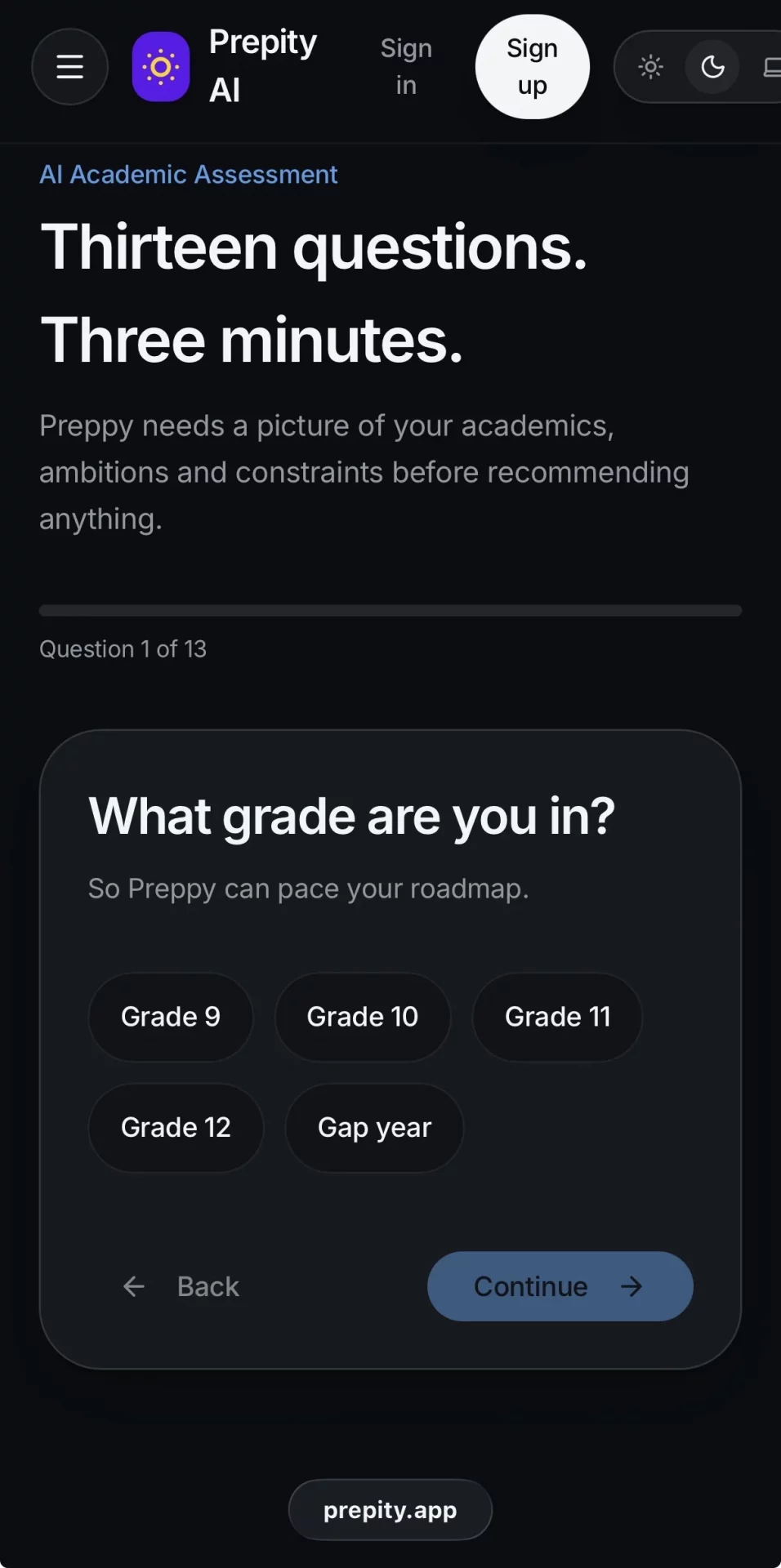
Screenshot of Prepity AI’s dark interface with a school grade selection question. · Screenshot: из архива Азамата Бералина
What Prepity AI does with a student’s profile
According to Azamat, the AI analyses a user’s academic profile, achievements and universities of interest. The service then offers recommendations and helps put together a development plan. Another stated feature is an estimate of the user’s chances of admission.
“The AI analyses the user’s academic profile, achievements and universities of interest, then provides recommendations, estimates their chances of admission and helps put together a development plan.”
There is an important detail here: the founder himself describes the admission chances as estimates. The platform bases its recommendations on a student’s profile and the universities they are considering. That is how Azamat describes the tool in his answers.
Users are encouraged to look at their achievements in the context of university admissions. Profile analysis leads to the next step: getting recommendations and putting together a development plan. The founder says these are the features that bring visitors to Prepity AI.
“The main goal is to make the admissions process easier to understand and more accessible,” Azamat says.
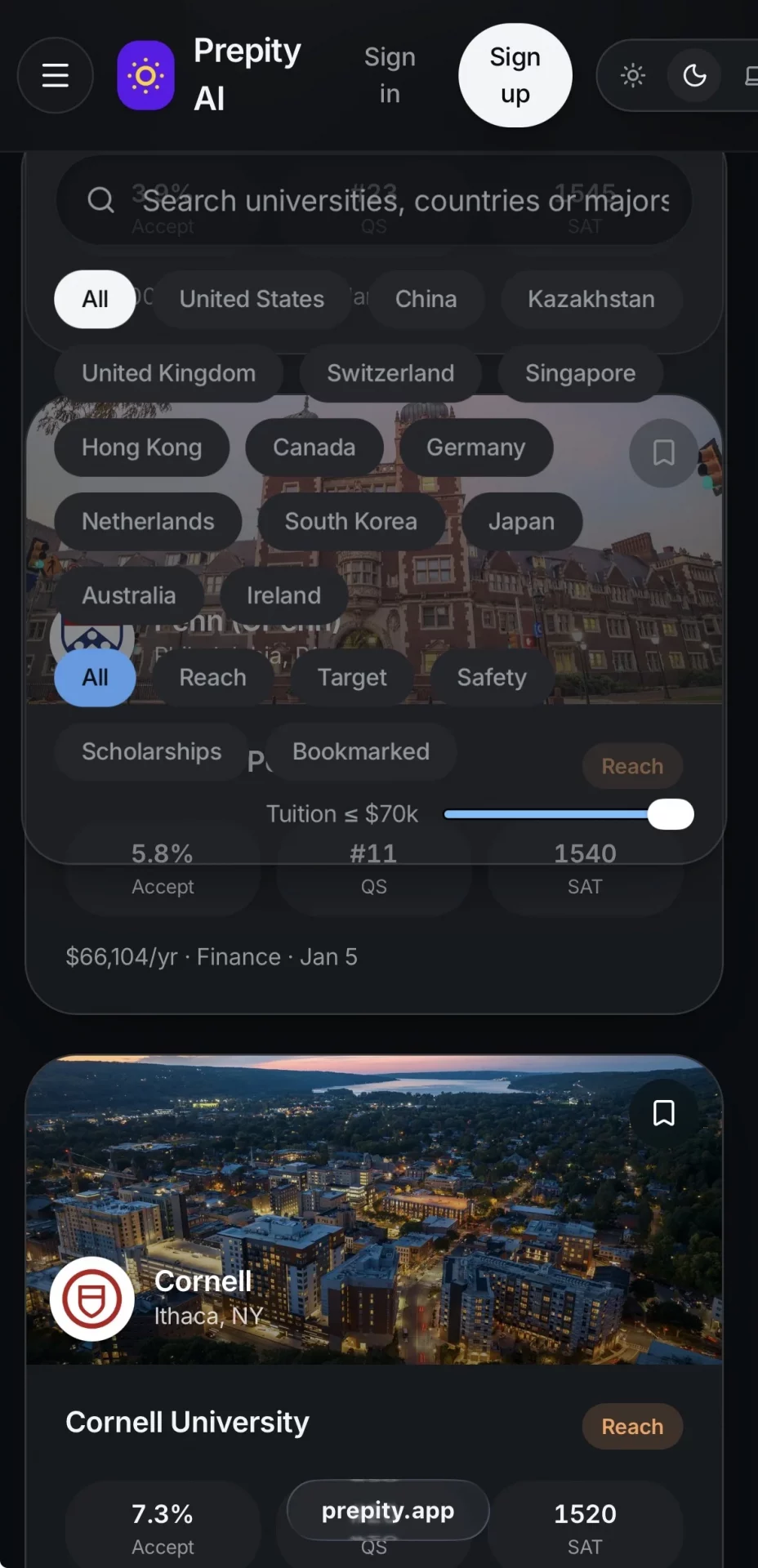
Mobile university search interface with filters and campus photos. · Screenshot: из архива Азамата Бералина
About 1,930 visitors in a month, according to the founder
Azamat says about 1,930 people visited the platform in a month. He shared that figure with the newsroom on 29 October 2026. For the founder, the traffic suggested that other school students faced the same problems he was trying to solve for himself.
Azamat is tentative about where the traffic came from. He points to Instagram and word of mouth: he told people he knew and other school students about the project. That is his explanation for how people discovered the free platform.
“The main sources of traffic were probably Instagram and word of mouth: I actively told people I knew and other school students about the project.”
Azamat says visitors use the service to analyse their profiles, estimate their chances of admission and get recommendations. These are the same tasks he built Prepity AI around. The founder plans to keep growing its audience.
“For me, almost 2,000 visitors in a month confirmed that there is demand for solutions like this and that this niche has a lot of potential,” Azamat says of the result.
Why Prepity AI is free to use
Azamat links his decision to make the platform free to the cost of education services. He has noticed that many university admissions platforms offer paid subscriptions. He wanted to build a tool that school students could use regardless of their financial circumstances.
“I noticed that many platforms in EdTech and university admissions offer paid subscriptions. So I decided to create a free alternative that school students could access regardless of their financial circumstances.”
For Azamat, keeping the service free ties into the project’s main purpose: helping students understand how to prepare for university. In his answer about future development, he talks about adding features and growing the audience. The founder also plans to seek investment.
His work on Prepity AI continues. Azamat lists completing the exam preparation sections among his immediate priorities. The platform’s development thus follows the same needs that inspired the original idea: understanding the requirements and preparing to apply.
SAT and IELTS sections are still in development
Azamat says SAT and IELTS are the platform’s main exam preparation areas. Those sections are still in development. Completing them is among his plans for Prepity AI.
“Right now, the main preparation areas are SAT and IELTS, and those sections are still in development. The platform focuses specifically on university admissions, rather than teaching school subjects.”
This is how the founder defines the project’s scope: his focus is on preparing students to apply to universities. He describes profile analysis and recommendations as features of the service, while the exam sections remain unfinished work.
The language exam is also covered in a separate raem.kz article on IELTS preparation. Alongside the exam sections, Azamat plans to add other features. He also links the platform’s development to attracting investment and growing its audience.
“Don’t be afraid to start”
Azamat says the hardest part was turning an idea into a fully fledged product. He had to get to grips with the technology, think through the features and fix bugs. At the same time, he was promoting the service.
“The hardest part was turning an idea into a fully fledged product on my own: getting to grips with the technology, thinking through the features, fixing bugs and promoting it at the same time.”
Azamat’s advice to his peers draws on what helped him: finding a real need to build a project around. For Prepity AI, that need came from his own university application preparations. In his view, access to AI tools makes it easier to get started.
“My main advice to my peers is not to be afraid to start. Thanks to AI, building your own projects has become much more accessible today. The main thing is to find a real problem, offer a solution and keep going beyond the idea until you have a working product.”