
In the high-intensity software industry, developers routinely mistake systemic workplace toxicity for personal exhaustion. Taking a two-week vacation to “reset” only leads to overwhelming anxiety the Sunday evening before returning. Distinguishing between acute operational fatigue and structural career burnout is the most critical professional diagnostic an engineer can perform.
The Diagnostic Matrix: Temporary Fatigue vs. Structural Burnout
The World Health Organization (WHO) classifies occupational burnout under ICD-11 (code QD85) not as an acute illness, but as an occupational syndrome resulting from chronic workplace stress that has not been successfully managed. To evaluate whether your condition requires restorative time off or an organizational exit, compare your current symptoms against the diagnostic matrix below.
| Diagnostic Dimension | Acute Fatigue (Take Time Off) | Chronic Burnout Pattern (Switch Jobs) | Actionable Remedy |
|---|---|---|---|
| Sleep & Physical Energy | Exhaustion linked to sprint crunch; restores after 2–3 days of uninterrupted rest | Chronic insomnia, waking unrefreshed, persistent morning dread regardless of sleep duration | Vacation heals fatigue; burnout requires removing the operational stressor |
| Motivation & Purpose | Temporary loss of enthusiasm for a specific codebase bug or deadline | Pervasive cynicism toward company mission, leadership decisions, and engineering quality | Internal role transfer vs. immediate external job search |
| Emotional Regulation | Occasional irritability during high-pressure release cycles | Emotional numbness, depersonalization, constant defensiveness, or apathy during team standups | Psychological consultation and boundary restructuring |
| Cognitive Output | Slower velocity due to mental overload; focus returns with downtime | Brain fog, inability to conceptualize architecture, frequent syntax blunders in routine PRs | Structured sabbatical or environment transition |
Three Scenarios: Rest, Role Restructuring, or Exit
Engineering leaders and career advisors identify three clear intervention pathways depending on diagnostic severity:
- Scenario A: Acute Sprint Fatigue. Triggered by an isolated release deadline or on-call incident. Remedy: Take an uninterrupted 7–14 day leave, completely disconnecting corporate Slack and email.
- Scenario B: Role Stagnation. The engineering team and management are supportive, but the technology stack or project domain is obsolete. Remedy: Negotiate an internal transfer to an AI initiative, platform engineering, or architecture refactoring.
- Scenario C: Structural Dysfunction. Micromanagement, moving product goalposts, blame cultures, and lack of engineering agency. Remedy: Taking vacation will not alter corporate leadership; the only sustainable solution is executing an exit strategy.
The Kazakhstan IT Market Context: Compensation vs. Culture
According to 2026 talent research across Central Asia’s tech ecosystem, competitive salary offers are no longer sufficient to retain senior engineers. With the regional market maturing, developers increasingly leave high-paying roles due to architectural chaos, bureaucratic bottlenecks, and toxic sprint cultures. For an empirical overview of market supply and hiring velocity, explore our analysis on Kazakhstan’s IT labor market dynamics and developer competition ratios.
Weekly Self-Audit Checklist for Engineers
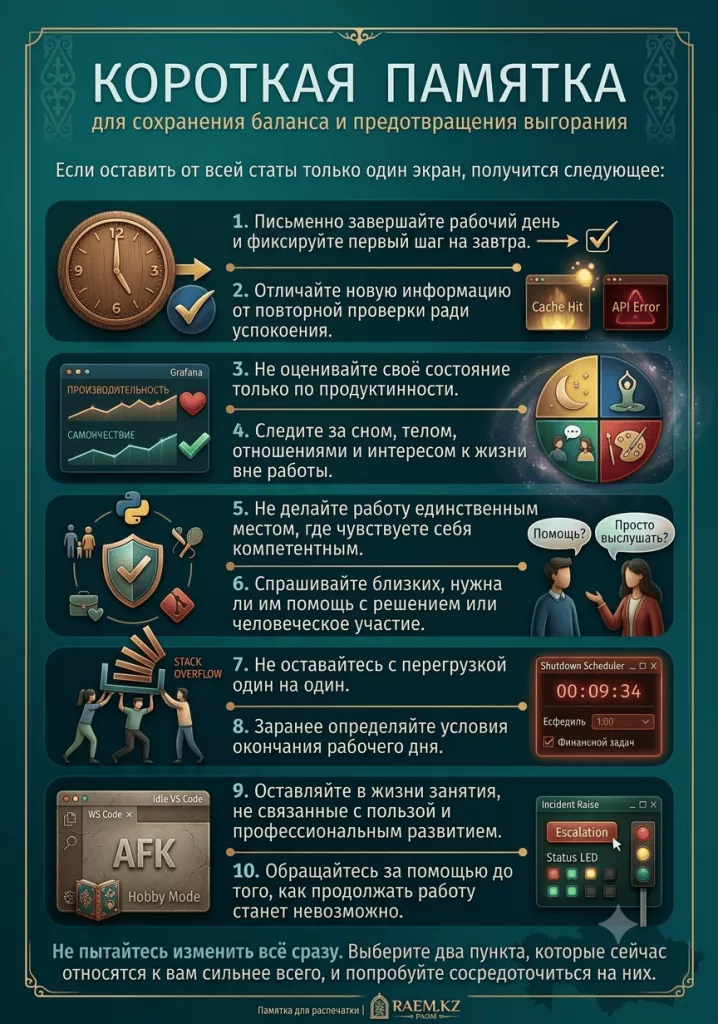
- Monitor Four Vital Signs: Track sleep quality, physical tension, personal relationships, and creative curiosity outside work hours.
- Evaluate the Pattern: Determine whether frustration is confined to a temporary bug or reflects systemic disillusionment with organizational leadership.
- Choose the Intervention: Differentiate clearly between needing rest, resetting team boundaries, or preparing your portfolio for market.
- Audit Future Employers: When interviewing, evaluate team code review culture, CI/CD automation, and deployment cadences rather than compensation alone.
- Seek Professional Clinical Guidance: If debilitating anxiety, chronic insomnia, or depression persist for weeks, consult a licensed mental health professional immediately.
Frequently Asked Questions
Is developer burnout classified as a medical disease? No. The World Health Organization defines burnout under ICD-11 as an occupational phenomenon rather than an independent illness. It serves as an official clinical basis for seeking mental health support.
What percentage of software engineers experience burnout? Empirical studies report that between 18% of developers suffer severe chronic burnout (Habr Career) while over 80% report regular productivity crises and developer fatigue (Microsoft/University of Victoria, 2024).
Does higher compensation cure burnout? No. Industry retention data in 2026 demonstrates that financial compensation cannot compensate for toxic team leadership, chronic overtime, and absence of professional autonomy.