
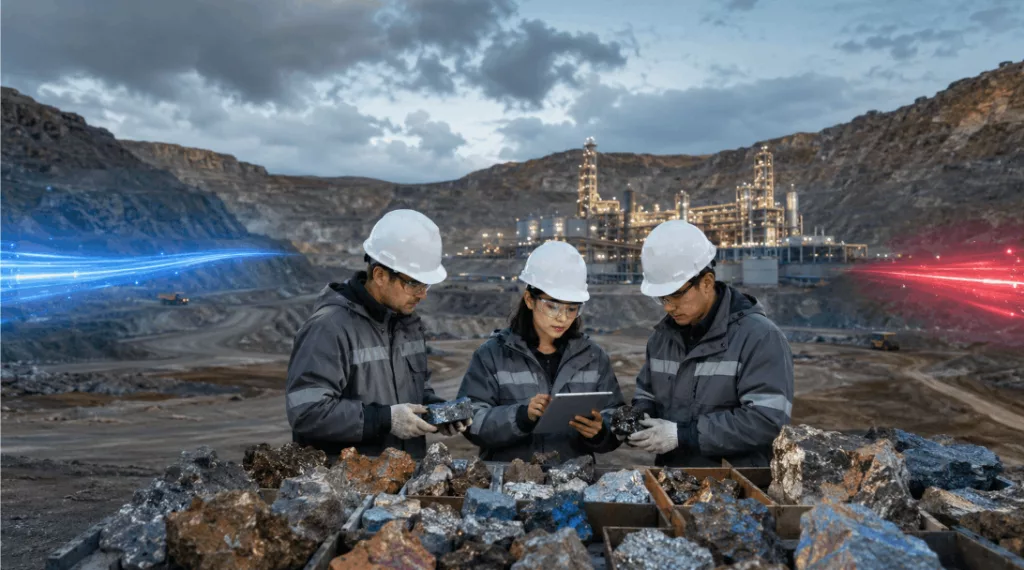
China is actively participating across Kazakhstani mega-projects spanning industrial robotics to renewable energy. Yet in the high-stakes domain of critical raw materials, the most prominent publicly formalised vector has emerged on the American side: a landmark Memorandum of Understanding with the United States and non-binding agreements between REAlloys and AltynGroup. Concrete Chinese deals for deep domestic refining are conspicuously absent from published bilateral registers.
This marks a surprising finale to our investigative series. China overwhelmingly dominates global refining and separation of rare earth elements (REEs)—without which manufacturing electric vehicles, high-capacity wind turbines, advanced microelectronics, and defense guidance systems is virtually impossible. Geopolitical observers naturally anticipated major downstream pacts with Beijing. However, the public reality tells an entirely different story.
The U.S. Accord Is a Strategic Memorandum, Not a Commercial Mining Contract
In November 2025, Kazakhstan and the United States signed a bilateral Memorandum of Understanding on critical minerals—the first document of its kind executed by Washington in Central Asia. The framework envisions local downstream mineral processing within Kazakhstan, technology transfer, and expedited supply chain access to the U.S. market.
The memorandum outlines overarching strategic intent but does not disclose specific deposits, capital expenditures, production timelines, or target volume quotas. On its own, it does not mean that commercial ore is currently being mined, refined, or shipped across the Atlantic.
REAlloys and AltynGroup Negotiate Potential Long-Term Supply Frameworks
On February 3, 2026, U.S.-based REAlloys and AltynGroup Kazakhstan executed a package of non-binding agreements. These preliminary pacts outline a potential ten-year supply architecture for rare earth raw materials, but stop short of being binding commercial contracts with fixed delivery pricing and firm tonnage guarantees.
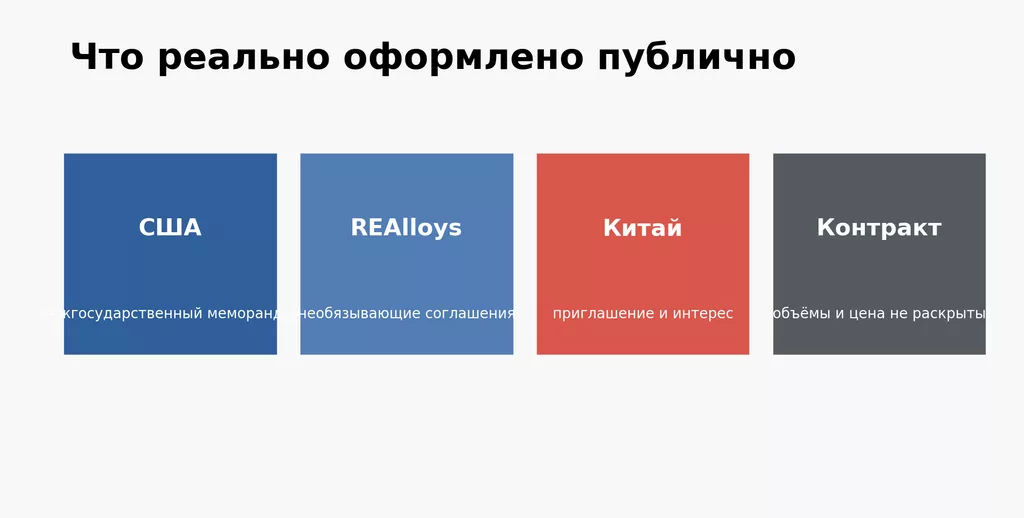
Public regulatory filings indicate the general direction of commercial negotiations, though finalized binding contracts remain undisclosed.
Precision of phrasing is critical here. It is factually inaccurate to claim that an American corporation has already purchased ten years’ worth of Kazakhstani rare earth production. The counterparties have merely agreed to negotiate toward such an arrangement, with concrete commercial parameters yet to be finalized.
With China: Broad Bilateral Invitations and Expressed Interest
During the bilateral summit in Shanghai, Kazakhstan’s President officially invited Chinese conglomerates to participate in the extraction and deep downstream refining of critical minerals. Official statements also referenced Chinese interest in processing technogenic mineral waste—legacy mine tailings and slag heaps holding secondary concentrations of copper, gold, silver, and rare elements.
However, across the 17 formal intergovernmental agreements published following the July summit, not a single standalone project was dedicated to deep domestic rare earth processing. Public registries show no designated industrial plant, specific capital commitment, patented refining technology, or lead Chinese institutional investor.
This absence does not prove that behind-the-scenes talks are inactive. Nonetheless, responsible industrial journalism must distinguish preliminary diplomatic interest from binding commercial execution: the diplomatic invitation was issued, but a bankable commercial project has yet to materialize.
China’s True Leverage Lies in Chemical Refining, Not in the Mine Pit
Rare earth minerals are frequently debated purely through the lens of geological in-ground reserves. Yet raw unrefined ore represents merely the first and lowest-margin step of the value chain. The profound technical hurdle emerges post-extraction: individual rare earth elements must be separated from one another, chemically purified to 99.999% grades, and converted into advanced alloys, metallic powders, permanent neodymium magnets, and precision components.
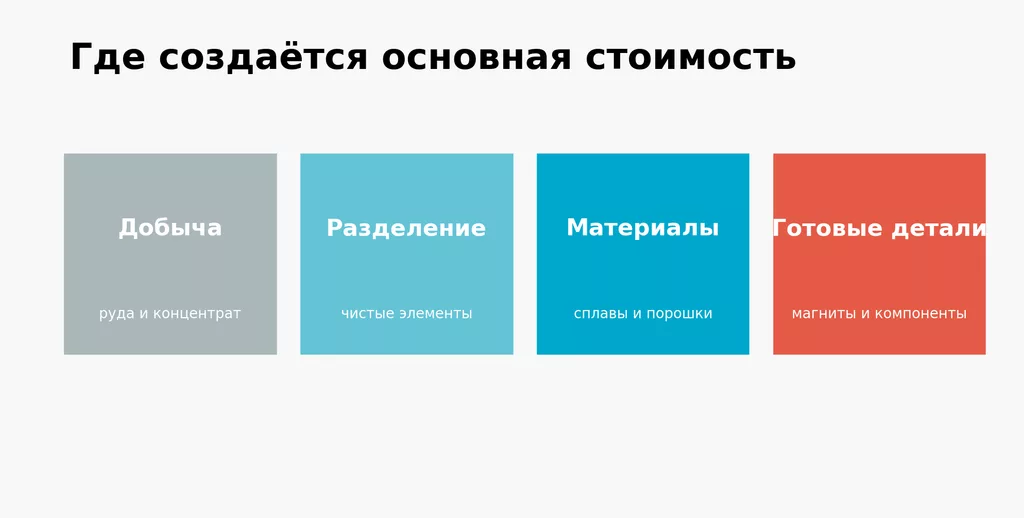
As critical minerals advance downstream, the requirement for proprietary chemical technology and capital-intensive value-add escalates exponentially.
It is in multi-stage solvent extraction, chemical separation, and downstream metallurgy that China maintains an overwhelming near-monopoly. Merely possessing an unmined deposit does not make a country a major geopolitical player. Without proprietary refining infrastructure and specialized chemical factories, an extraction state remains an exporter of cheap, unrefined mineral concentrate.
Why Western Nations Are Aggressively Seeking Non-Chinese Supply Chains
China’s recent export controls on gallium, germanium, antimony, and specialized graphite demonstrated that critical minerals can be wielded as formidable geopolitical instruments. The United States, the European Union, and Japan are rapidly diversifying supply chains, funding alternative refining capacity insulated from Beijing. Kazakhstan’s massive raw mineral base and geographic position at the crossroads of Eurasia place it squarely on Western strategic procurement maps.
Yet American strategic interest does not automatically guarantee equitable commercial terms. If primary extractive operations remain inside Kazakhstan while high-value chemical separation and advanced magnet fabrication are relocated to Western facilities, Kazakhstan will once again be relegated to the low-margin base of the global raw material hierarchy.
Unconfirmed Soviet Reserves Easily Turn into Misleading Headlines
Public domain sources lack a unified, internationally audited assessment of Kazakhstan’s commercially recoverable rare earth reserves compliant with JORC, CRIRSCO, or NI 43-101 reporting standards. Grandiose claims regarding Kazakhstan’s imminent dominance in global supply must be scrutinized with rigorous professional skepticism.
Theoretical geological potential, speculative inferred resources, and bankable, economically extractable reserves are vastly different realities. Years of exploratory diamond drilling, metallurgical assay testing, environmental licensing, tailing management planning, and billions in transport and power infrastructure stand between an initial geological anomaly and an operating, profitable mine.
Multi-Vector Diplomacy Thrives Only While Sovereign Choice Remains Intact
Kazakhstan simultaneously engages in the U.S. Pax Silica critical minerals initiative while deepening technological cooperation with China. In artificial intelligence, robotics, automotive assembly, and renewable energy, Chinese commercial partnerships are already far more concretely structured. In critical minerals, by contrast, the American diplomatic vector has taken the early lead.
This dynamic does not mandate picking an exclusive geopolitical camp. Distinct international partners can operate across different tiers of the industrial value chain. However, multi-vector balance delivers sovereign economic value only if Kazakhstan retains uncompromising control over mining licenses, geological telemetry data, environmental standards, and export licensing terms.
Five Tough Questions for Any Future Minerals Agreement
• Which specific mining concession or technogenic tailings deposit is included in the project scope?
• Are commercial reserves verified under international reporting standards (e.g. JORC), and what is the certified metallurgical recovery rate?
• Where will chemical separation, cracking, and deep downstream refining physically take place—inside Kazakhstan or abroad?
• Who holds intellectual property rights over the refining patents, processing infrastructure, and finished metallic components?
• Exactly what proportion of permanent engineering jobs, corporate taxes, and retained manufacturing value will remain within Kazakhstan?
Conclusion: What the Ten-Part “Kazakhstan × China” Investigation Reveals
Across our ten-part investigative series, the evidence demonstrates that Chinese economic engagement in Kazakhstan has evolved significantly up the technological ladder. The historic focus on crude oil, raw ores, and transit railways has expanded to encompass AI models, robotics, data centers, automotive manufacturing, digital finance, academic laboratories, and renewable green energy.
Yet an overarching dividing line runs through virtually every sector: signing high-level memoranda is far simpler than constructing physical plants, transferring proprietary technology, or cultivating domestic engineering capabilities. In some industries, tangible results are already measured in assembled cars and operational solar arrays. In others, commitments remain confined to diplomatic declarations.
Critical minerals crystallize every core question of this entire investigation. For Kazakhstan, merely unearthing rare ores and choosing between Washington and Beijing is not enough. Sovereign economic transformation will occur only if the nation anchors the most complex and lucrative segments of the value chain domestically: chemical refining, advanced metallurgy, and finished industrial components.