Kazakhstan has ratified a major intergovernmental agreement with China encompassing four renewable energy projects totaling 1.8 gigawatts (GW) of generation capacity. The official treaty document specifies engineering developers, designated capacities, feed-in tariffs, and battery energy storage systems (BESS). This represents a far more binding legal commitment than a diplomatic memorandum—yet it does not yet represent operational, power-generating clean energy facilities.
The initial gigawatt-scale wind project led by China Power first surfaced in bilateral agreements back in May 2023. Three years later, the renewable package has finally secured formal intergovernmental treaty ratification. Today, the fundamental question must be framed with greater precision: not merely “do these projects exist on paper,” but rather “when will heavy construction earthmovers actually break ground on site?”
Four Strategic Power Plants Totalling 1.8 GW of Clean Capacity
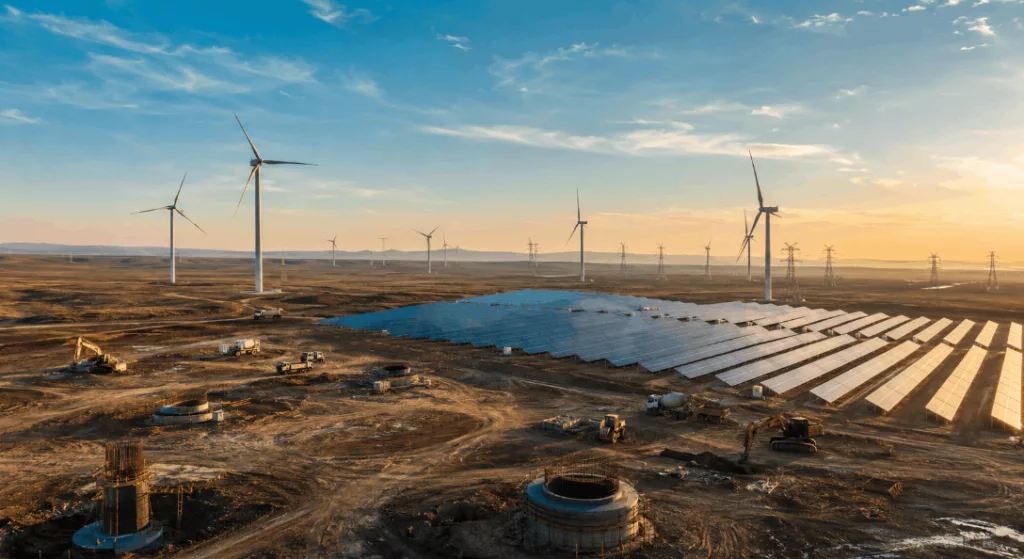
The ratified bilateral agreement encompasses two 500 MW utility-scale wind farms developed by China Power, alongside a 300 MW solar photovoltaic facility by China Energy in Turkistan Region and an additional 500 MW wind farm in Karaganda Region.
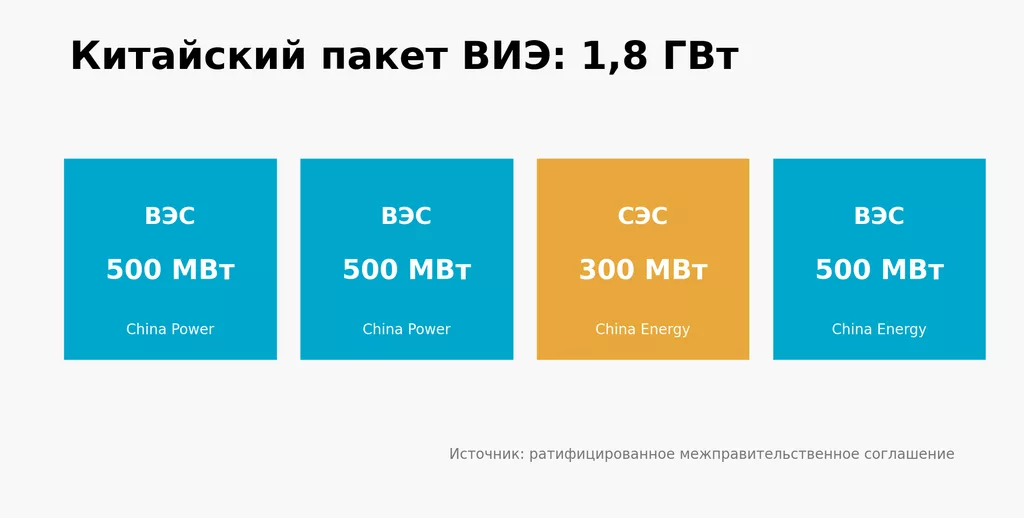
Composition of the Chinese renewable energy portfolio established under the ratified intergovernmental treaty.
The Ministry of Energy of Kazakhstan indicates target operational deadlines: the 1 GW China Power wind portfolio is slated for commercial commissioning by 2028, while the 800 MW China Energy assets are scheduled for grid connection by 2029. These deadlines indicate planned commissioning windows, but do not replace detailed, legally binding construction milestone schedules.
Ratification Is Crucial, but Treaties Do Not Turn Wind Turbines
A diplomatic memorandum registers intent. An intergovernmental agreement establishes binding sovereign rules, tax frameworks, and fiscal guarantees. Thereafter, executing gigawatt projects requires securing land plots, environmental permits, long-term non-recourse project financing, grid interconnection agreements, equipment procurement, and civil engineering works.
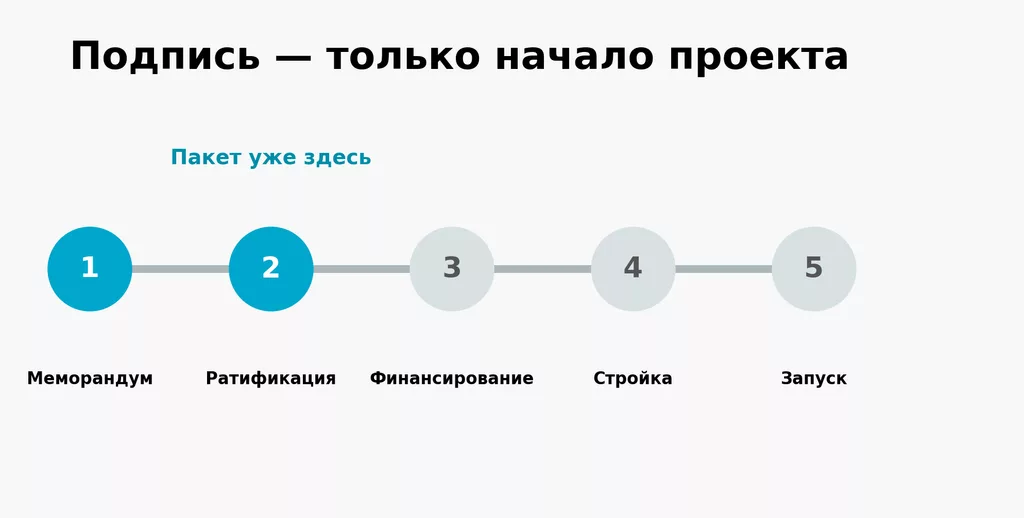
Legal execution has completed the first two preliminary phases. Public confirmation of physical ground-breaking across all four power plants remains pending.
At the time of this publication, official announcements confirming the commencement of physical civil construction on the four specific facilities remain absent. This does not indicate that the agreements have failed. Massive utility-scale energy projects routinely undergo lengthy environmental impact assessments and technical alignment. Yet following formal parliamentary ratification, the public should expect verified construction milestones rather than additional ceremonial signings.
Why a 1 GW Project Required Three Years to Formalize
Earlier commentary frequently asserted that such projects could not face three-year procedural delays purely due to technical constraints. Proving such sweeping assertions is impossible. Developing a gigawatt of clean energy demands high-voltage transmission access, extensive land allocation, wildlife impact studies, multi-decade debt financing structures, and guaranteed off-take contracts via Kazakhstan’s Financial Settlement Center (KOREM/KEGOC).
Neither ministry officials nor corporate developers have publicly itemized the specific bottlenecks that extended the timeline. Consequently, the only factually defensible conclusion is clear: initial timeline projections shifted, and the precise institutional causes remain undisclosed.
Masdar Has Commenced Physical Construction, but It Is Not a Chinese Project
On June 29, 2026, civil construction officially commenced in southern Kazakhstan on a 1 GW wind power project developed by Masdar. While this milestone is occasionally grouped alongside Chinese renewable projects in aggregate industry summaries, Masdar is a clean energy flagship of the United Arab Emirates.
Conflating distinct sovereign initiatives is misleading. The Chinese ratified renewable package stands at 1.8 GW. The physical construction launch of Masdar’s facility illustrates what a successful transition from bilateral accord to on-site civil works looks like, but provides zero validation regarding the physical progress of China Power or China Energy assets.
Building Generation Capacity Is Pointless Without Grid Interconnection
Intermittent wind and solar generation fluctuates sharply based on atmospheric conditions. Consequently, the bilateral treaty mandates the deployment of Battery Energy Storage Systems (BESS). These grid-scale batteries absorb supply spikes and buffer evening demand peaks, but add substantial capital expenditures to total project balance sheets.
The primary systemic bottleneck remains national transmission infrastructure. If high-voltage transmission lines and regional substations managed by KEGOC are unequipped to absorb gigawatts of intermittent generation without triggering regional frequency imbalances, even fully erected wind turbines cannot dispatch power at capacity. Clean energy assessments must evaluate the entire structural trinity: generation turbines, battery storage, and high-voltage transmission lines.
Verifiable Metrics Required in the Public Domain
• Precise geographic coordinates and finalized land-use rights;
• Total capital expenditure breakdown and debt financing consortia;
• Finalized grid interconnection contracts with KEGOC;
• Formal on-site groundbreaking dates and turbine procurement delivery schedules;
• Phased commercial commissioning timelines across all four regional sites;
• Local content commitments: share of domestic engineering labor, concrete, towers, and auxiliary equipment.
Without these verified disclosures, 1.8 GW remains a theoretical capacity figure locked inside legislative gazettes. With them, the portfolio transforms into a transparent national industrial project whose execution can be objectively tracked and held accountable.
The Next Milestone That Matters: Poured Concrete on Site
The Chinese clean energy portfolio has achieved a decisive legal milestone: transitioning from aspirational memoranda to a ratified sovereign treaty featuring designated power plants and target deadlines. Labeling them mere empty promises is no longer accurate. Labeling them currently under construction is equally false.
In utility-scale energy, diplomatic signatures simply mark the starting gun for a multi-year engineering marathon. The true genesis begins when earthmovers arrive, turbine foundation concrete is poured, and high-voltage transmission lines are tied into the national grid. That is the concrete milestone the energy sector must now look for across the 1.8 GW package.