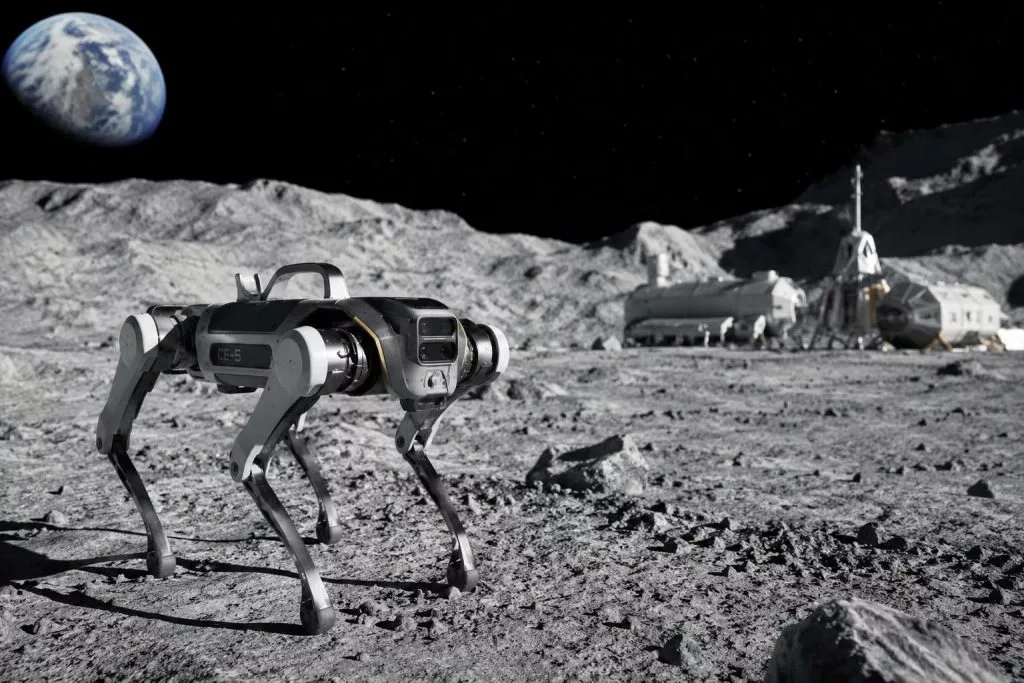
Aerospace engineers at the Chinese Academy of Space Technology (CAST) and the Beijing Institute of Control Engineering are actively developing quadruped legged robots specifically engineered for surface operations on the Moon. While video clips of bio-inspired robot dogs navigating terrestrial obstacles have become commonplace, China’s space program is redesigning the architecture for extreme off-world duty: exploring treacherous South Pole craters, boulder fields, and volcanic lava tubes where conventional wheeled lunar rovers cannot physically tread.
China’s robotic initiative forms an integral component of the International Lunar Research Station (ILRS), a multi-nation lunar surface base initiative developed alongside international partners. For insights into the commercial scaling of quadruped and humanoid mechanics, explore our analysis of Unitree Robotics and industrial legged locomotion scaling.

The Limits of Wheeled Rovers at the Lunar South Pole
Classic wheeled vehicles such as China’s Yutu or NASA’s Curiosity excel across relatively flat plains and gentle inclines. However, the most scientifically compelling targets at the lunar South Pole are permanently shadowed craters containing water ice deposits, characterized by 40-degree scree slopes, razor-sharp abrasive boulders, and ultra-fine regolith dust.
If a wheeled rover’s chassis becomes high-centered or its wheels spin in loose soil, the multi-hundred-million-dollar mission terminates instantly. A quadruped robot dog, by contrast, can step over obstacles, dynamically redistribute its center of gravity, self-right itself following a rollover, and hop across crevasses.
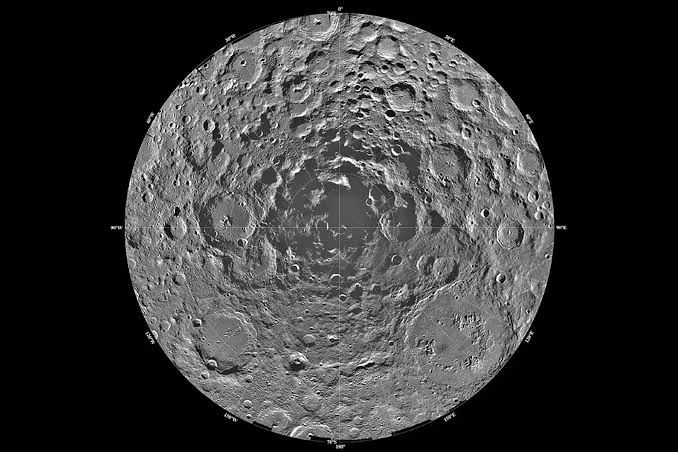
Engineering for 1/6th Gravity and Cryogenic Shadows
Deploying a quadruped on the Moon presents formidable thermodynamic and mechanical hurdles:
- Low-Gravity Gait Dynamics: In lunar gravity (one-sixth of Earth’s), traditional walking gaits cause a robot to float or lose traction. Chinese researchers are training reinforcement-learning models to master bounding and hopping sequences that maintain ground contact.
- Cryogenic Operating Ranges: In permanently shadowed craters, temperatures drop to minus 240°C. Actuator joint lubricants freeze and structural metals become brittle, requiring integrated radioisotope heating units (RHUs).
- Regolith Vacuum Adhesion: Lunar dust consists of un-weathered, jagged glass fragments with high electrostatic charge, requiring hermetic magnetic seals around all moving knee and hip actuators.
Exploring Volcanic Lava Tubes for Future Habitats
Beyond surface craters, CAST envisions robotic quadrupeds rappelling into lunar skylights—collapsed ceilings of ancient underground volcanic lava tubes. These subsurface cavern networks offer natural protection against cosmic radiation, micrometeorites, and extreme diurnal temperature swings, serving as the prime candidate sites for permanent crewed bases.
China’s deployment of robotic dogs is not a marketing spectacle; it is a pragmatic engineering solution for off-world construction and resource prospecting. For related perspectives on multi-medium bio-inspired mobility, explore our coverage of biomimetic robotic birds and multi-medium locomotion.
Sources: Chinese Academy of Space Technology (CAST) Research Briefings; Beijing Institute of Control Engineering Aerospace Publications; International Lunar Research Station (ILRS) Project Roadmap.