Kazakhstan is pursuing a bold industrial transformation: converting one of the largest thermal energy basins on the Eurasian continent into a continental export hub for artificial intelligence compute. Under the ambitious “Data Center Valley” roadmap in Ekibastuz, the government envisions deploying up to 100,000 enterprise NVIDIA GPUs, shifting the country’s economic model from exporting raw fossil electricity to exporting high-margin AI inference cycles and model training.
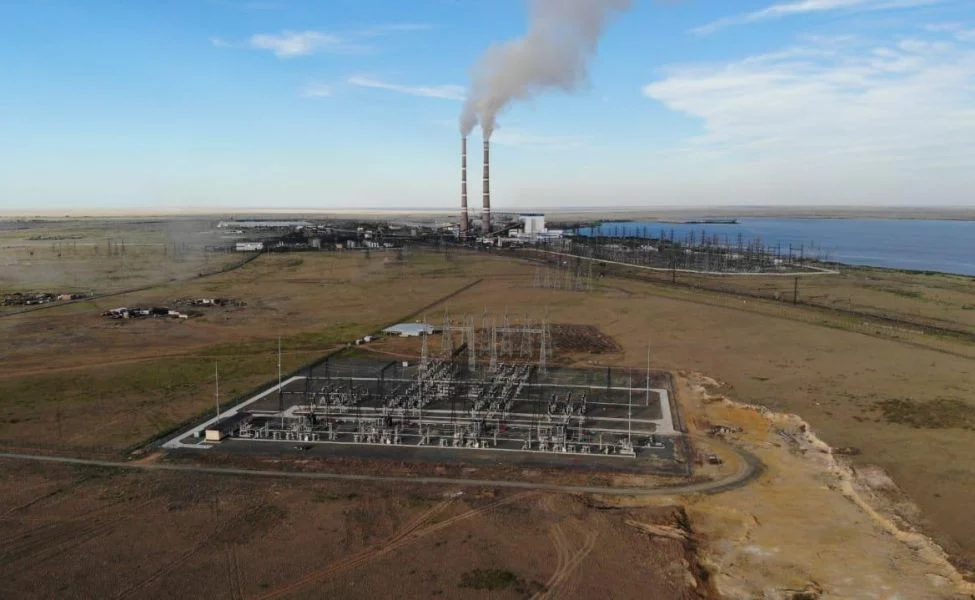
Ekibastuz in northeastern Kazakhstan possesses unique industrial prerequisites: the massive Bogatyr open-cast coal mine, adjacent GRES-1 and GRES-2 thermal power stations with gigawatts of generating capacity, and existing heavy industrial high-voltage transmission lines.
Economic Rationale: Exporting Compute Instead of Raw Electrons
Historically, transporting physical electricity over long-distance grid wires incurs substantial resistive transmission losses (often 7% to 15% across hundreds of kilometers). Furthermore, electricity is priced as a low-margin commodity at pennies per kilowatt-hour.
By consuming electricity right at the power plant busbars to power dense clusters of NVIDIA H100, B200, and Blackwell accelerators, Kazakhstan transforms low-cost energy into digital compute tokens. One hour of enterprise GPU compute commands orders of magnitude higher gross margins on global markets than the wholesale coal electricity used to generate it.
Strategic Consortium and Staged Deployment
Developing a 1-gigawatt data center campus requires billions of dollars in foreign direct investment. Government planners are structuring the project with international consortiums (including partnerships like Firebird and regional sovereign funds) in phased modular increments. The initial phase envisions 50 MW to 100 MW operational blocks to prove cooling resilience, connectivity latency, and customer demand before scaling toward the 100,000 GPU target.
Systemic Risks: Carbon Emissions and Water Scarcity
While the economic upside is immense, two major headwinds require disciplined engineering mitigation:
- Carbon Footprint and ESG Compliance: Global tech giants (Microsoft, Google, Meta, Apple) operate under strict corporate zero-carbon and renewable energy mandates. Powering AI data centers with high-emission thermal coal will deter Western hyperscalers unless accompanied by carbon capture or dedicated renewable energy offsets.
- Industrial Water Cooling: High-density GPU clusters generate colossal thermal loads. Operating in the semi-arid steppe requires closed-circuit dry coolers or direct liquid-to-chip immersion architectures to preserve regional water basins.
RAEM Perspective: A Pragmatic Bridge to the Digital Future
Ekibastuz offers Kazakhstan a rare historical window of opportunity. While global GPU shortages and soaring electricity costs constrain AI infrastructure in Europe and East Asia, capitalizing on domestic energy self-sufficiency to build high-performance computing clusters can firmly establish Kazakhstan as the computational engine of the New Silk Road.