
Illustration: AI
Loans in Kazakhstan could gradually get cheaper, but the cut in the base rate to 15.75% will not make borrowing more affordable overnight. Returns on tenge deposits could also change over time, explained economist Baurzhan Shurmanov, co-founder of Qazaq Expert Club, in comments reported by Kapital.kz. In his assessment, deposits are still helping savers preserve their purchasing power. Further changes will depend on how steadily price growth slows.
Why loan costs may fall gradually
A cut in the base rate does not mean banks will immediately offer consumers cheaper loans. As Shurmanov explains, the National Bank’s decisions take months to feed through to the economy. The regulator considers both current inflation and how it might develop.
The economist links a gradual decline in borrowing costs to a further slowdown in inflation. Cutting the rate quickly could spur spending and push prices up again. The National Bank would then have to resume raising rates, leaving borrowers and businesses to adjust to new conditions.
What will happen to deposit returns?
As the base rate gradually falls, returns on deposits may change over time. But another measure also matters for savings: how far deposit returns outpace price growth. Shurmanov says tenge deposits still offer that advantage.
According to the economist, when tenge deposits earn substantially more than inflation, people have an incentive to save rather than spend immediately. This helps slow price growth.
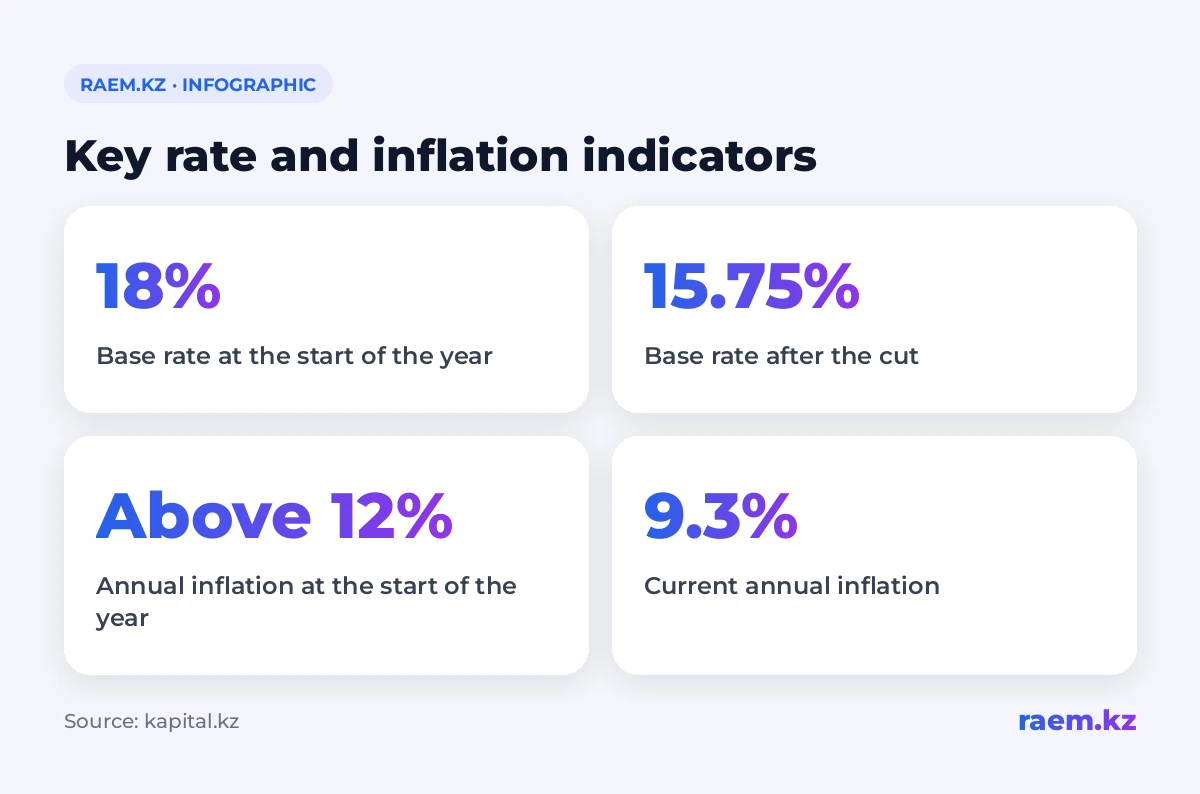
Key rate and inflation indicators
Shurmanov cites the following figures:
| Indicator | At the start of the year | Figures cited following the cut |
|---|---|---|
| Base rate | 18% | 15.75% |
| Annual inflation | Above 12% | 9.3% |
Public inflation expectations stood at around 11.8%, according to the figures cited by the economist.
Looking only at changes in the base rate is therefore not enough. For savers, interest increases their savings balance, while rising prices reduce what those savings can buy. Comparing deposit returns with inflation helps assess whether savings are retaining their purchasing power.
How expectations of price rises affect prices
Inflation is influenced by what buyers and sellers expect. If people anticipate price rises, they try to buy goods in advance. Sellers may factor expected cost increases into their prices.
The figures cited by Shurmanov suggest that people still expect prices to rise faster than the current annual inflation rate.
The economist says trust builds when people see price growth slow for several months in a row. That is why he considers consistency and predictability in the regulator’s actions important.
How utility tariffs affect annual inflation
The National Bank says annual inflation could temporarily rise towards the end of the year because of a comparison base effect. In the fourth quarter of last year, utility tariffs fell by 14% amid a moratorium. Comparing prices with that lower level could produce a higher annual inflation figure without indicating a deterioration in underlying conditions.
The regulator has said it will not raise the base rate in response to this base effect. Shurmanov considers that approach reasonable.
The economist explains that the base rate cannot directly make utility tariffs cheaper. Its role is to prevent tariff increases from spreading into broader price growth. The regulator therefore needs to distinguish one-off price changes from a sustained acceleration in inflation.
What the changes mean for borrowers and savers
The base rate cut could gradually affect loans and deposits. Shurmanov links cheaper borrowing to a sustained slowdown in price growth and currently assesses returns on tenge deposits as exceeding inflation.
When assessing savings, both deposit returns and price growth matter. Their relationship helps show whether money is retaining its purchasing power.