


Photo: Theo Decker / Pexels
Microfinance organisations in Kazakhstan will collect smartphones’ location data during transactions through their apps if customers grant permission (kursiv.media). The Agency for Regulation and Development of the Financial Market (ARDFM) adopted the resolution. Organisations must keep records of online microloans for at least five years after obligations under the loan agreement end. Other requirements cover online lending checks, suspending charges and debt collection in fraud cases, and conditions for writing off debt.
Apps will share location data with the customer’s permission
The requirement covers transactions through microfinance organisations’ mobile apps, including microloan disbursements. If a customer grants location access, the app must send the device’s coordinates to the microfinance organisation’s server.
The absence of permission must also be recorded.
If a customer has not granted location access, the app must send a message to the server saying so. The resolution covers both ways the app can operate: with and without permission to share location data.
Remote access to a smartphone will block online lending
A microfinance organisation’s app must block online microloan disbursements if it detects that the smartphone is being controlled remotely. The same requirement applies if it detects that the operating system’s security protections have been bypassed.
Critical vulnerabilities may also lead to restrictions on the app. Microfinance organisations must be able to force an update or block functions until those vulnerabilities are fixed.
Customers must receive a notification when someone logs into their account.
Notifications will also be required when a password is changed or reset. The app must also notify customers when their registered phone number changes.
During biometric checks, microfinance organisations must guard against attempts to impersonate someone using photos or videos. Borrowers will therefore need to perform sequences of verification movements that do not repeat.
Microfinance organisations will connect their systems to the Anti-Fraud Centre
Microfinance organisations must have their own anti-fraud systems connected to the National Bank’s Anti-Fraud Centre. Pawnshops and credit partnerships are exempt.
Information about suspicious transactions must be shared around the clock.
Microfinance organisations must also maintain internal lists of people involved in suspicious transactions. Customer details will be checked against these lists automatically. The systems must allow microloan disbursements to be suspended or rejected.
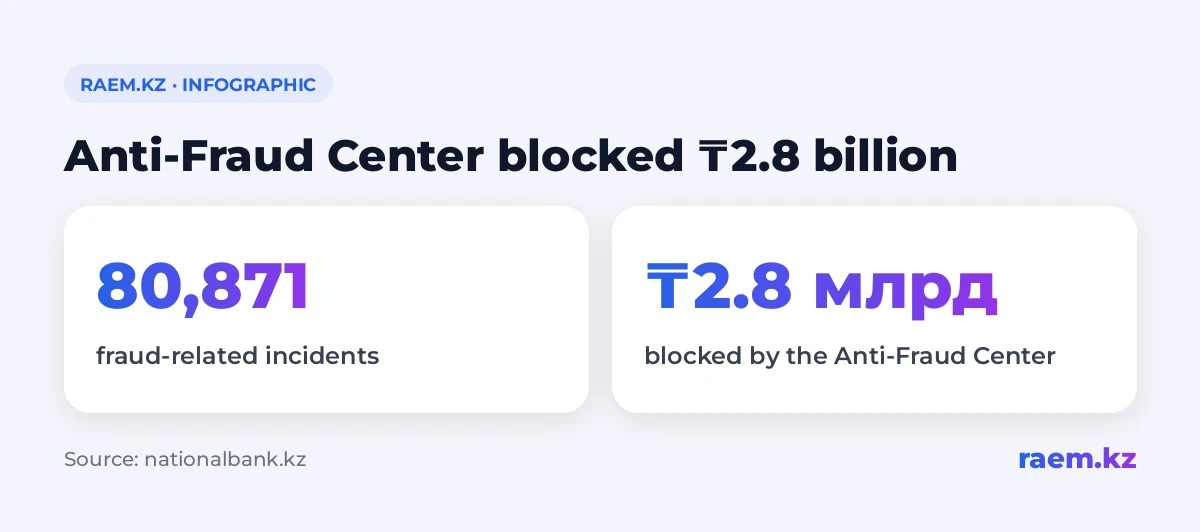
According to the National Bank, as of 1 January 2026, the Anti-Fraud Centre had registered 80,871 incidents involving transactions with signs of fraud (nationalbank.kz). The centre’s work helped block 2.8 billion tenge. More than half a billion tenge was returned to victims.
raem.kz previously reported that classified ad websites may gain access to information from National Bank databases.
Loans above 324,000 tenge will require a one-day wait
The app requirements add to other online lending checks. The ARDFM said online microloans above 324,000 tenge require a waiting period of at least 24 hours (gov.kz). That is at least a full day.
During this time, the lender checks for signs of fraud. The customer must confirm the loan again before the money can be transferred.
An active application at another financial organisation also restricts lending. While that application remains active, a bank or microfinance organisation cannot issue a new loan to the borrower.
According to the National Bank, credit bureaus have joined the Anti-Fraud Centre’s participants. They must report cases where a person applies for a consumer loan or microloan at two or more financial organisations within an hour.
Biometric records and calls will be kept for at least five years after loan obligations end
Microfinance organisations must keep information about microloans taken out online for at least five years after obligations under the agreement end. The retention period starts when those obligations end.
They must keep transaction details, SMS messages and push notifications. The list also includes call centre calls. Documents and biometric verification materials must also remain with the microfinance organisation for that period.
raem.kz previously examined the requirements for storing customer information.
Charges and debt collection must stop once a criminal case is opened and the person is recognised as a victim
The ARDFM also outlined the procedure for loans linked to fraud. Once a criminal case has been opened and the person has been recognised as a victim, the bank or microfinance organisation must stop charging interest. It must also stop charging fines and late payment penalties. Debt collection must be suspended.
A separate condition applies to writing off debt without going to court.
If a loan was issued to the victim in breach of mandatory legal requirements, the financial organisation must write off the debt.