
RAEM tested the government’s flagship AI business compliance navigator. For a standard small auto repair garage, the system generated a staggering 1,109 sector-specific and 7,173 general statutory requirements—totaling 8,282 regulatory mandates. Included in the checklist were legal rules governing commodity exchange brokers, wholesale trade markets, and financial institutions with which an ordinary auto repair shop has zero connection.
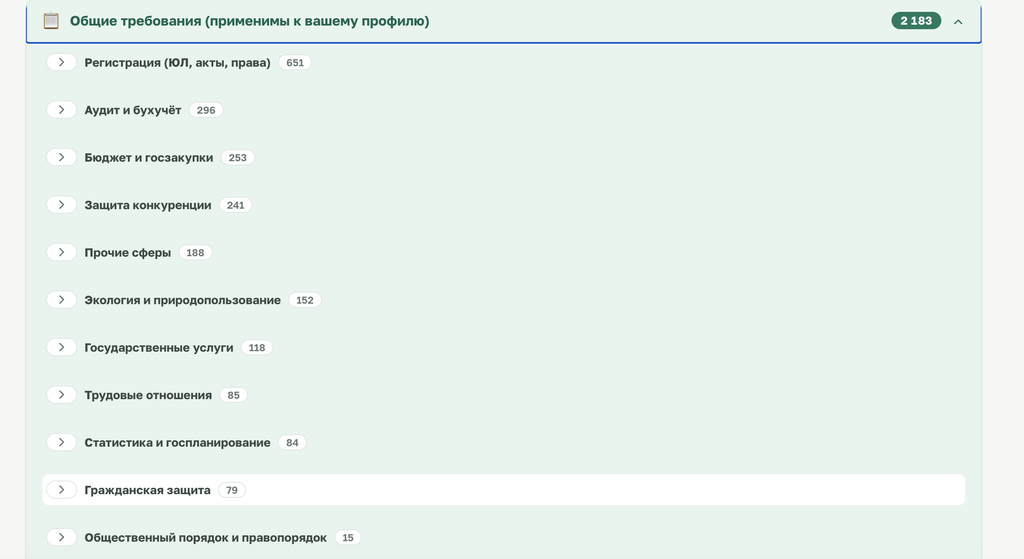
On August 26, 2026, RAEM completed the compliance assessment questionnaire on business.rot.kz. While output parameters dynamically adjust based on user inputs—meaning 8,282 is not a fixed universal tally for every auto shop—our standard operational profile exposed the defining flaw of the state’s regulatory reform: automated tools simply digitize bureaucratic bloat rather than trimming it.
The «Regulation from Scratch» Initiative vs. Reality
Under Kazakhstan’s proclaimed «Clean-Slate Regulation» (Regulation from Scratch) economic reform, the Ministry of National Economy and the Atameken National Chamber of Entrepreneurs promised to conduct an exhaustive audit of all business requirements. Outdated, contradictory, and redundant Soviet-era standards were slated for systematic legislative repeal.

To assist entrepreneurs, state IT developers built an online compliance navigator designed to show a small business owner exactly what state fire, sanitary, tax, and labor inspectors could legally demand during an official audit.
How an Auto Repair Shop Ended Up with Commodity Exchange Rules
When an auto repair owner selects their primary OKED activity code (Maintenance and repair of motor vehicles), the portal’s backend algorithm bundles all overarching legislation governing commercial enterprises. Because the legal database cross-references the Entrepreneurial Code without granular filtering, auto garages inherit statutory obligations intended for industrial commodity trading platforms, hazardous chemical storage facilities, and agricultural grain elevators.
«If a small entrepreneur operating a hydraulic lift and tire machine were to actually read, verify, and document compliance across all 8,282 demands, they would need to hire a full department of corporate lawyers,» notes a regional business consultant in Astana. «Instead of simplifying compliance, the digital portal turns regulatory absurdity into an automated 500-page checklist.»
The experiment demonstrates that true deregulation requires substantive legislative trimming of state inspection powers, not merely wrapping thousands of overlapping laws into a digital portal interface.