

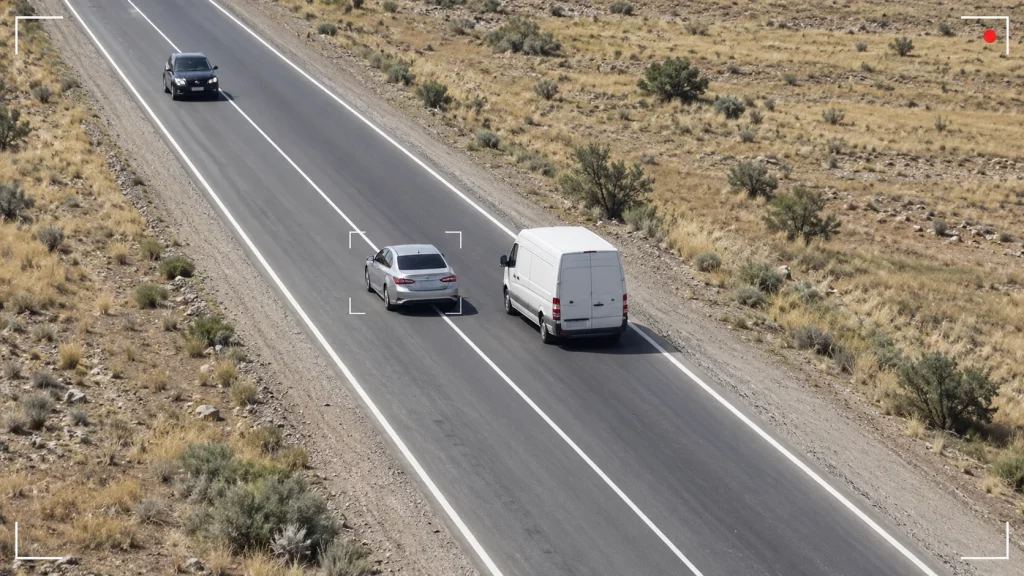
Police in the Zhetisu region are expanding drone deployment for traffic monitoring. According to the regional police department, unmanned aerial vehicles have helped identify 2,204 traffic violations since the beginning of the year.
Aerial surveillance is now embedded into routine highway patrol operations. However, the published statistics reflect total violation events rather than 2,204 distinct motorists or an identical number of automated citations.
Violations Identified via Aerial Drones
The police announcement specifically highlighted three primary infraction categories:
| Violation | Count |
|---|---|
| Crossing into oncoming traffic lane | 124 |
| Using a mobile phone while driving | 211 |
| Unfastened seatbelt | 255 |
These figures constitute part of a larger total; a comprehensive breakdown of all 2,204 recorded violations was not published. Authorities identify collision prevention and roadway safety as the core objectives of drone operations.
The released figures illustrate that aerial enforcement extends beyond vehicle trajectory to monitor in-cabin driver behavior. Nonetheless, operational telemetry details — drone models, sensor capabilities, and manual verification procedures — were not detailed in the release.
Connection to Automated Phone-Detection Cameras
RAEM previously investigated government directives to upgrade fixed traffic cameras for smartphone detection. That report examined infrastructure testing and expanded camera capabilities, noting that manual operators in municipal command centers were already logging phone infractions.
The Zhetisu operations introduce aerial surveillance to this enforcement toolkit. Drones extend oversight to remote highway corridors where stationary roadside cameras and physical patrol cars are impractical. The Ministry of Internal Affairs portal Polisia.kz emphasizes this strategic mobility.
Deploying a drone, however, does not necessarily mean AI algorithms are processing the video. The Zhetisu dispatch does not state that automated computer vision flags smartphones and auto-generates citations. The confirmed reality is drone-assisted visual inspection; the exact degree of algorithmic automation remains undisclosed.
Aerial Traffic Enforcement Across Other Regions
Zhetisu is not alone in leveraging drones for roadway policing. According to an August 17, 2026 Polisia.kz report, North Kazakhstan region logged 146 drone-detected traffic infractions year-to-date, with hand-held phone use and unfastened seatbelts among primary citations.
In the Turkistan region, drones monitored pedestrian crosswalk compliance. A September 2 release detailed an enforcement action in the Sayram district where a drone flagged a Nissan driver failing to yield to pedestrians. A total of 12 motorists were cited during that operation, accompanied by video releases.
These varied deployments demonstrate multi-faceted drone use cases: highway trajectory monitoring, in-cabin compliance, and pedestrian safety enforcement. Evaluating regional efficiency solely by raw citation totals is misleading without data on fleet size, flight hours, and patrolled sector density.
What the Statistics Reveal — and Data Gaps That Remain
Logging 2,204 violations demonstrates active drone operational cadence across Zhetisu, but citation totals alone do not confirm collision reductions. Measuring authentic safety improvements requires cross-referencing accident rates and injury severity on patrolled corridors before and after drone deployment, adjusted for seasonal traffic volume.
A comprehensive cost-benefit analysis also requires hardware acquisition costs, maintenance overhead, and pilot certification expenses, none of which were included in the official announcement.
For now, the tangible takeaway is clear: unmanned aerial vehicles have become an established enforcement tool for highway police, actively logging distractions like phone use and unfastened belts. The definitive benchmark ahead will be demonstrating whether drone monitoring measurably curtails roadway collisions.



