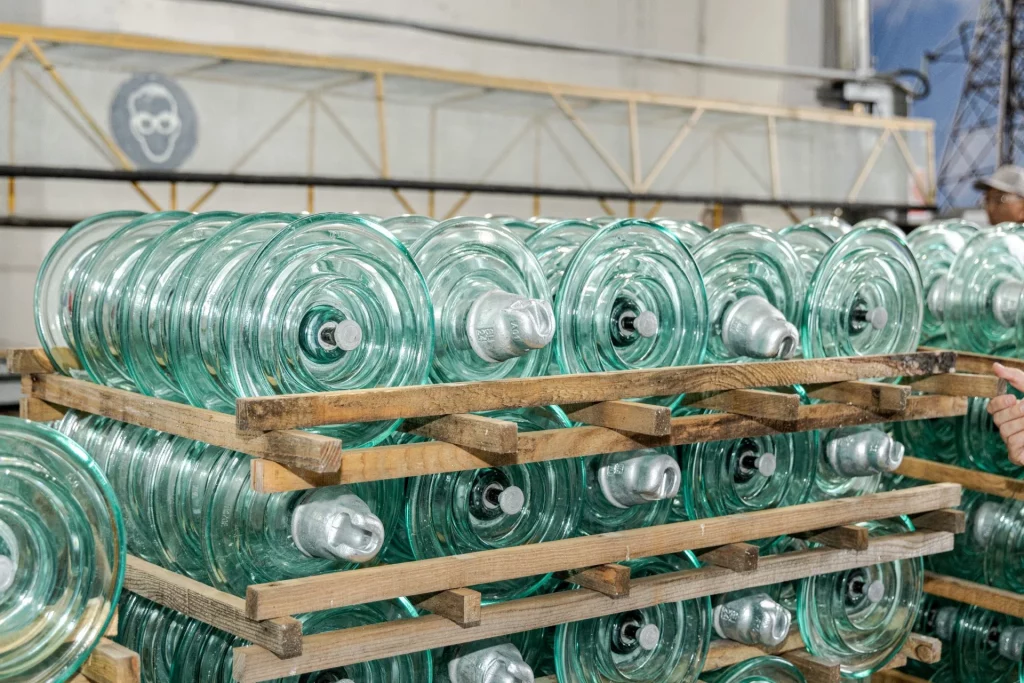
Kazakhstan Armature and Insulator Plant (KAIZ), based in Kostanay, is supplying toughened glass electrical insulators to Chinese energy construction contractors. According to CEO Samat Mukenov, the facility spent approximately three months in 2026 manufacturing fulfillments for Chinese accounts, as disclosed in an interview with Kursiv.
The enterprise has also dispatched a trial consignment of glass insulators to the United States to evaluate technical certification and commercial viability in North American power transmission projects. No long-term multi-year master supply agreements have been formalized to date.
Manufacturing Profile and Plant Capabilities
The Kostanay facility manufactures toughened disc glass insulators for overhead high-voltage power transmission lines (OHL). These electromechanical components mechanically suspend conductors while providing electrical insulation from transmission towers, assembled into characteristic suspension strings.
Insulators represent mission-critical grid infrastructure, requiring certified endurance against mechanical tension, atmospheric pollution, moisture ingress, and thermal fluctuations.
Operating since 2013—with initial facilities in Rudny prior to centralizing operations in Kostanay—the plant maintains a certified nameplate manufacturing capacity of 1.54 million units annually, according to official Powerexpo documentation.
Capacity Overhang Drives Export Expansion
Mukenov estimated domestic Kazakhstani grid replacement and construction demand at approximately 600,000–700,000 insulators annually. The plant’s installed manufacturing capacity exceeds domestic absorption capacity by more than double.
Nameplate capacity represents maximum theoretical run-rate throughput rather than verified sales. While this capacity overhang illustrates the rationale for cross-border market development, domestic procurement remains shared among competing regional vendors.
According to the executive, historical shipments include utilities in Azerbaijan, Saudi Arabia, and several South American nations. The Chinese purchase orders reflect an industrial milestone: exporting heavy electromechanical components into a manufacturing superpower with domestic glass casting industries.
Mukenov maintains that the enterprise competes favorably on cost per unit and mechanical failure ratings, representing executive perspective pending comparative third-party lab testing.
US Expansion Initiates via Trial Consignment
Exporting trial volumes to the US constitutes an initial exploratory step into North American power utilities. Lot size, transaction value, counterparty identities, and lab validation results remain confidential.
Consequently, US market expansion remains exploratory. Sustained commercial export operations will depend on utility qualification tests and recurring purchase orders.
Long-term expansion hinges on converting ad-hoc spot shipments into multi-year recurring procurement contracts. While Chinese orders provided substantial production throughput in 2026, commercial prospects across US utilities remain subject to field verification.