
Employers in Kazakhstan must pay wages in full and on time, formalise employment relationships, make mandatory contributions and provide workplace accident insurance. These requirements were discussed at a meeting between the Chamber of Entrepreneurs of East Kazakhstan Region and representatives of the state labour inspectorate, according to inbusiness.kz.

The legal requirements are also documented independently of that report. Article 23 of Kazakhstan’s Labour Code, published on gov.kz, requires employers to conclude employment contracts, pay wages on time and in full, provide compulsory social insurance and insure employees against accidents while performing their duties.
What penalties do employers face for late wage payments?
Employers must meet wage payment deadlines and pay the full amount owed. The Kyzylorda labour inspectorate independently confirms that Article 87 of the Code of Administrative Offences provides for administrative liability for failure to pay wages within the prescribed deadlines, as well as failure to calculate and pay the required late-payment penalty through the employer’s fault.
How must employers register an employee?
Employers must conclude an employment contract and submit the required details to the Unified System for Recording Employment Contracts (ESUTD). Signing the contract and entering its details into the system are separate obligations.
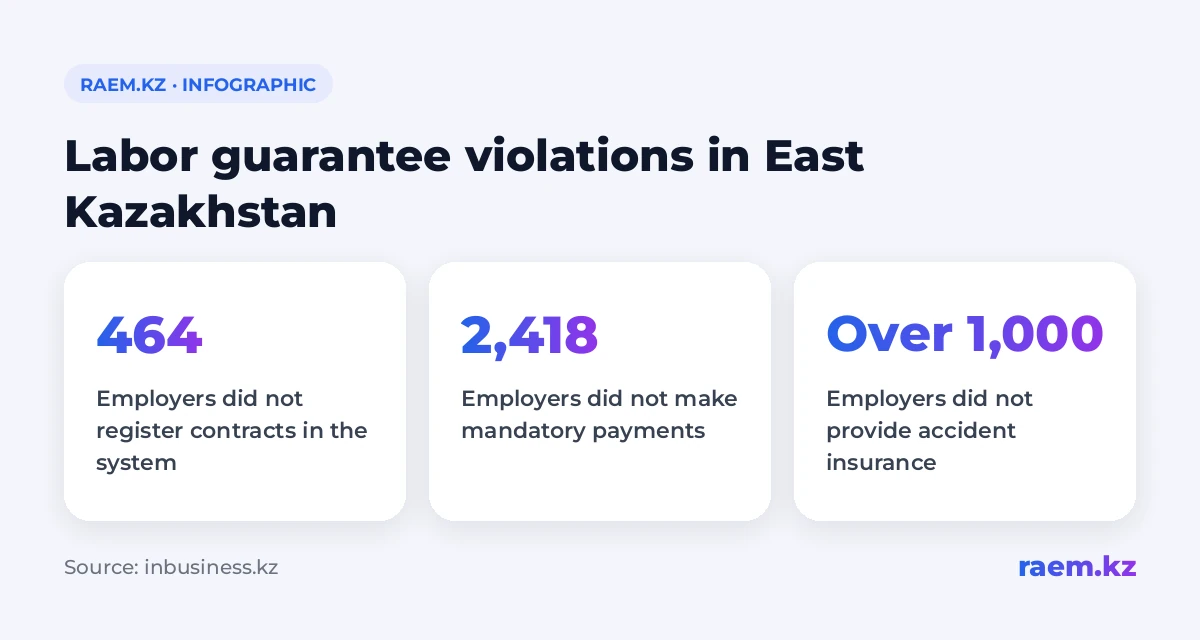
According to inbusiness.kz, the Chamber cited East Kazakhstan Region prosecutor’s office monitoring data showing that 464 employers had not entered employment contract details into ESUTD as of October 2026. The figures came from the Digital Oversight information system.
A separate Shymkent labour inspectorate explanation confirms that breaches of the procedure for entering employment contract information into ESUTD can carry administrative liability.
What mandatory contributions were discussed?
The meeting covered three categories of mandatory payments:
- mandatory pension contributions;
- mandatory occupational pension contributions;
- social contributions.
According to the monitoring figures relayed by the Chamber and reported by inbusiness.kz, 2,418 employers in East Kazakhstan Region had failed to make mandatory payments in these categories.
Who must insure employees against workplace accidents?
Employers must provide compulsory insurance against accidents occurring while employees perform their duties. This obligation is set out in Article 23 of the Labour Code and is also explained in the Shymkent labour inspectorate publication linked above.
Inbusiness.kz reported that more than 1,000 employers in East Kazakhstan Region had failed to provide this insurance, citing the same monitoring figures relayed by the Chamber. The independent legal sources confirm the obligations; they do not independently corroborate the regional totals.
What should employees check?
Check whether wages are paid in full and on time, whether an employment contract has been signed and its details entered into ESUTD, whether applicable mandatory contributions are being made, and whether workplace accident insurance is in place. An employment contract does not replace the employer’s other obligations.