Illustration: AI
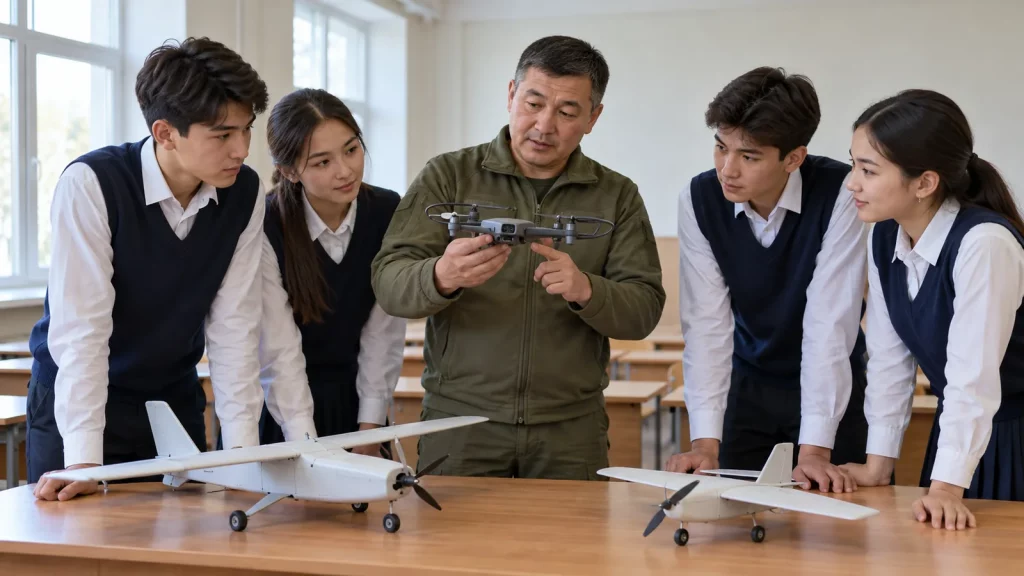
Schools in Kazakhstan will teach basic drone piloting skills as part of basic military training. Model aircraft classrooms are planned in every region of the country. The school training is included in the Comprehensive Plan for the Development of Unmanned Systems for 2026–2029 (kursiv.media).
What happened
The government approved the plan for developing unmanned systems through Resolution No. 898 of October 13, 2026. The document provides for equipment for school classrooms and additions to basic military training modules.
Schools will get model aircraft classrooms, and learning spaces will be fitted with specialist equipment for unmanned aircraft systems. Piloting and technical literacy will be added to basic military training modules. The focus will be on basic skills for handling drones.
The document does not specify where or when the first classrooms will open. It also gives no figure for spending on school equipment.
What this means
School lessons will form part of the training for future specialists in unmanned technology. The plan’s education measures span several stages, from introducing schoolchildren to the equipment to vocational training and specialist study for university students.
“The country’s engineering and drone operator elite will be developed through a seamless pathway, from early career guidance for schoolchildren to advanced specialization for university students,” the agency said.
Kazakhstan aims to train at least 1,000 specialists in unmanned systems by 2029. The list includes operators, design engineers, software and artificial intelligence developers, cybersecurity specialists and maintenance specialists.
How training will continue after school
Technical, vocational and higher education programs will be updated to train these specialists. Their content is to be adapted to market needs. The education section of the document thus links school career guidance with subsequent training for specific professions.
The list of specializations covers operating, developing, securing and maintaining unmanned vehicles. Embedded software development—creating programs that run inside devices—is specifically listed among the training areas. The school stage, meanwhile, focuses on initial piloting skills and technical literacy.
Another planned measure is annual university competitions in unmanned technology. Along with curriculum updates, these form part of the education section of the 2026–2029 plan.