Photo: пресс-служба IITU
IITU tests students’ understanding of AI-assisted work through oral defenses. Lecturers ask them to change an algorithm’s logic or rewrite code at the board, says Rustem Bigari, president of IITU (International Information Technology University). He believes automated AI-text detectors cannot reliably assess students’ work.
Bigari, a former vice minister of education and science of Kazakhstan, answered raem.kz’s questions in writing about AI in university studies, job automation and the support universities need from the government. His answers follow with light editing.
AI has shifted IITU students’ focus from routine tasks to research
Three years ago, students spent up to 70% of their time on routine tasks: tracking down syntax errors, building basic interface layouts, translating technical documentation or gathering sources by hand. Today, AI handles those tasks.
Students no longer spend weeks writing rough code or gathering initial data. They use AI to generate a framework for solutions, run preliminary simulations and review the literature. Their own efforts go into architecture, information security, testing hypotheses and application logic.
Project work has become much faster. Teams build and test prototypes of services or integrated hardware and software systems in weeks, days or hours. The same work once took a semester.
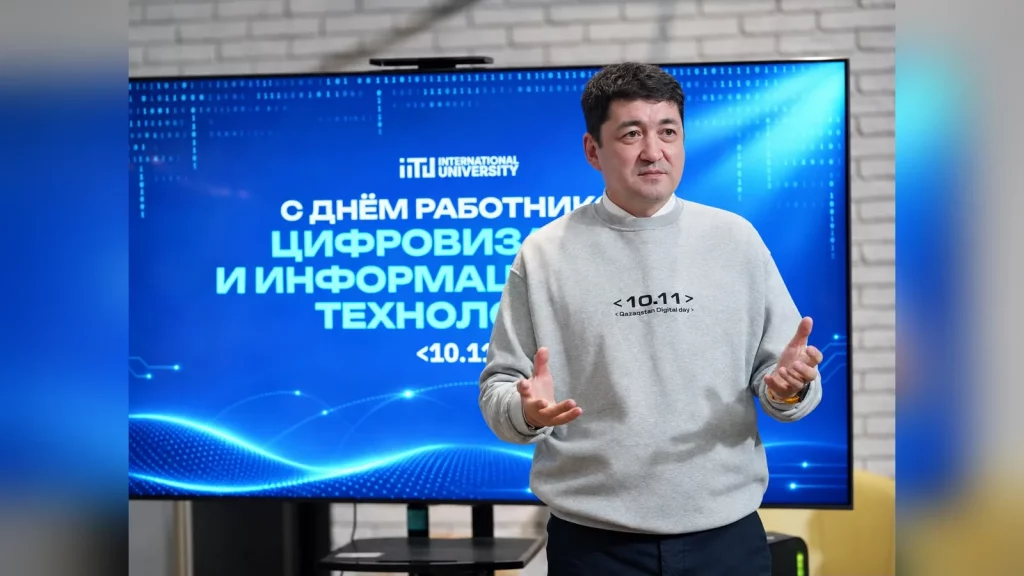
Digital Day at IITU · Photo: IITU press office
IITU requires AI disclosure and checks understanding through oral defenses
Honestly, reliable automated AI detectors simply do not exist today.
Text-checking algorithms, including modules in StrikePlagiarism, Turnitin and other systems, cannot reliably identify traces of AI. They flag well-written human academic prose and can be bypassed with minor rewriting or changes to sentence structure. The belief that a plagiarism checker can deliver an objective verdict at the click of a button harms the academic community.
We build our approach around one principle: “AI can help researchers, but it cannot replace them.” Students can use AI to find literature, process datasets, model, write code or proofread. The substance, original contribution and conclusions must be their own. They must be able to explain how their code works or how they developed their project.
IITU is introducing AI Disclosure. Undergraduates, master’s students and doctoral students must document their use of generative models, naming the services, prompts and tasks involved. We want students to discuss these tools openly, without fear. Leading universities around the world adopted this practice long ago.
StrikePlagiarism reports on borrowed material and generated passages serve as supporting evidence. An expert committee compares the findings with the author’s disclosure and the work itself. We do not automatically disqualify anyone based on a software report.
The author remains responsible for accurate calculations, correct references and ensuring that no data is fabricated. At IITU, saying “the AI made a mistake, invented a source or produced a faulty calculation” is treated as clear evidence of a researcher’s incompetence.
The main test of knowledge is a live conversation. During a defense, lecturers ask students to change an algorithm’s logic, rewrite code at the board or justify their choice of architecture or mathematical methods. If a student doesn’t understand the substance, the AI-generated compilation falls apart within the first three minutes of discussion. The lecturer’s role in testing understanding becomes central.
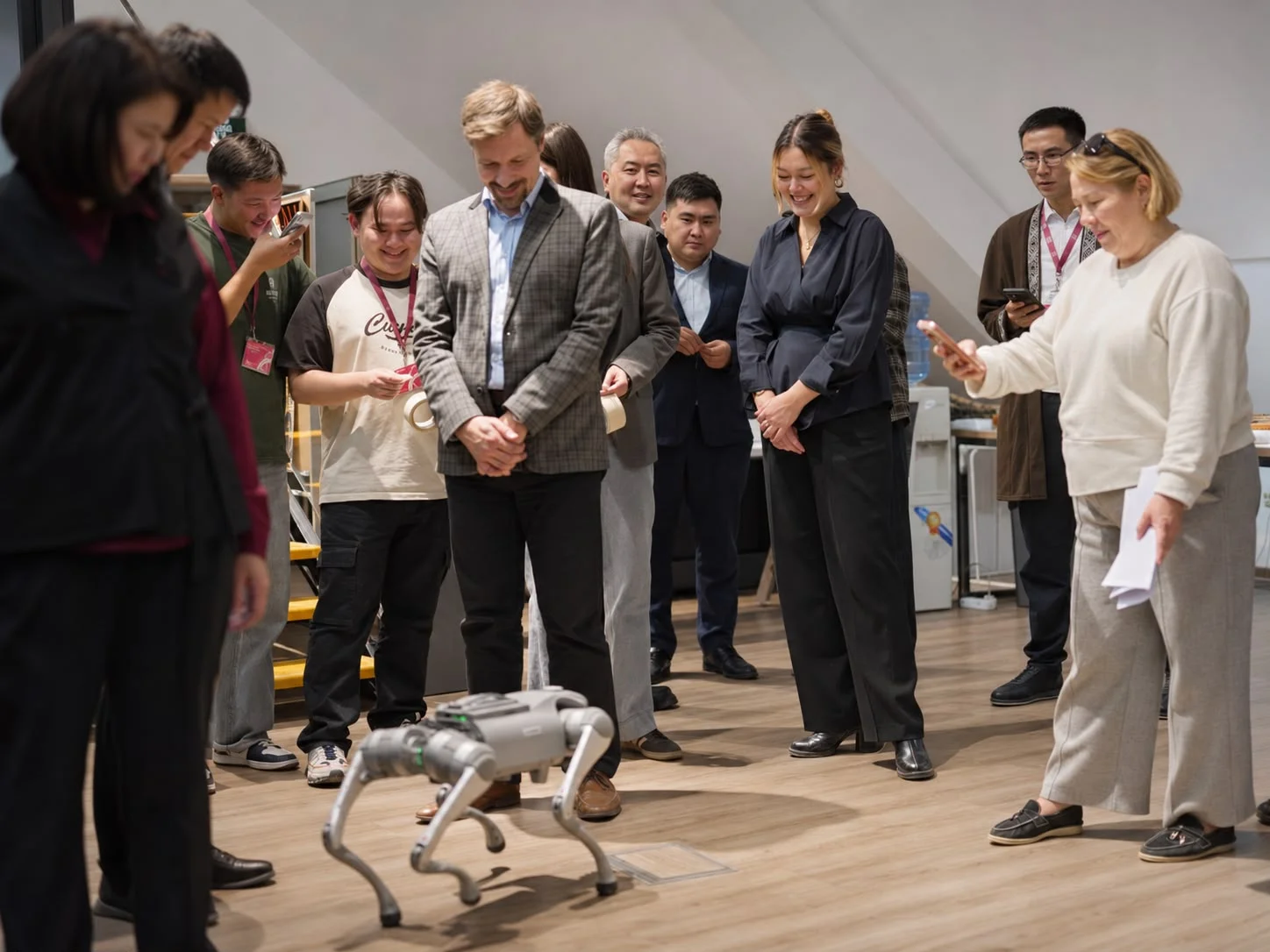
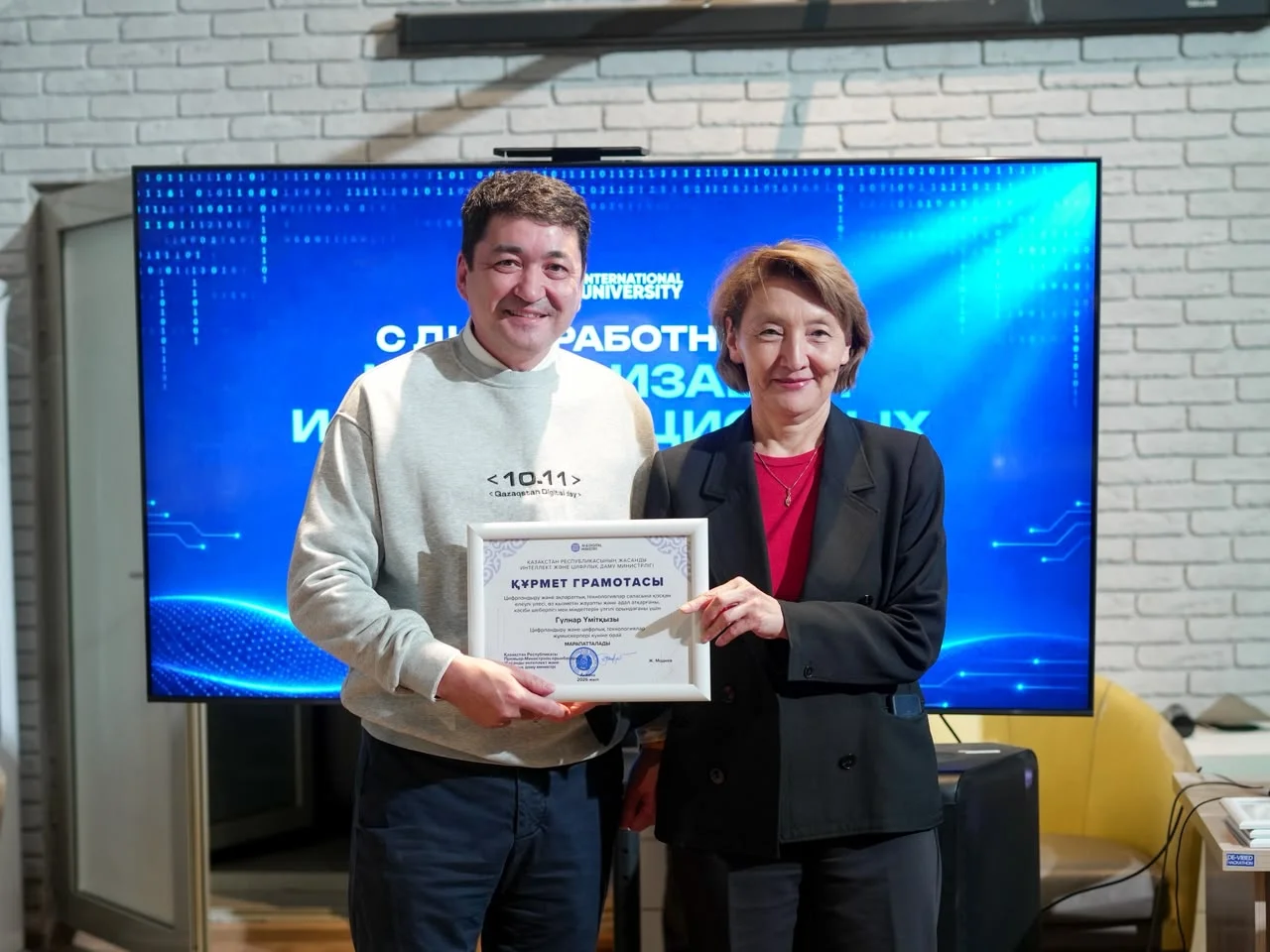
Digital Day at IITU · Photo: IITU press office
AI takes over routine tasks as demand grows for judgment and engineering
Mechanical tasks within professions are disappearing. Any repetitive routine that can be written as a step-by-step procedure is at risk.
In office administration, smart agents already analyze incoming information by meaning and context, then route assignments and draft documents to the right people. HR paperwork is also moving to algorithms: standard personnel orders, vacation schedules, certificates and initial résumé screening.
AI drafts and reviews standard sales or lease agreements in seconds. Lawyers whose work consists of assembling these documents from templates are no longer in demand. In financial and inventory bookkeeping, manual invoice entry, posting bank statement transactions and reconciling accounting records are becoming things of the past.
Demand is growing for people who exercise judgment and work with strategy, human relationships or physical systems. A model can draft a contract template. Multilateral negotiations, defending a party’s interests, detecting hidden risks and persuading a court still require a person.
HR partners and talent specialists need to assess motivation in face-to-face meetings, judge how a candidate fits a team and attract strong leaders. These tasks require empathy and agency. In B2B negotiations and large infrastructure deals, clients pay for personal accountability, partnership and trust.
AI architects and data engineers design enterprise systems, manage data governance, prevent data degradation and maintain the integrity of government and corporate registers.
Highly skilled IT professionals also become more valuable as vibe coding and generative programming develop. Code-generation tools are a universal “shovel” available to everyone. The greatest value remains with those who create these tools, design scalable architectures and build fault-tolerant systems.
Robotics systems engineers bring AI into the physical world. Their embedded AI models control sensors, drones, industrial machinery and autonomous vehicles.
At IITU, we are changing the curriculum to prepare students for work that requires independent judgment. Machine learning and data architecture modules run throughout every study pathway. Students study the mathematics behind models, design multi-agent systems and learn to integrate software with hardware. They also practice critical thinking and argumentation so they can check algorithms’ work and take responsibility for the results.
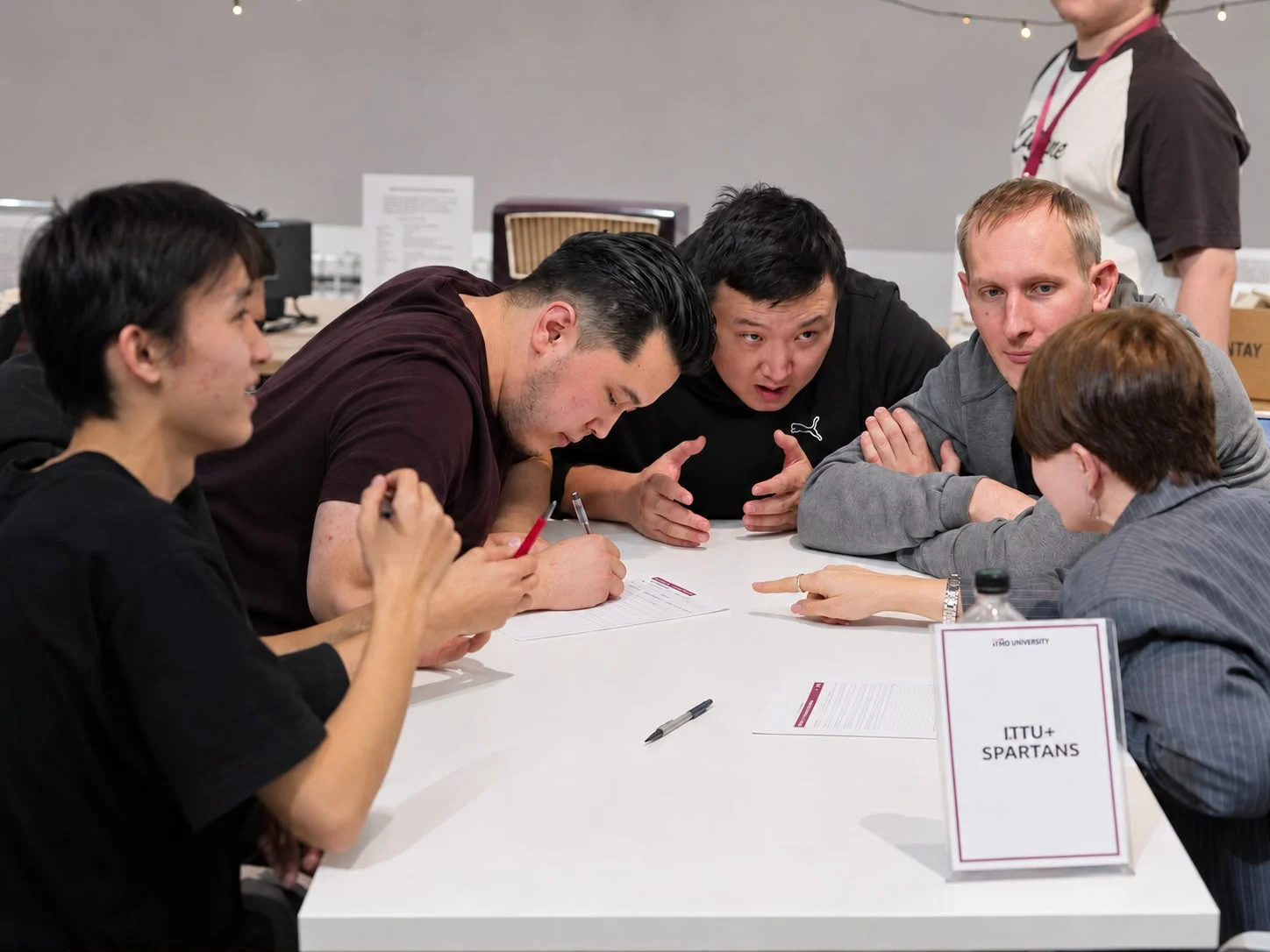
Digital Day at IITU · Photo: IITU press office
Lecturers with AI expertise and practical experience are in short supply
This is the biggest challenge facing higher education worldwide. The AI technology stack changes every few months; traditional academic training takes years. Specialists who understand the mathematics behind models and have current experience deploying them are in short supply.
We are launching joint research initiatives and academic exchanges within Kazakhstan so departments can share expertise. We also bring practitioners from technology companies and international centers of expertise into specialist courses, workshops and thesis mentoring.
IITU’s existing faculty receive ongoing training. It covers practical tools and prompt engineering, along with ways to redesign syllabuses for new requirements in academic integrity and knowledge assessment.
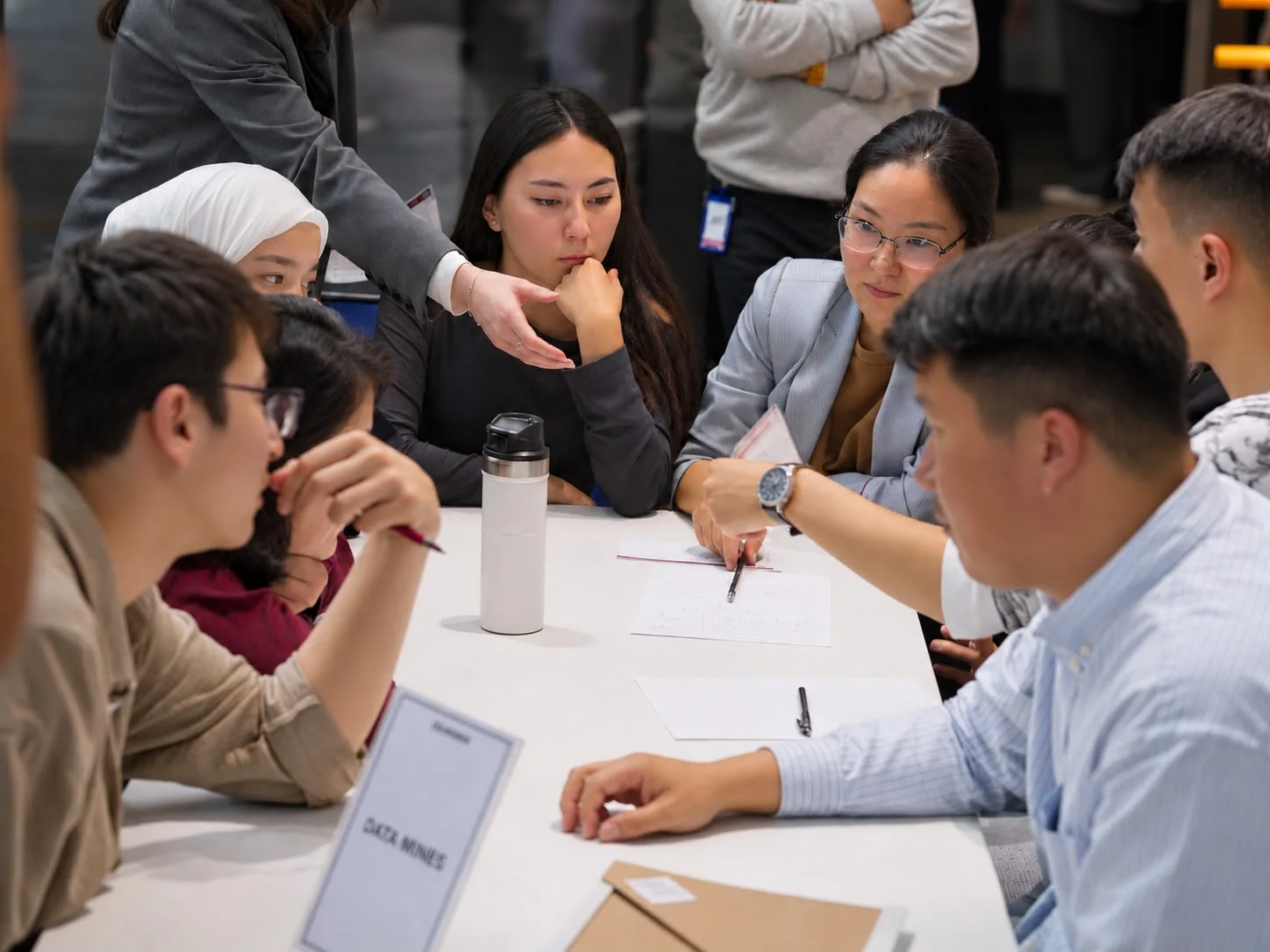
Digital Day at IITU · Photo: IITU press office
Universities need computing power, government data and academic flexibility
The government should build the country’s technological foundations. Restrictive regulation should not be its main focus.
Access to high-performance GPU clusters is a major bottleneck for university R&D labs. We need a national computing resource pool with transparent quotas for basic and applied academic research.
Universities also need a national open-data resource, or Data Commons. Secure, regulated access to high-quality, anonymized government data would help them train and adapt models for Kazakhstan’s economy, society and state language.
Rigid state compulsory education standards slow development. Universities should be allowed to update up to 30–40% of their degree program content each year by notifying the authorities, without going through bureaucratic approval processes.
Research grants should fund working engineering prototypes that address specific industrial problems in Kazakhstan. Funding should move away from reports produced as a formality and abstract publications.

Digital Day at IITU · Photo: IITU press office
Bigari would show investors projects combining applied AI and physical systems
I would show projects at the intersection of applied AI and physical systems. Pure software or simple add-ons built on other companies’ language models are easy for competitors to replicate today. Integrating algorithms with hardware creates long-term investment value.
One example is autonomous robotic systems that inspect industrial infrastructure, monitor power grids or work in hazardous areas. Compact computer vision models run directly on an onboard controller in real time, using Edge/Embedded AI without a constant cloud connection.
Another is predictive analytics for industry and urban infrastructure. These systems bring together streaming sensor telemetry, detect anomalies early and prevent emergency equipment shutdowns.
Investors are interested in engineering teams that can handle the full development cycle, from designing microcontroller boards and working with sensors to fine-tuning models and deploying them in operating industrial systems. These projects have considerable value and strengthen the country’s professional capabilities.
Bigari advises 2027 applicants to build strong foundations and study across disciplines
My main advice is to avoid a path that reduces you to a single function. Algorithms will first take over tasks that follow a predictable pattern and require no personal risk.
Build a foundation in mathematics, physics, algorithm theory and systems engineering. Applied frameworks and programming languages change every few years; fundamental principles remain. Someone with that grounding can master new tools in a couple of weeks.
Look across disciplines. The most resilient and best-paid niches sit where fields meet: artificial intelligence with robotics and hardware, IT with biotechnology and medicine, cybersecurity with public administration and law.
Develop agency and critical thinking. AI can generate options instantly, but it cannot identify problems that aren’t obvious, sense context, negotiate or take personal responsibility for decisions. Be the person who defines the task, verifies the data and takes responsibility for the result.