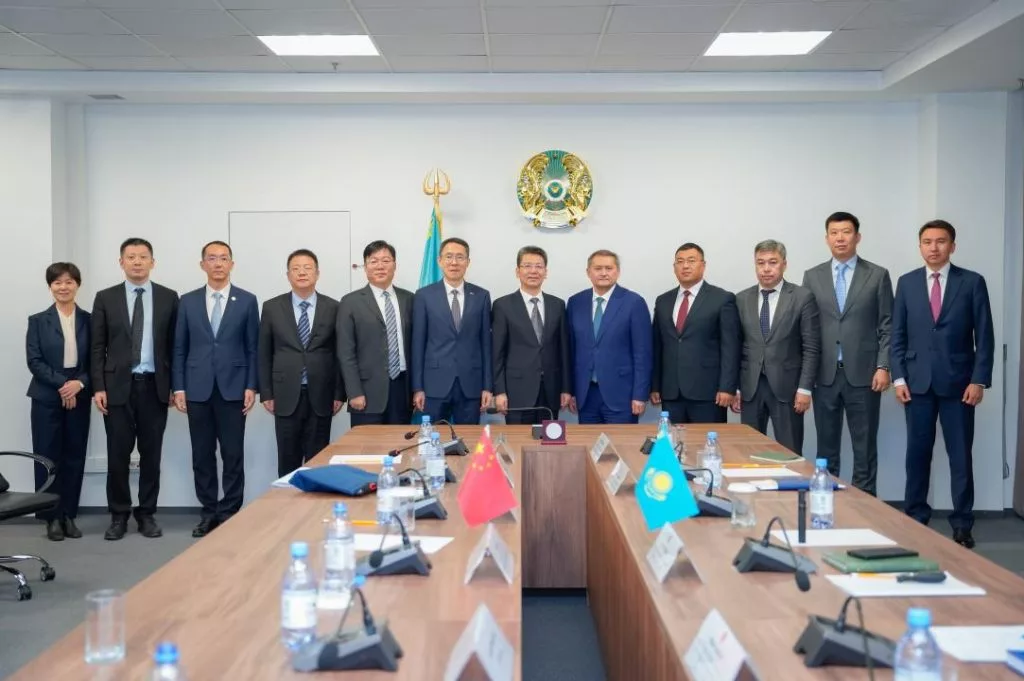
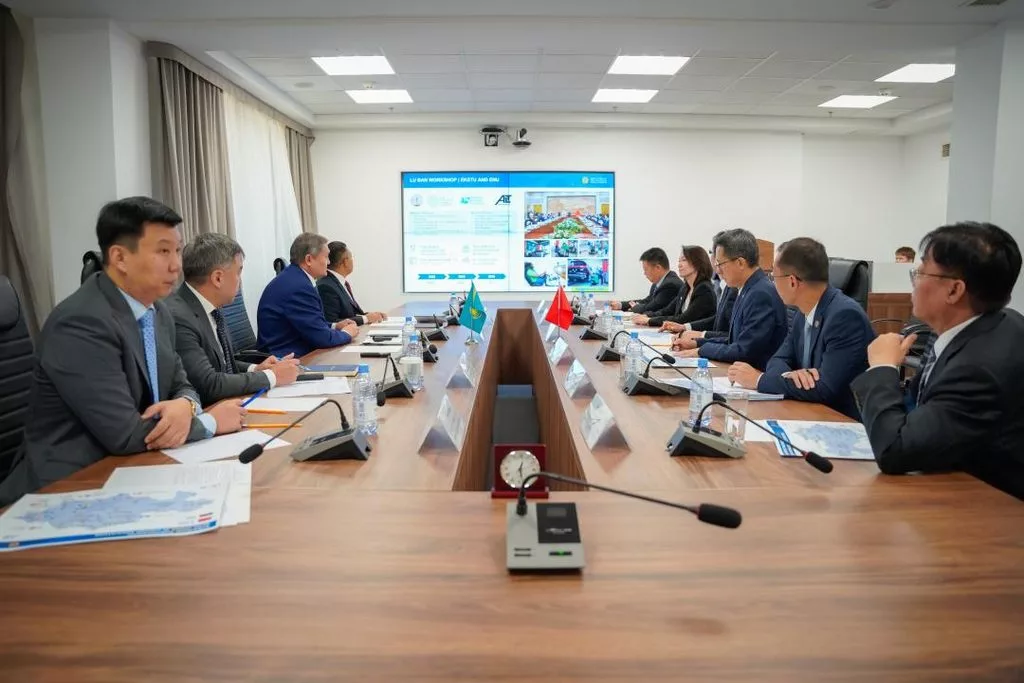
On September 2, 2026, Kazakhstan’s Acting Minister of Science and Higher Education Sayasat Nurbek held a formal working session with a delegation from the China Association for Science and Technology (CAST), led by Executive President He Junke (gov.kz).
The parties discussed a broad bilateral agenda: collaborative AI development, educational and research internships for Kazakhstani scientists in China, and science commercialization initiatives. Nurbek specifically proposed establishing an international research and educational hub in Kazakhstan with active CAST participation, alongside launching technology commercialization platforms based on Chinese scientific models.
This engagement marks the third major high-level interaction between Kazakhstan’s scientific leadership and Chinese academic institutions within just six weeks. Over this short timeframe, Chinese scientific and engineering organizations have methodically deepened their footprint across Kazakhstan’s higher education and innovation ecosystem.
Who Is CAST and What Role Does It Play in China
The China Association for Science and Technology is not merely an academic society. It is China’s largest national non-governmental organization of scientific and technological workers, directly linking the Chinese Communist Party leadership and government apparatus with the scientific and engineering community.
CAST encompasses over 210 national member societies, operates branches across every Chinese province, and maintains a formal membership exceeding 91 million scientists, engineers, and tech professionals. Crucially, CAST serves as one of the central mechanisms through which the Chinese state coordinates international scientific cooperation, technology transfer, and overseas diaspora talent recruitment.
Executive President He Junke, who led the Beijing delegation to Astana, holds full ministerial-level rank within the Chinese administrative hierarchy and serves on the Central Committee of the CCP. This level of representation signals that Beijing does not view scientific dialogue with Kazakhstan as a symbolic courtesy, but as an institutionalized priority within the Belt and Road technological corridor.
Key Pillars of the Astana Negotiations
According to official releases from the Ministry of Science and Higher Education, the Astana discussions centered around three core operational pillars:
- Artificial Intelligence and Applied Data Science: Joint development of foundational models, cross-border computing clusters, and algorithmic adaptation for industrial sectors including energy, geology, and agriculture.
- Academic Mobility and Doctoral Fellowships: Allocating long-term research grants and postdoctoral fellowships for Kazakhstani doctoral candidates and early-career researchers at leading Chinese research laboratories.
- Science Commercialization and Innovation Hubs: Structuring technology transfer offices and joint incubation centers designed to transform laboratory R&D into commercially viable spin-offs.
Nurbek explicitly emphasized that Kazakhstan seeks to transition from being a consumer of imported scientific solutions to becoming an active regional R&D co-developer. However, realizing this ambition requires access to high-end laboratory instrumentation, semiconductor testing facilities, and supercomputing capacity—assets China possesses in abundance.
Chronology: Three Chinese Scientific Delegations in Six Weeks
The September 2 meeting with CAST was not an isolated event. It represents the third phase of an accelerating sequence:
July 2026: A delegation from Beijing Foreign Studies University and academic institutes visited Astana to formalize joint linguistic and digital translation platforms, expanding Chinese language software and technological corpus processing.
August 2026: Comprehensive agreements were signed with the Chinese Academy of Sciences (CAS). That roadmap outlined several deep-tech initiatives:
- Local adaptation of Chinese foundational scientific AI models—specifically «PanShi» and «Zidong Taichu»—trained on Kazakhstani domain datasets for hydrology, precision agriculture, smart mineral geology, and bilingual Kazakh-Russian academic corpora.
- Joint nuclear engineering research covering small modular reactors (SMRs), radiation-resistant structural materials, next-generation nuclear fuels, and medical isotope applications.
- Direct involvement of CAS urban planning and innovation experts to help design the smart industrial ecosystem of Alatau City, modeled after the Shenzhen High-Tech Industrial Park.
September 2, 2026: The high-level CAST meeting in Astana, focusing on engineer accreditation, startup incubation networks, and institutionalizing an international academic hub.
Three distinct Chinese organizational bodies within forty-five days: an elite university system, the premier state academy of sciences, and the supreme national association of engineers. Each approaches Kazakhstan along separate administrative tracks, yet converges upon the same strategic hub.
Critical Questions Left Unanswered in Public Disclosures
While official communiqués celebrate burgeoning bilateral ties, several foundational parameters remain unaddressed in public records:
Binding Agreements vs. Declaratory Intent: The ministry’s release does not mention the signing of a legally binding intergovernmental agreement or memorandum of understanding with CAST. The language remains framed around terms like «discussed» and «proposed for consideration.»
Intellectual Property and Ownership Architecture: What does «science commercialization» mean in practical terms when partnering with CAST? If Kazakhstani raw scientific data or regional agricultural telemetry is processed through Chinese foundational algorithms, who retains the resulting patents, software copyrights, and licensing revenues?
Capital Allocations for the Educational Hub: The proposal to construct an international educational hub in Kazakhstan has been voiced repeatedly across various forums. However, a public architectural master plan detailing concrete funding allocations, construction deadlines, and physical locations remains unpublished.
Governance of Domestic Data in AI Fine-Tuning: Under the August CAS roadmap involving the PanShi and Zidong Taichu models, public records do not specify whether sensitive national geological and hydrological datasets will leave domestic borders or whether fine-tuned model weights will reside on sovereign Kazakhstani servers.
RAEM has submitted formal inquiries to the Ministry of Science and Higher Education and will update this investigation upon receipt of official clarifications.
Editorial Perspective
This section represents analytical commentary based on industry observations.
International scientific collaboration with China is fundamentally rational and necessary. Academic fellowships, doctoral quotas, and access to world-class Chinese particle accelerators, gene sequencers, and computing clusters provide Kazakhstani researchers with capabilities that domestic budgets cannot independently duplicate.
The strategic hazard lies not in cooperation itself, but in the asymmetry of value capture. When one side offers broad proposals for «commercializing R&D,» while the counterparty operates a global network of offshore incubation nodes specifically engineered to funnel intellectual capital into mainland manufacturing pipelines, domestic policymakers must know precisely where added value will materialize.
The benchmark test over the next eighteen months is straightforward: Will these bilateral programs produce registered Kazakhstani patents, joint spin-off corporate equity, and local commercial revenue—or will they conclude with ceremonial certificates, fellowship travel logs, and bullet points in bureaucratic annual reports?