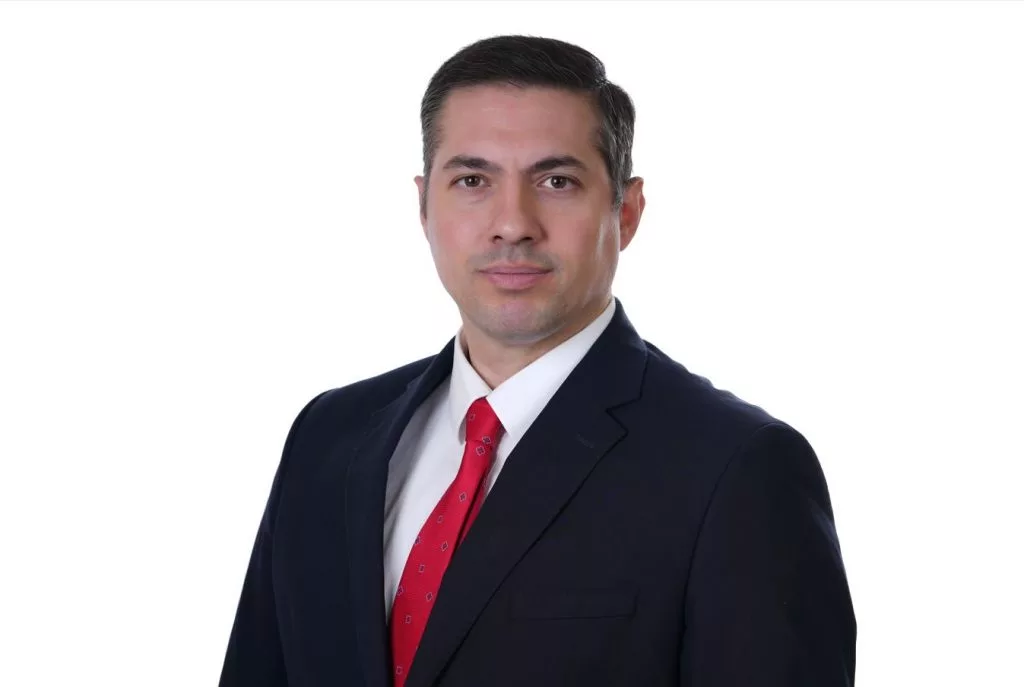
Huseyin Atakan Varol is a professor of robotics, the founding director of the Institute of Smart Systems and Artificial Intelligence (ISSAI) at Nazarbayev University (NU), and, since May 2026, the inaugural Dean of NU’s newly formed School of Computing and Artificial Intelligence. While tech headlines frequently celebrate venture-backed apps, Varol’s laboratory built the foundational, non-commercial layer without which sovereign Kazakh artificial intelligence could not exist: the national speech corpuses, phonetic benchmarks, and linguistic datasets powering models like Oylan, Mangisoz, and TilSync.
Engineering Infrastructure for a Foreign Language
Varol earned his Bachelor’s degree in Mechatronics from Sabancı University in Turkey, followed by an M.S. and Ph.D. in Electrical Engineering from Vanderbilt University in the United States. He relocated to Kazakhstan in 2019—not as a temporary academic consultant, but as the founding architect of ISSAI, which he continues to direct. Under his leadership, the institute developed the first open-source speech and text corpuses for the Kazakh language: Kazakh Speech Corpus (KSC and KSC2), text-to-speech datasets (KazakhTTS, KazakhTTS2), and named entity recognition datasets (KazNERD). This foundational open data enabled every commercial and governmental developer in Kazakhstan to train voice assistants, automated transcription pipelines, and localized language models.
This technical rigor mirrors the achievements of other Central Asian DeepTech founders tackling specialized algorithmic challenges, such as the clinical diagnostic pipelines of Cerebra and its Stanford validation.
Linguistic Foundation Rather than Shallow Wrappers
Proprietary systems like Oylan (Kazakh foundational LLM), Mangisoz (speech recognition), and TilSync (real-time automated subtitling) are not isolated apps; they represent years of fundamental data curation. Unlike commercial startups that build thin API wrappers around overseas foundation models, Varol’s institute built the substrate underneath—the phonetic alignments, syntactic corpuses, and tokenizers required to teach neural architectures to comprehend Kazakh grammar and nuance natively.
“Before you can teach a neural network to speak Kazakh fluently, you have to build clean, high-fidelity datasets upon which it can be trained—a process that demands years of methodical laboratory labor.”
Active Researcher: 150+ Papers and Bionic Patents
Beyond administrative duties, Varol remains an active laboratory investigator. His research focuses on generative AI, soft robotics, sensor fusion, and tensegrity structures. He is the author of more than 150 peer-reviewed scientific papers and holds multiple international patents in bionics and prosthetic manipulation. According to Google Scholar, his published works have accumulated over 7,300 academic citations—demonstrating profound scientific rigor that bridges theoretical mechanics and applied AI.
Internal Candidate Wins International Deanship Search
In May 2026, Nazarbayev University appointed Varol as the first Dean of the School of Computing and Artificial Intelligence following an international search. Notably, while the university actively recruited academic leadership from top Western institutions—including the University of British Columbia, King’s College London, and Singapore’s A*STAR—the AI deanship was awarded to the internal leader who spent seven years building Kazakhstan’s premier AI laboratory from within.
Frequently Asked Questions
Who is Huseyin Atakan Varol?
Professor of robotics, founding director of ISSAI, and the inaugural Dean of the School of Computing and Artificial Intelligence at Nazarbayev University.
What AI systems has his institute built?
Sovereign Kazakh AI systems including Oylan (multilingual LLM), Mangisoz (speech recognition), TilSync (real-time live captioning), and core foundational datasets like KSC, KazakhTTS, and KazNERD.
What is his background?
He holds degrees in mechatronics from Sabancı University (Turkey) and electrical engineering from Vanderbilt University (USA), relocating to Astana in 2019 to establish ISSAI. Understanding such foundational models is vital when evaluating enterprise deployments of autonomous AI engineering agents.