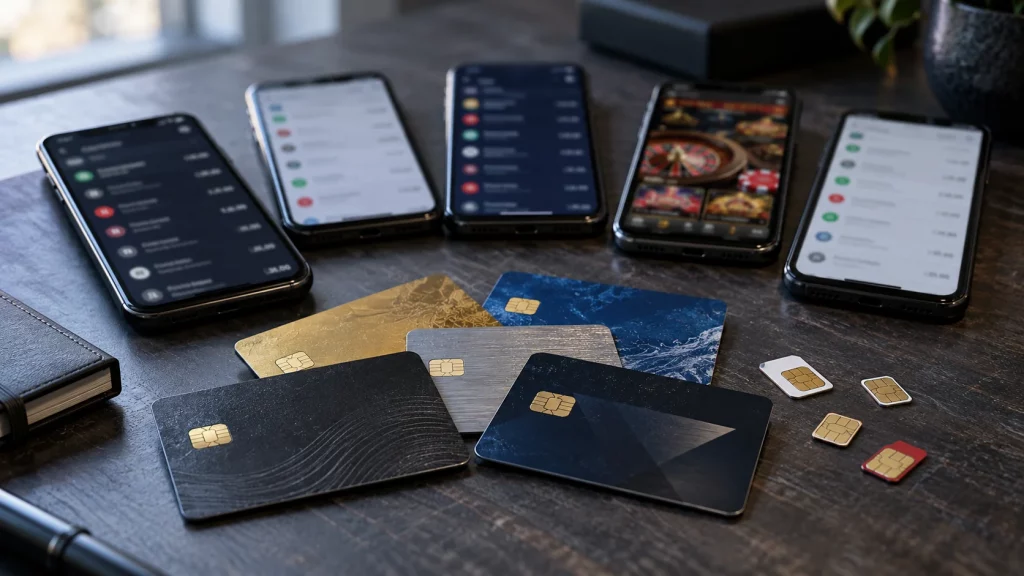
Kazakhstan’s Financial Monitoring Agency (FMA) has uncovered a cross-border banking mule network utilized to settle illicit payments for unlicensed online casinos. Gross transaction turnover across cards operated by one syndicate exceeded 9.8 billion KZT ($20.5 million), with minors recruited into the money transmission ring.
The FMA reported two distinct operational enforcement actions: one centered in Turkistan Region and Almaty, and a second infrastructure hub operating across Taraz and Almaty uncovered during investigations in Zhambyl Region.
Architecture of the P2P Banking Mule Farm
According to investigative records, organizers maintained “drop farms”—distributed clusters of domestic bank accounts registered under nominee figureheads but teleoperated by criminal syndicates. The network deployed accounts belonging to citizens of Kazakhstan, Uzbekistan, and Kyrgyzstan.
Foreign nationals arriving in Kazakhstan were registered for individual taxpayer numbers (IIN), local SIM cards, and retail bank accounts. Smartphones configured with pre-authenticated mobile banking applications were surrendered to coordinators managing fund liquidation.
To process player deposits and pay casino winnings, the syndicate integrated automated peer-to-peer (P2P) gateway software to match payment inflows with gaming accounts. Internal settlement between syndicate organizers was conducted partially in USDT cryptocurrency.
This payment infrastructure enabled unlicensed online gambling operators to process retail gambling deposits and withdrawals through legitimate consumer banking rails under individual names.
Enforcement in Taraz and Almaty: Minors Involved
In the Zhambyl case, operators established mule cells in Taraz and Almaty, recruiting foreign nationals from Kyrgyzstan and Uzbekistan, including minors.
Search operations resulted in the seizure of 180 payment cards, 15 mobile devices, and 26 SIM cards, alongside $50,000 in cash, 27,000 USDT in digital assets, four vehicles, and firearms with ammunition.
Aggregate transaction volume processed across the compromised accounts surpassed 9.8 billion KZT. This figure represents cumulative gross account turnover rather than quantified net criminal proceeds or victim restitution claims.
The exact headcount and recruitment methods targeting minors were not disclosed in initial agency statements.
Parallel 500M KZT Laundering Channel Dismantled
In Turkistan Region and Almaty, law enforcement detained three Uzbek nationals operating 89 Kazakh payment cards and 20 mobile handsets.
Transactional volume on this secondary cell was quantified at 500 million KZT ($1 million), representing an independent investigation separate from the 9.8 billion KZT Zhambyl network.
Nominee Cards and Loss of Financial Custody
A plastic debit card is merely an access token. A mobile device hosting authenticated mobile banking allows third parties to initiate instantaneous wire transfers in the account holder’s legal identity without their ongoing knowledge.
The syndicates secured complete administrative custody: primary accounts, linked mobile numbers, and active mobile banking sessions, orchestrating synthetic commercial payment flows across straw accounts.
Surrendering account control to third parties does not extinguish statutory liability for the registered account holder. Public offers to lease or sell banking credentials carry significant criminal liability regardless of promised compensation.
The FMA confirmed that judicial authorities sanctioned pre-trial detention for five primary suspects as investigations continue. Pre-trial detention does not constitute a criminal conviction, and guilt remains subject to judicial verdict.