
Standard screen time limiters rely on willpower—and fail when users routinely tap “Ignore limit for 15 minutes.” A new category of digital wellbeing applications takes a physical approach: completely locking distracting social media feeds, games, and video platforms until you get off the couch and achieve verifiable physical movement.
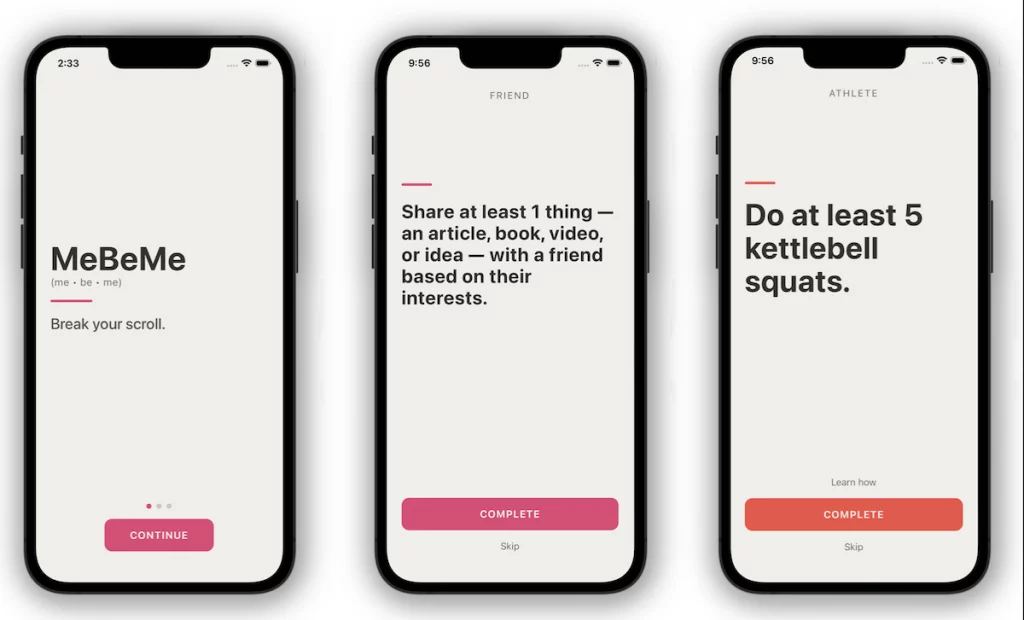
1. MeBeMe: Motion-Locked Feed Blocker
MeBeMe. Tracks body motion through device sensors, locking down target distracting applications until you stand up and move. Designed to break continuous sedentary doomscrolling loops.

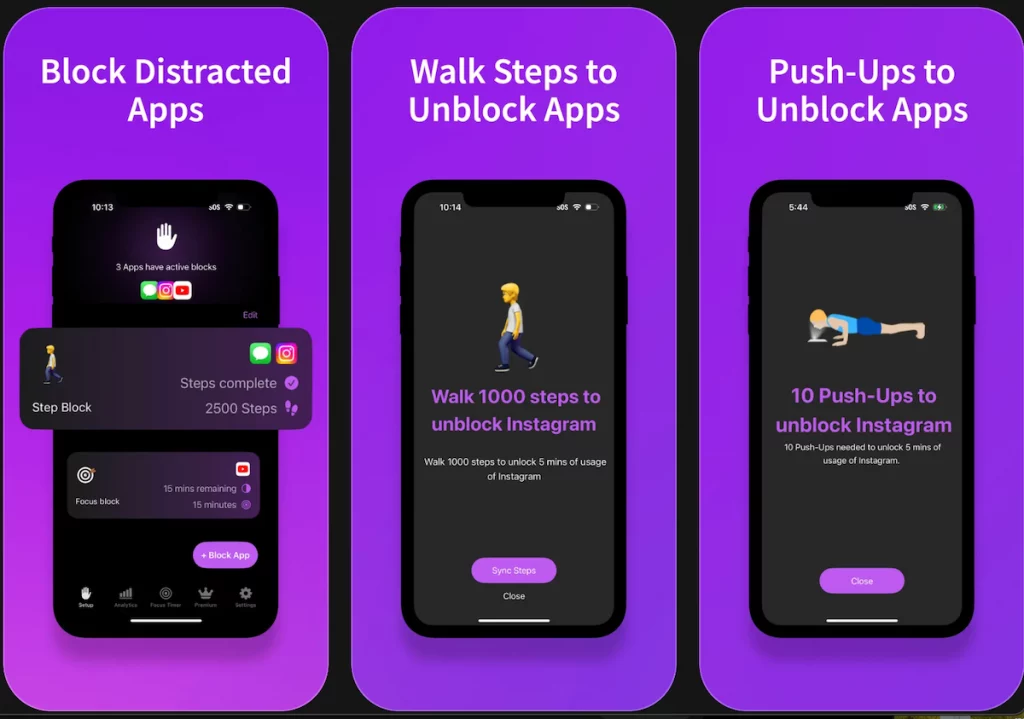
2. StepBloc: Exercise and Step Verification
StepBloc. Blocks access to selected applications until you either walk a pre-configured step count or complete physical bodyweight exercises (pushups, planks, squats) for a specified duration. Only after physical completion does the app unlock Instagram, TikTok, YouTube, or mobile games. Free on iOS, with optional subscriptions for custom configurations.
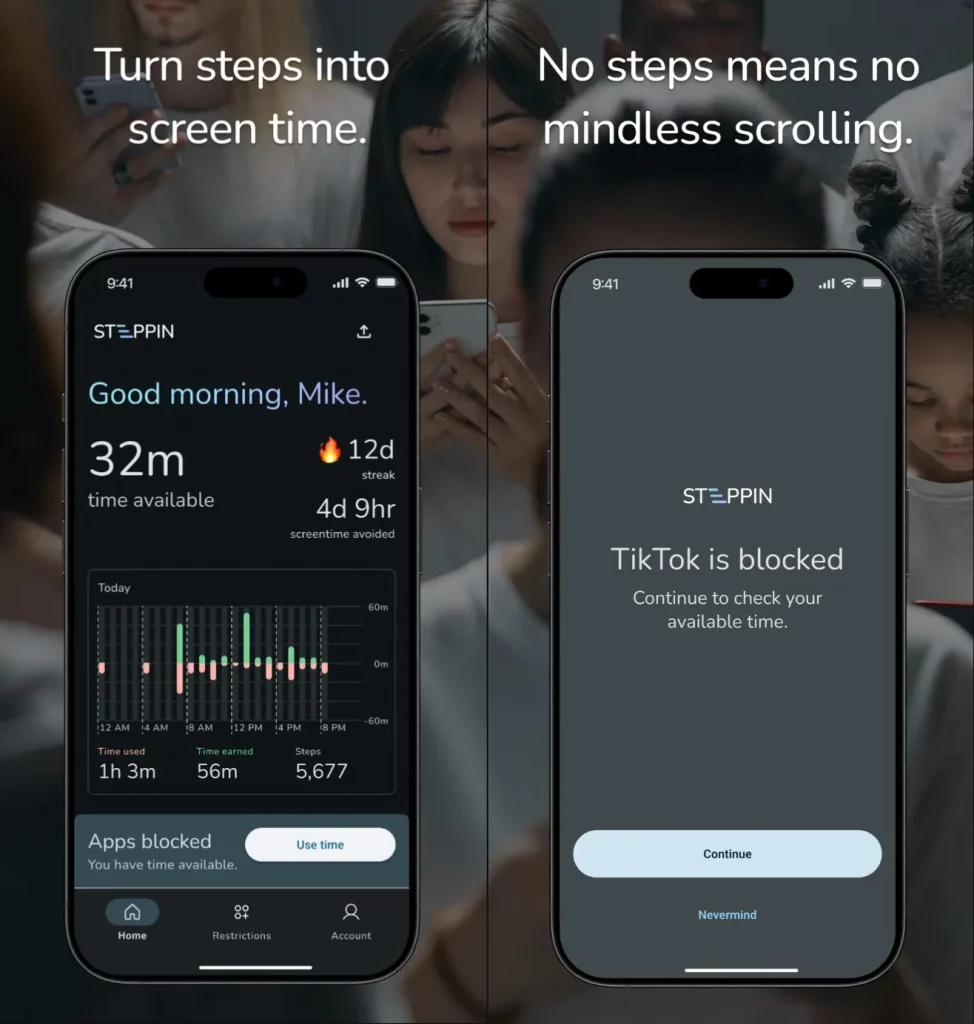
3. Steppin: Trading Real Steps for Feed Minutes
Steppin. Created by a co-founder of Kayak, Steppin operates on a transparent exchange rate: physical steps are directly converted into social media browsing time—such as 100 steps earning 60 seconds of feed scrolling. Users configure custom step thresholds across streaming, social, and gaming categories. Available exclusively on iOS.
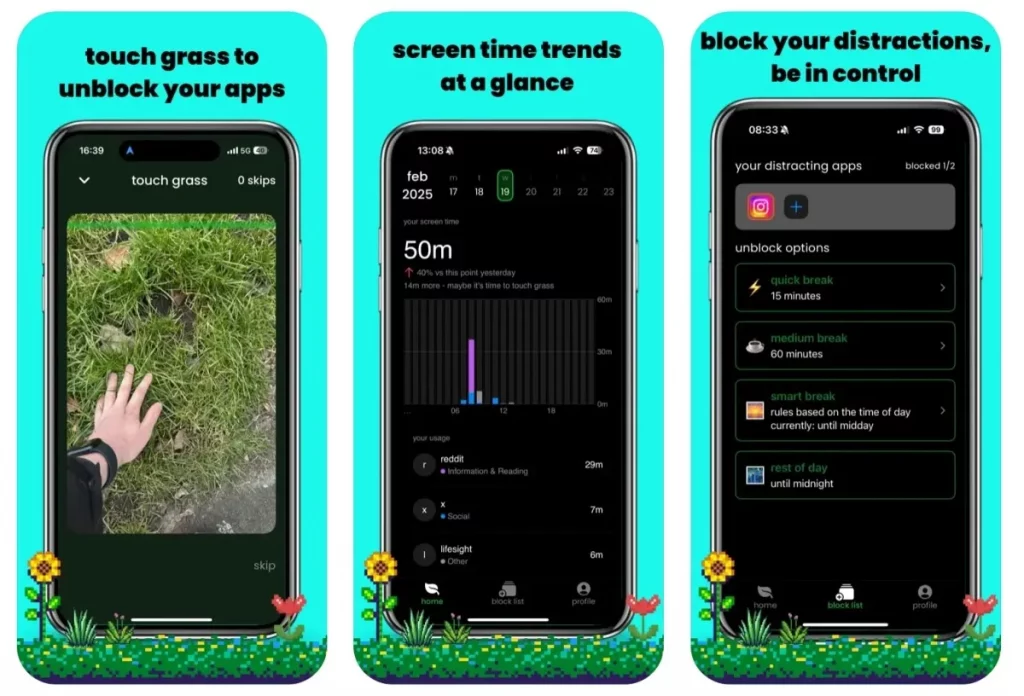
4. TouchGrass: Computer Vision Outdoor Verification
TouchGrass. The most literal manifestation of internet slang: to unlock restricted apps, the user must physically walk outdoors and capture a photograph of living lawn grass. An integrated computer vision model verifies that the photo depicts genuine outdoor turf rather than house plants, leafy trees, or synthetic carpets. The free tier restricts up to two apps, with full access priced at $5.99/month or $49.99/year on iOS.
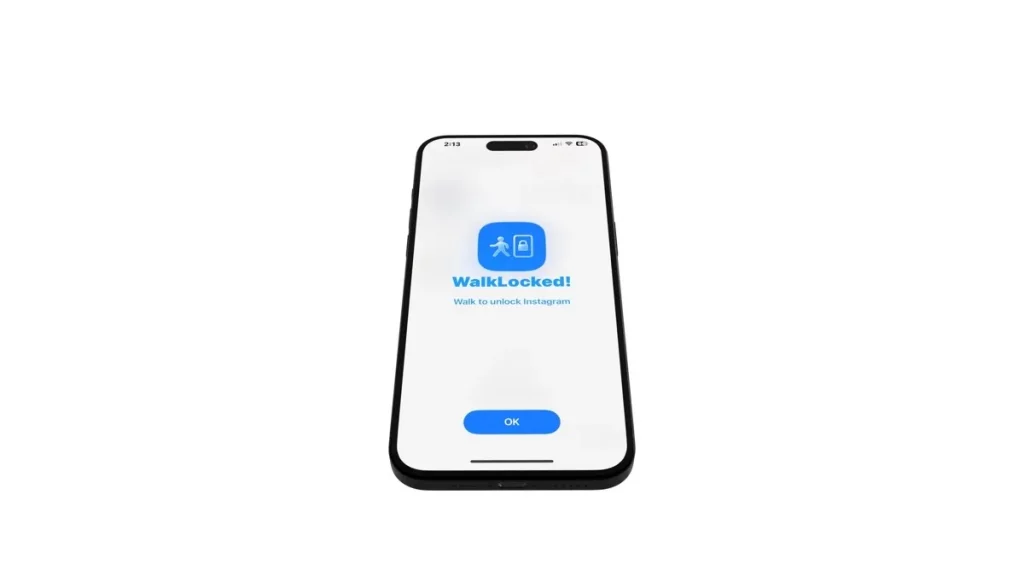
5. WalkLock: Apple Health Integration for iOS
WalkLock. Integrates seamlessly with Apple Health to keep designated entertainment applications locked until the user reaches their daily walking threshold. Step counts synchronize automatically from iPhone and Apple Watch sensors, accompanied by an interactive Lock Screen widget showing live progress. Available on iOS. For insights into building distinctive habit-forming consumer software, read our case study on niche mobile app development and unexpected user behavior.
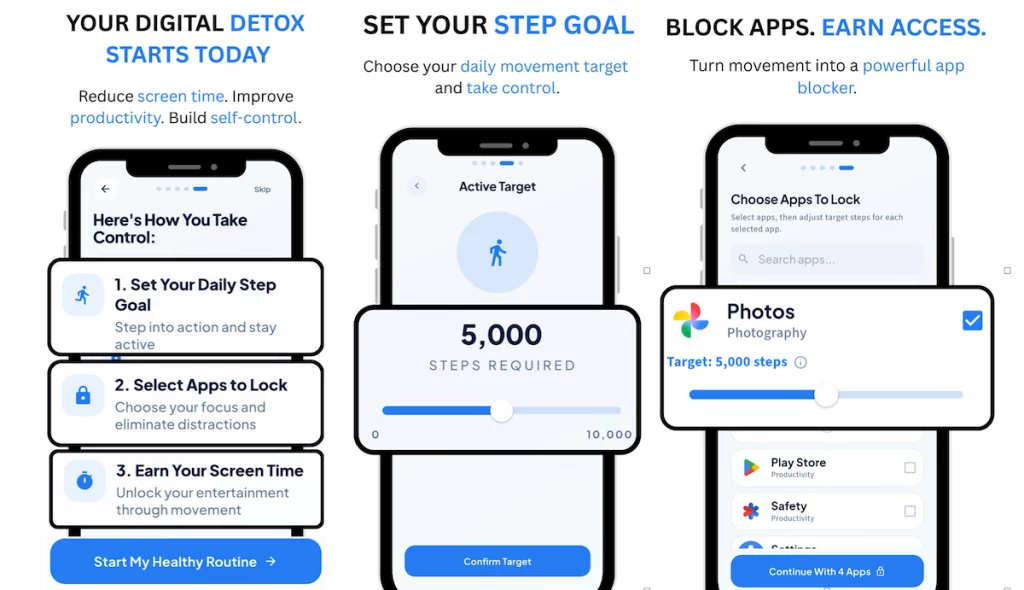
6. Walkly: Android Step-Gated Access
Walkly. Functionally equivalent to WalkLock tailored for the Android ecosystem. Blocks social feeds, mobile games, and streaming applications until the specified daily step quota is registered, automatically restoring access once the movement goal is achieved.
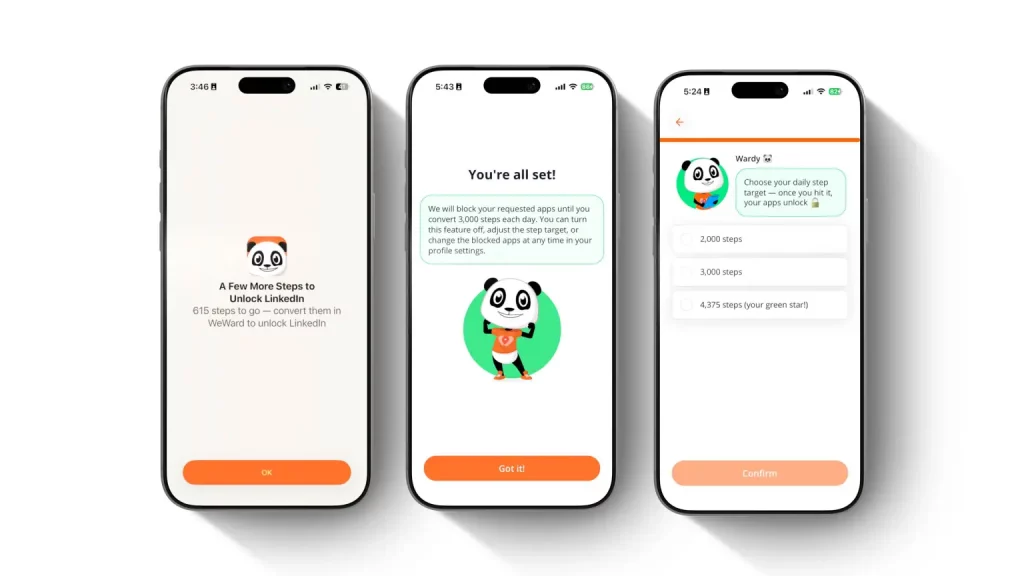
7. WeWard: Earn While You Move
WeWard. Originally created as a rewards platform that compensates users with an internal currency (“Wards”) for walking—convertible into cash payouts, retail gift cards, or philanthropic donations. WeWard recently introduced “Walking Mode”—an integrated app locker that freezes selected entertainment feeds until step targets are completed. Available across both iOS and Android.
Monetization Models and Market Dynamics
Monetization strategies across this cohort diverge significantly: freemium models with recurring subscriptions for advanced automation (StepBloc, TouchGrass), entirely free utility products (WalkLock, Walkly, Steppin, MeBeMe), and reward ecosystems where the platform pays the consumer (WeWard). As algorithmic feeds grow increasingly addictive, gating digital consumption behind physical proof-of-movement represents one of the fastest-growing niches in behavioral software design.